- NATURE PODCAST
Star orbiting close to Sagittarius A* could reveal its spin — plus, how exoskeletons might change the way humans move.
By
- Benjamin Thompson
- Nick Petrić Howe
Download the Nature Podcast 19 August 2026
In this episode:
00:46 The star that could reveal a black hole’s spin
Research article: Dayem et al.
13:23 Research Highlights
Nature: Rattlesnakes’ own antivenom could protect humans too
Nature: Shipping on rivers packs a surprisingly large climate punch
15:40 Commercial exoskeletons are hitting the market — what now?
Nature: Will you be wearing an exoskeleton in ten years? The tech that could change how we move
Subscribe to Nature Briefing, an unmissable daily round-up of science news, opinion and analysis free in your inbox every weekday.
Never miss an episode. Subscribe to the Nature Podcast on Apple Podcasts, Spotify, YouTube Music or your favourite podcast app. An RSS feed for the Nature Podcast is available too.
doi: https://doi.org/10.1038/d41586-026-02607-0
Related Articles
-
 Biggest black-hole outburst ever seen records death throes of a star
-
 Blood of man who’s had 200 snake bites helps make a potent antivenom
-
 Exoskeleton boots could power your walk by learning your stride
Subjects
Latest on:
- Astronomy and astrophysics
- Space physics
- Engineering
-
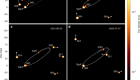
Discovery of a star sensitive to the spin of Sagittarius A*
Article
-

Evidence for the first globular cluster stellar stream beyond the Milky Way
Article
-

Giant balloon gives rise to new view of the Milky Way’s centre
Research Highlight
-
How escalating costs scuppered a radio telescope at Joddrell Bank
News & Views
-

Solar eclipse offers rare chance to solve Sun’s magnetic-field mysteries
News
-
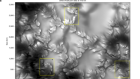
Ubiquitous Kelvin–Helmholtz instabilities driving plasma mixing on the Sun
Article
-
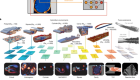
The HydroGym reinforcement learning platform for fluid dynamics
Article
-

Will you be wearing an exoskeleton in ten years? The tech that could change how we move
News Feature
-

Five ways 3D printing is improving lab work
Technology Feature