 Hwang Joo-young
Staff reporter at The Korea Herald’s National Desk, based in Seoul. Covers South Korea’s national security and foreign policy, with a focus on the Defense, Foreign and Unification Ministries, as well as the National Assembly.
Before entering journalism, served as an Air Force officer. Experience includes providing translation and interpretation, as well as strategic input for planning efforts, at the ROK-US Combined Forces Command. During three years of military service, took part in six major South Korea-US combined exercises.
UNC holds 50th anniversary ceremony for Panmunjom axe killings
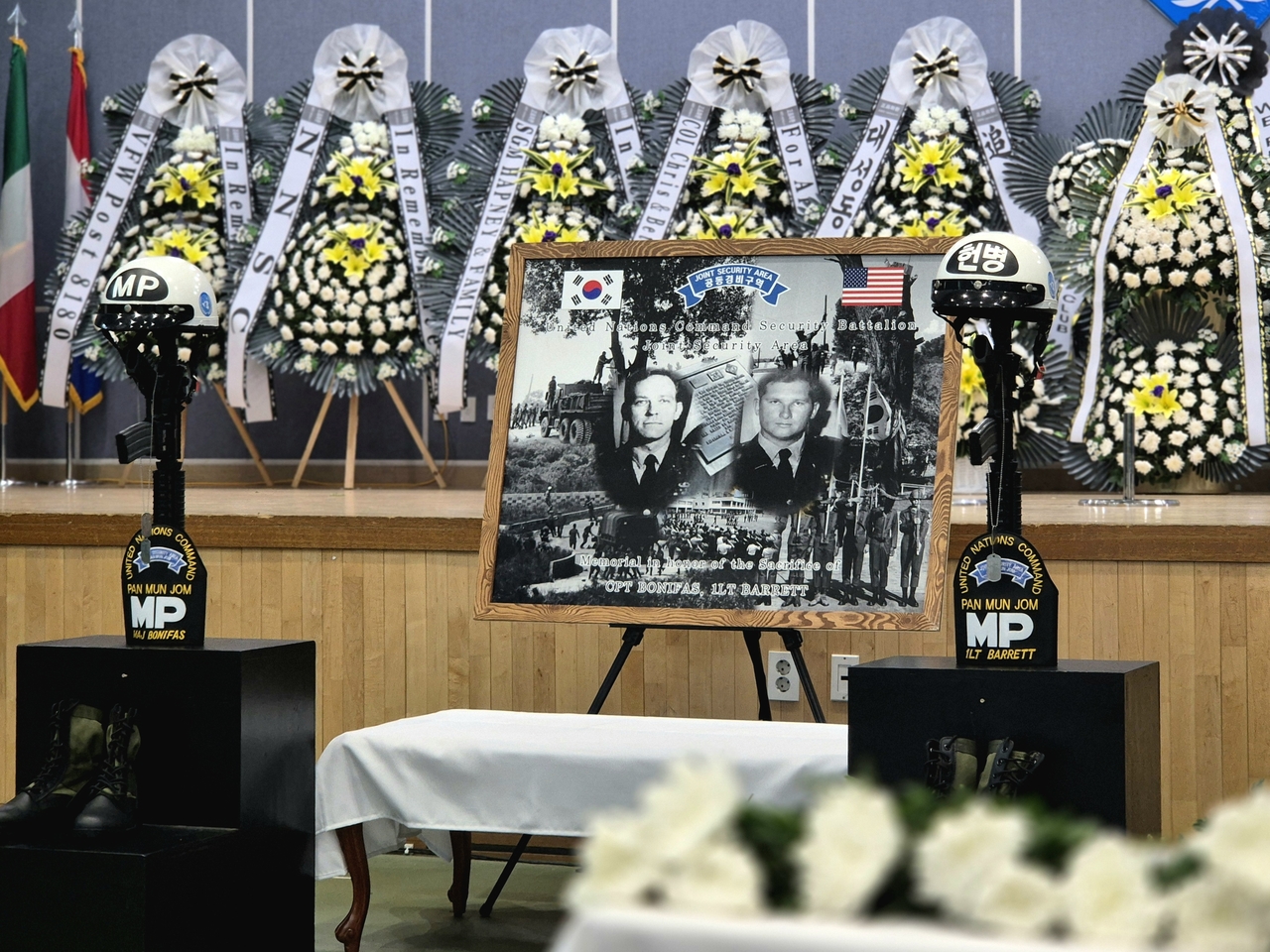
PAJU, Gyeonggi Province — “I just hope for continued cooperation between our two countries.”
Stacy Adams, a niece of 1st Lt. Mark Barrett, said Tuesday while visiting the Joint Security Area, where her uncle and Maj. Arthur Bonifas were killed by North Korean soldiers exactly 50 years ago. Both were US Army officers serving under the United Nations Command at the JSA.
“The walk towards peace is sometimes a long one,” Adams told reporters.
The deaths of the two officers, she said, “really brought South Korea and the United States together with the shared goal of keeping South Korea safe and preventing North Korea from taking over.”
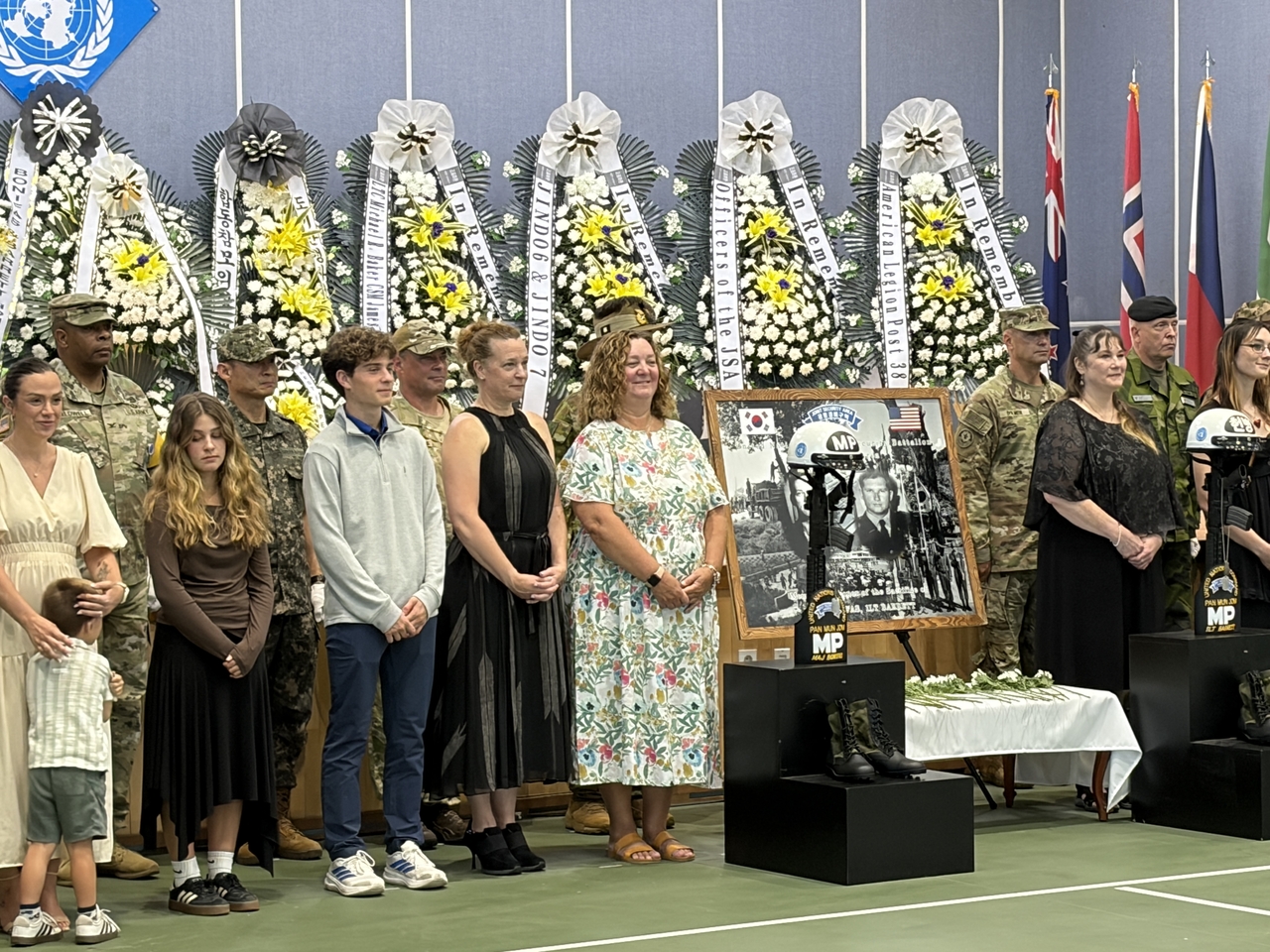
At Tuesday’s ceremony, speakers emphasized the enduring role of South Korean and US troops operating together at the JSA, which sits along the Military Demarcation Line inside the Demilitarized Zone separating the two Koreas since the 1950-53 Korean War.
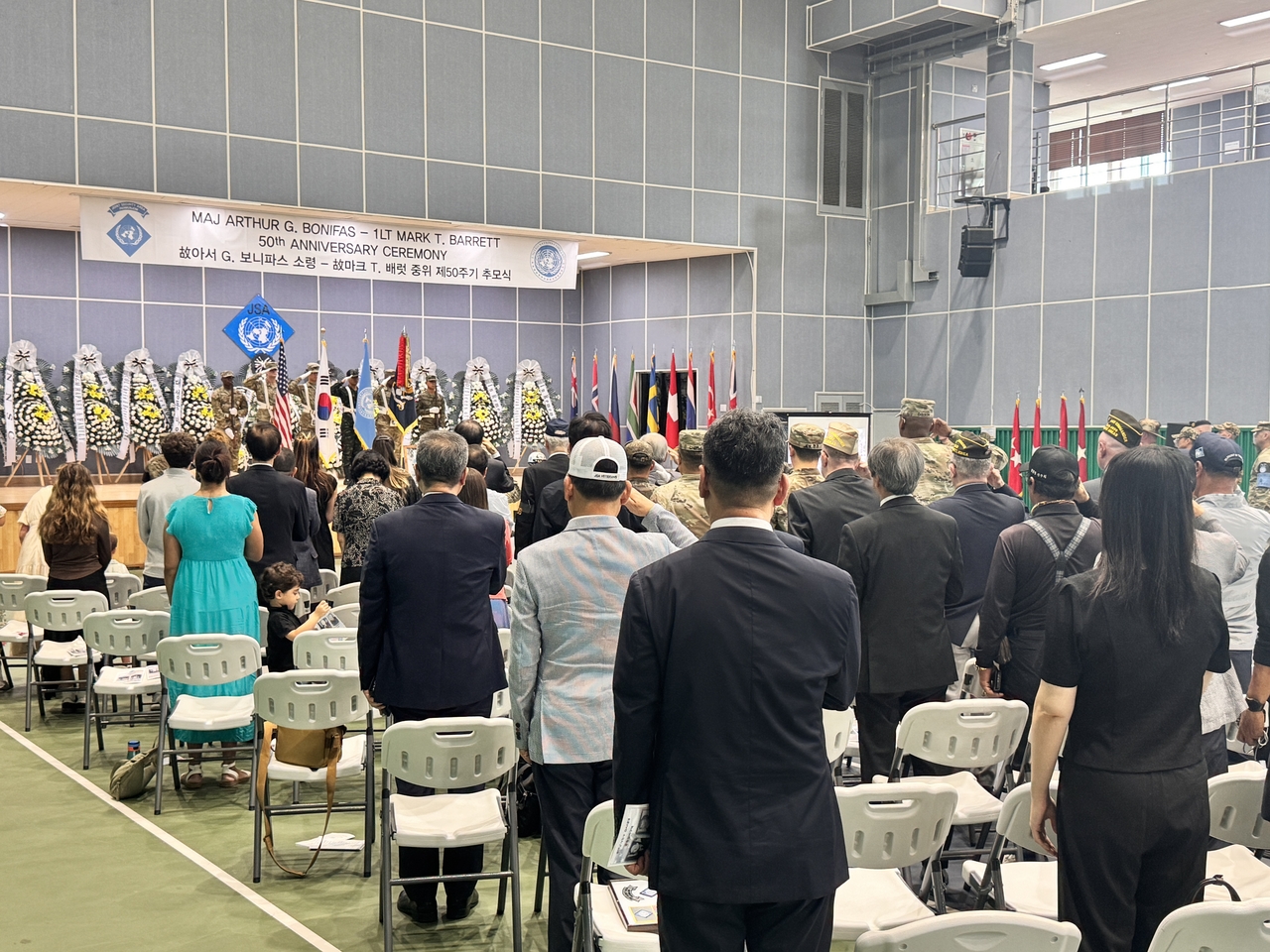
About 130 people gathered at a gym inside the JSA, including relatives of Bonifas and Barrett, current and former JSA personnel, South Korean and US troops and service members from United Nations Command member states.
Gen. Xavier Brunson, commander of the UNC, Combined Forces Command and US Forces Korea, did not attend due to what the command described as a scheduling conflict. His remarks were read by Australian Army Lt. Gen. Scott Winter, the UNC deputy commander.
“The world has changed in countless ways, but the fundamental truth of the Demilitarized Zone has not,” Brunson said in the statement.
“Peace is not a natural state. It is a fragile condition that must be guarded, fought for and, sometimes, tragically paid for in blood.”
Brunson also drew a connection between the two officers killed five decades ago and the troops stationed at the border today.
“Today, Republic of Korea, United States and United Nations Command soldiers from across the globe continue to stand exactly where they stood,” he said, referring to South Korea by its official name.
“They operate in the same perilous environment, with the same courage, under the same flag.”
“The mission here is not merely ceremonial. It is daily. It is dangerous. And it is essential.”
The families echoed that emphasis.
Beth Bonifas, Bonifas’ eldest daughter, said that while the way South Korean and US forces operate within the UNC framework had changed since her previous visit in 2015, “I feel it’s still a very strong alliance.”
Her sister Megan DeCore, who was 3 when their father was killed, said she was proud of “the US and South Korean militaries for keeping his legacy alive, as well as Mark Barrett’s.”
After the indoor ceremony, the families traveled deeper into the JSA to the site where Bonifas and Barrett were killed.
The site still bore the visible markers of the peninsula’s division. A giant North Korean flag could be seen across the border facing a similarly towering South Korean flag, while South Korean and US JSA troops stood watch near the Bridge of No Return, a Cold War-era crossing between the two sides of the JSA.
Seventeen troops formed ranks beside a memorial marker at the spot where the poplar tree at the center of the 1976 incident once stood.
On Aug. 18, 1976, Bonifas and Barrett were supervising a routine tree-trimming operation near the bridge when North Korean soldiers attacked the work party with clubs, pickaxes and axes seized from workers.
Both officers were fatally wounded, while four South Korean and four US personnel were injured.
The attack sent tensions on the peninsula soaring. South Korea and the US raised their military readiness to DEFCON 3, a heightened alert level requiring forces to be prepared for deployment on short notice.
Three days later, the allies launched Operation Paul Bunyan, returning to the site under heavy military protection to cut down the tree. The operation was completed without a major clash, and then-North Korean leader Kim Il-sung later sent a message expressing regret over the incident, helping tensions gradually subside.
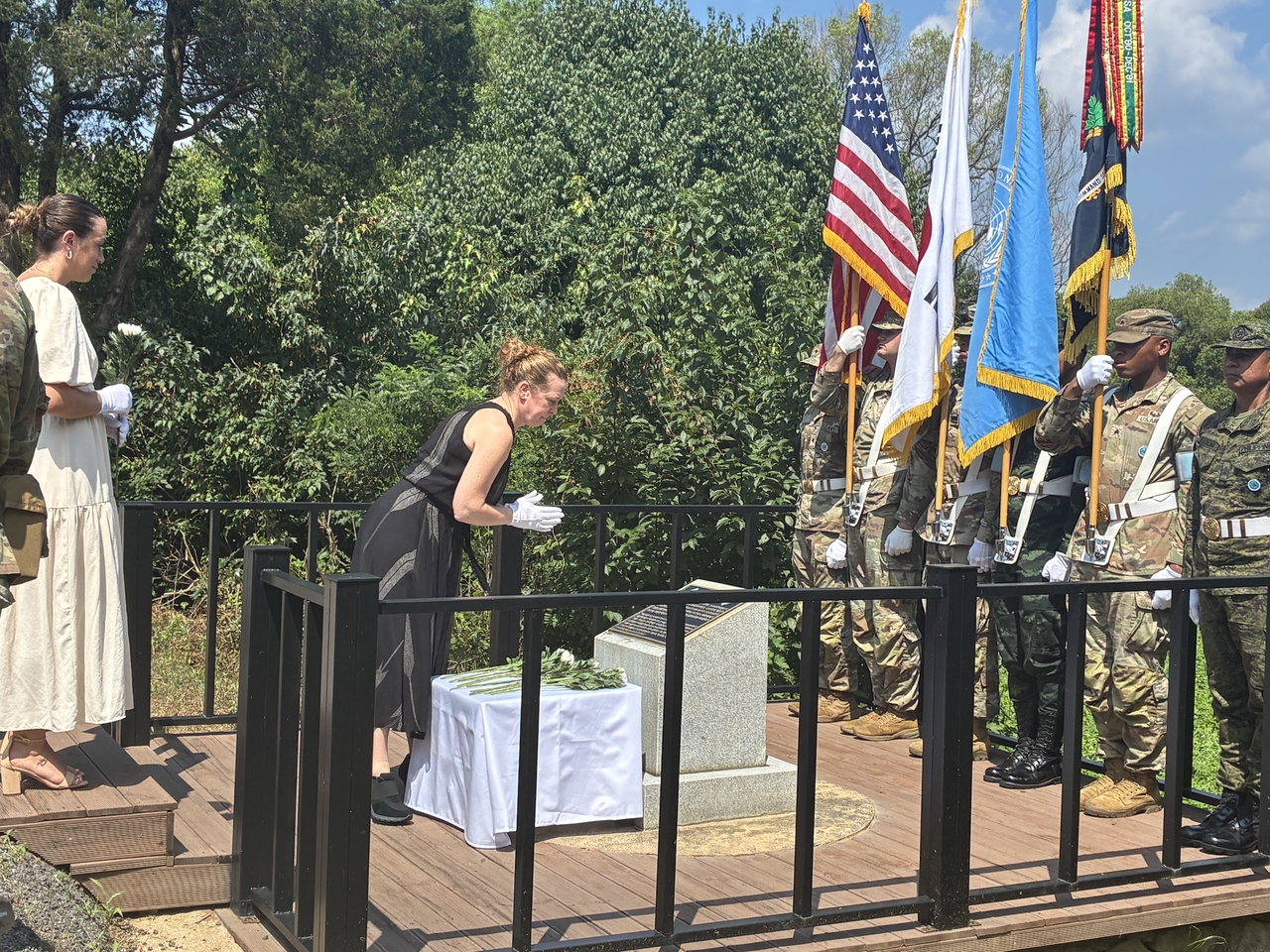
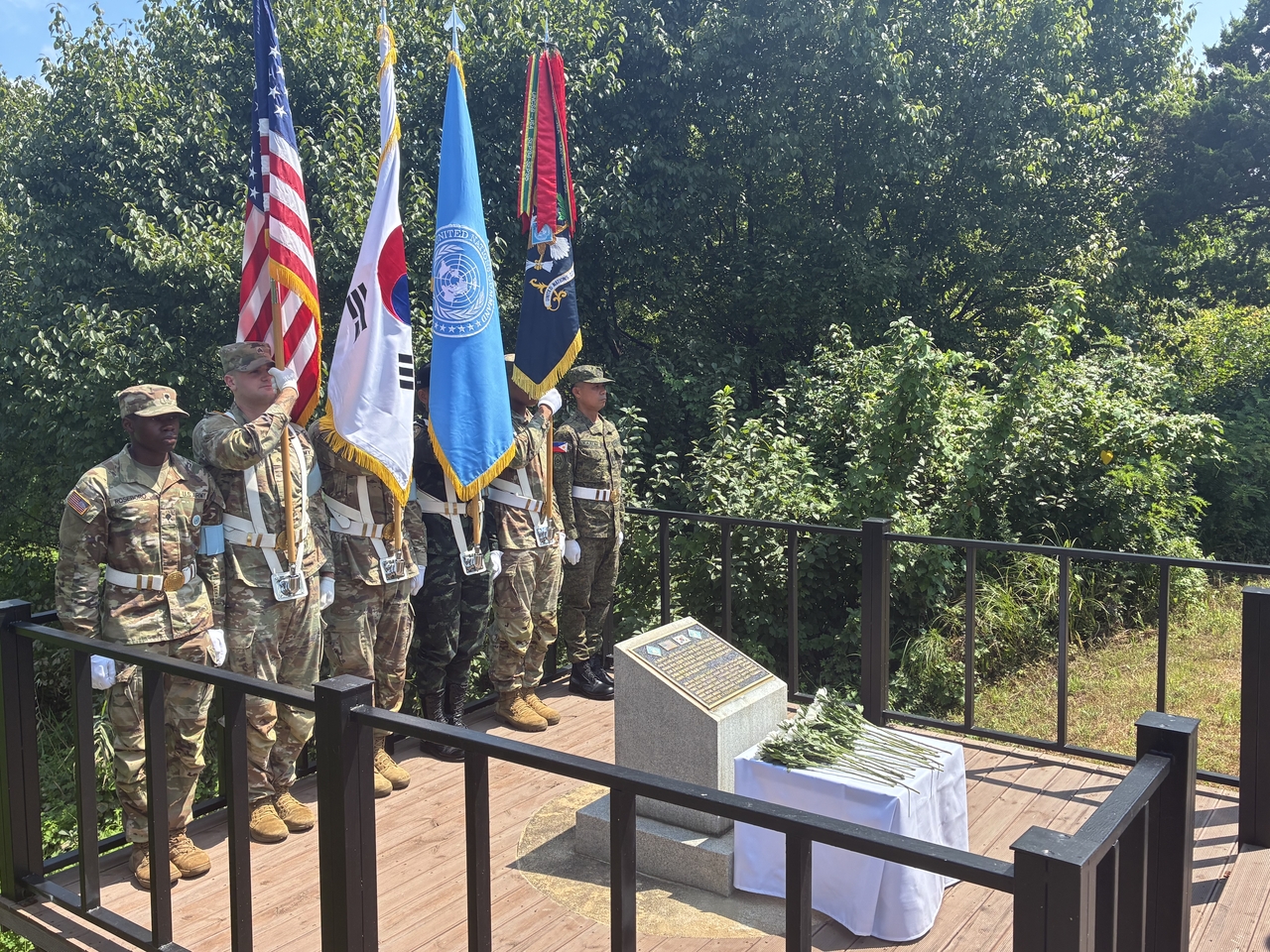
At that same spot Tuesday, Bonifas’ grandchildren, 18-year-old Brady DeCore and 15-year-old Dylan DeCore, read from letters their grandfather had sent home from Korea in 1976.
One passage reflected both the danger around him and his concern for those serving under his command.
“We’ll really have to be on our toes,” Bonifas wrote. “So far, no one has been injured. God, please let it continue. That’s truly my goal.”
For his grandchildren, the words showed that “even while serving in one of the most dangerous places in the world, his greatest concern was the safety of others.”
Adams, meanwhile, said the sacrifice of the two officers did not diminish her hope for eventual peace with North Korea.
“I feel that eventually, over time, we can somehow reach peace. At least, that is my hope,” she said.
But she returned to the relationship forged through the confrontation 50 years ago.
“I just hope for continued cooperation between our two countries.”
flylikekite@heraldcorp.com
- 50 years after JSA killings, victims’ families underscore S. Korea-US military cooperation
- Here's what Gwangju air base relocation means for South Korea's Air Force
- S. Korea, UN Command issue contradicting statements on new armistice unit
-
A decade after brutal killing, Manila steps up protection for Koreans
x
-
LG outearns Samsung in appliances, despite similar sales
x
-
As East Sea warms, sharks move in
x