- RESEARCH BRIEFINGS
An innovative artificial-intelligence application enhances weather forecasting in the difficult subseasonal range, providing accurate forecasts of precipitation, temperature and pressure 3–5 weeks in advance. The tool refines both physics- and AI-based weather models and improves the early prediction of extremes of heat, cold, rainfall and flooding.
This is a summary of: Guan, H. et al. Advancing subseasonal forecasting with machine learning. Nature 658, 951–957 (2026).
doi: https://doi.org/10.1038/d41586-026-03077-0
‘Expert opinion’ is published under a CC BY 4.0 licence and Figure 1 is published under a CC BY-NC-ND 4.0 licence.
References
Cohen, J. et al. WIREs Clim. Change 10, e00567 (2018).
Article Google Scholar
Nathaniel, J. et al. Adv. Neural Inf. Process. Syst. 37, 43715–43729 (2024).
Article Google Scholar
Hwang, J., Orenstein, P., Cohen, J., Pfeiffer, K. & Mackey, L. In Proc. 25th ACM SIGKDD Int. Conf. Knowledge Discovery Data Mining (eds Teredesai, A. & Kumar, V.) 2325–2335 (ACM, 2019).
Mouatadid, S. et al. Adv. Neural Inf. Process. Syst. 36, 7960–7992 (2023).
Article Google Scholar
Mouatadid, S. et al. Nature Commun. 14, 3482 (2023).
Article PubMed Google Scholar
Download references
Related Articles
-
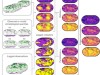 Read the paper: Advancing subseasonal forecasting with machine learning
-
 The outlook for AI weather prediction
-
 Tropical cyclones could be predicted with an extra day’s warning, thanks to an AI model
Subjects
Latest on:
- Machine learning
- Climate sciences
-

Using AI to offer personalized health advice
News & Views
-

Three reasons why AI is not conscious and perhaps never will be
Comment
-

PhD students who write dissertations with AI less likely to stay in academia
News
-
Global emissions slow — but world hurtles towards 2 °C of warming
News
-
The contribution of salt marshes to wave attenuation during extreme storms
Article
-
Amazon carbon emissions driven by human actions amplified by droughts
Article