Lima pitches mineral processing and Chancay port as it looks to expand Korean manufacturing investment
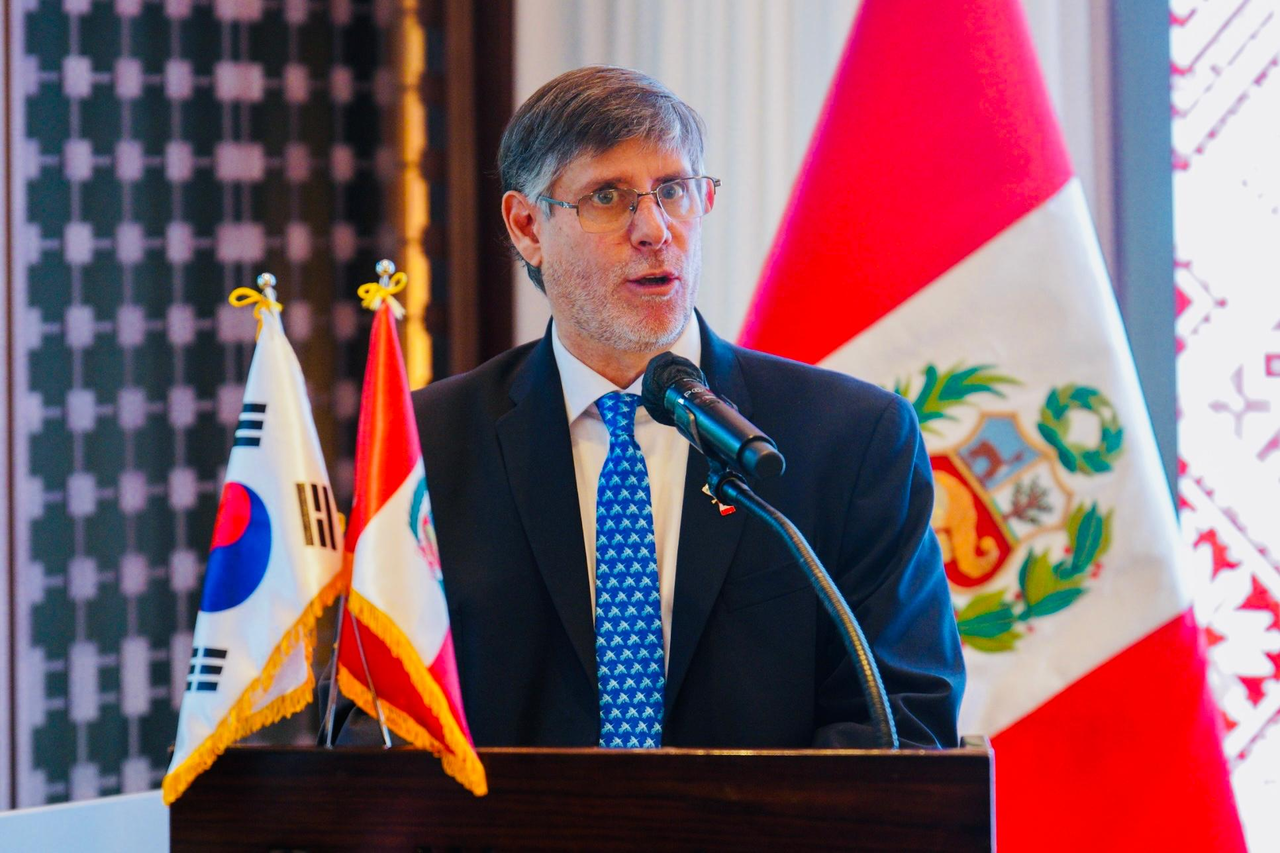
Peru is rolling out privately managed special economic zones, also known as free zones, to attract South Korean investment in critical minerals processing and manufacturing and better connect the resource-rich country to global supply chains, Peruvian Ambassador to South Korea Paul Duclos says.
According to Duclos, the new framework for special economic zones is designed to attract investment in manufacturing and processing rather than simply facilitate trade.
“We are seeking to generate new levels of mineral processing and value addition,” Duclos told The Korea Herald in an interview.
Peru, the world's second-largest copper producer, holds about 12 percent of global copper reserves, according to Duclos. The country also has lithium and other critical minerals, making Peru a potential source of raw materials for South Korea, whose battery, electric vehicle and advanced manufacturing industries rely heavily on imports. The Peruvian government also wants Korean companies to go beyond buying minerals and invest in local processing.
South Korea imported about $618 million worth of copper ores and concentrates from Peru in 2024, making Peru its fourth-largest supplier after Chile, Indonesia and Canada, according to World Bank trade data.
The two countries have also expanded cooperation in the sector. Their industry ministries signed an agreement in November 2024 covering critical minerals policy, supply chain information, joint exploration and development, and technical exchanges.
“This creates an opportunity not only to secure access to critical minerals,” Duclos said, but also to participate in their processing in Peru.
Peru's private free zones are intended for manufacturing and other productive activities, including industrial production, assembly and related services. The framework is designed to encourage companies to establish operations in Peru rather than limit their involvement to sourcing commodities.
Peru enacted legislation in September 2025 establishing tax and customs incentives for privately operated economic zones and issued implementing regulations in April. The rules set procedures for establishing zones and selecting private operators, including a minimum investment commitment of 1,500 tax units over two years.
Chancay expands Asia links
The Port of Chancay is also expected to improve shipping links between South America and Asia.
COSCO Shipping Ports owns 60 percent of the roughly $3.6 billion port, with Peruvian private capital holding the remaining 40 percent.
Duclos said the port would be supported by transport corridors and industrial areas, including the Ancon Industrial Zone.
The Chancay-Shanghai route cuts transit time by about 12 days compared with traditional routes, according to Duclos.
He said the port could eventually develop stronger connections with other Asian ports, including Busan.
Chancay's direct Asian links currently center on China, however, meaning its value to Korean companies would depend partly on the development of shipping links with Korean ports and supporting transport infrastructure.
Duclos said Peru's mineral resources, processing zones and Pacific shipping links could allow Korean companies operating there to serve other Latin American markets. Peru also has free trade agreements with major economies.
Room for Korean investment
South Korea and Peru have had a free trade agreement since 2011, and bilateral trade has increased more than sixfold since it took effect, according to Duclos.
Peru was among Korea's three largest investment destinations in Latin America between 2018 and 2023, receiving about 22 percent of Korean foreign direct investment in the region, Duclos said, citing Korea Eximbank data.
However, Korea's overall economic engagement with Latin America remains relatively small. Goods trade with the region accounted for 3.9 percent of Korea's global trade between 2020 and 2024, according to figures cited by Duclos.
Peru's emphasis on processing investment reflects a broader effort to capture more value from its natural resources rather than rely primarily on raw-material exports.
Economic ties are already expanding beyond mining. Duclos pointed to cooperation in modernizing shipbuilding facilities in Callao, co-producing naval vessels and armored vehicles, and involving Peruvian companies in supply chains linked to Korean fighter aircraft.
Those industrial ties, combined with Peru's mineral resources and Pacific location, could provide a broader base for Korean manufacturing investment in the country.
sanjaykumar@heraldcorp.com