Despite Nvidia, Brookfield backing, Korean financial firms remain wary of demand and profitability
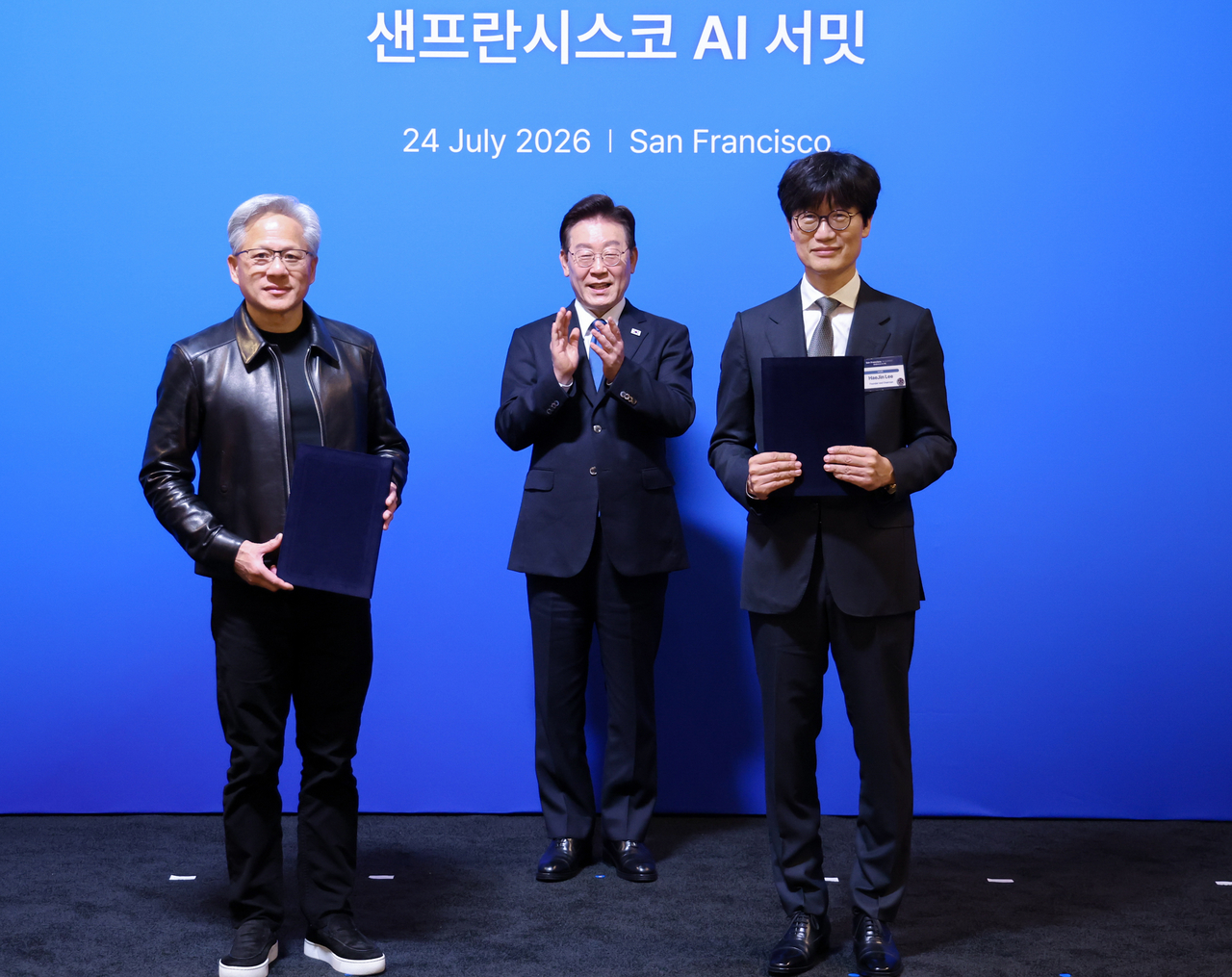
Naver’s plan to build one of South Korea’s largest AI data centers in Sejong has heavyweight names behind it: Nvidia, global asset manager Brookfield and potentially some of the country’s biggest banks and securities firms.
Yet financing a $10 billion AI infrastructure project is proving anything but straightforward.
Naver and Brookfield are discussing up to $9 billion in financing for the first phase of an expansion of Naver’s Gak Sejong AI factory, which would increase its capacity to 200 megawatts. Their initial 12-week negotiation period expires next Wednesday, but talks are expected to continue as the two sides work out the financing structure and assess the project’s commercial viability, according to financial sources.
The negotiations offer an early test of whether Korea’s project finance market can support the enormous capital requirements of the AI infrastructure boom.
Unlike a conventional data center project, an AI data center requires investment not only in buildings, power and cooling systems but also in costly graphics processing units. That makes lenders' calculations more complicated: They must determine whether demand, utilization rates and GPU workloads can generate enough recurring revenue to justify billions of dollars in upfront investment.
“Adding GPU costs to data center development means the funding requirement can reach trillions of won, making large-scale financing unavoidable,” said an industry source involved in project financing. “But lenders cannot move quickly because there are still questions over real demand for AI data centers and GPUs and whether the investment will translate into corporate earnings.”
How will $10 billion project be financed?
Naver, Nvidia and Brookfield plan to expand Gak Sejong from an initial 55 MW to 200 MW, with the facility expected to house about 100,000 Nvidia GPUs.
Operations are scheduled to begin at 55 MW in the first half of 2027, before capacity rises to 100 MW by the end of that year and 200 MW in 2028.
Brookfield is in talks with Naver over a financing package of up to $9 billion for the $10 billion expansion of Gak Sejong to 200 MW, while Nvidia plans to invest $1 billion. The 200 MW project is part of Naver’s longer-term plan to scale the AI factory to 1 GW.
The final structure of Brookfield’s financing package, including how much funding could be raised from Korean financial institutions, remains under discussion.
KB Kookmin, Shinhan, Hana and Woori banks, along with state-run Korea Development Bank, are considering participating. NH Investment & Securities, Korea Investment & Securities and KB Securities are also thinking about joining the financing, according to financial sources.
Securities firms could arrange and underwrite portions of the financing before selling down their positions to other investors, limiting their direct exposure while earning arrangement and underwriting fees.
Why isn't Nvidia's involvement enough?
The presence of Nvidia — alongside Naver and Brookfield — gives the project unusually strong sponsors. But lenders ultimately finance cash flows, not corporate names.
For an AI data center, that means assessing whether enough customers will consistently pay to use its computing capacity.
Utilization is particularly important because GPUs represent a substantial portion of the investment and can become technologically outdated much faster than conventional data center infrastructure.
Rapid advances in AI chips also make it harder to estimate the residual value and competitiveness of hardware several years into a financing period.
That creates a different risk profile from traditional data centers backed by long-term leases with large cloud providers.
“AIDCs with stable demand and secured tenants can attract capital, but financial firms are not funding every project simply because it is related to AI,” another financial source said. “They are becoming increasingly selective.”
What happens when 200 MW becomes 1 GW?
The bigger question comes after the first phase.
Naver ultimately envisions expanding the AI factory to 1 GW — five times the capacity currently under discussion.
Korea has little experience financing a single AI data center on that scale, raising questions not only about capital but also about power availability, GPU procurement and whether demand can grow quickly enough to absorb the additional computing capacity.
“A 100 MW-class project and a gigawatt-scale project are on completely different levels in terms of funding, power supply and GPU procurement,” an AI infrastructure industry official said.
“There are still questions over how much demand and revenue hyperscale AI data centers can generate. Financial firms are assessing whether the expansion of AI investment can translate into viable projects and sustainable profits.”
The scale also means financing is likely to have to proceed in stages rather than through a single funding package.
Why are financial firms interested?
Despite those risks, AI data centers are emerging as an increasingly attractive alternative for Korean financial institutions as the traditional real estate project finance market struggles with higher construction costs, elevated borrowing costs and weak development economics.
Data centers can offer infrastructure-like characteristics and potentially stable long-term cash flows when backed by strong tenants.
But the shift toward AI adds another layer of risk. Investors must consider not only property and power infrastructure but also rapidly changing computing technology and uncertainty over future AI demand.
That is why the Naver project could become an important precedent.
If Naver and Brookfield can put together financing for the 200 MW phase and attract substantial participation from Korean institutions, the deal could provide a template for financing the next generation of large AI infrastructure projects.
If financing proves difficult even with Naver, Nvidia and Brookfield involved, it would also demonstrate the limits of investor appetite for the enormous capital requirements behind the AI boom.
ch0221@heraldcorp.com