
Richard Kojan and his colleague Patient Kipala Wenga put on personal protective equipment before visiting people in the red zone of the Ebola treatment centre in the Democratic Republic of the Congo. Credit: ALIMA
On 15 May this year, an Ebola disease outbreak caused by the rare Bundibugyo virus was declared in the Democratic Republic of the Congo (DRC) and Uganda. This species was named after the Ugandan district in which it was first recorded in 2007. In the two previous known Bundibugyo virus outbreaks in these countries, the fatality rate was between 30% and 50%. By 23 September, the number of cases in the DRC had reached 7,890 and around 3,799 people had died — a death rate of around 48%.
There is no licenced vaccine or cure for this species of Ebola virus. Two of four potential Bundibugyo vaccines — which aim to train the body’s immune response to the virus — are currently in clinical trials, as are a number of drugs that could be given to people who have potentially been exposed to the virus but do not yet have symptoms.
Nature Spotlight: Infectious diseases
Richard Kojan, an intensive-care physician at The Alliance for International Medical Action (ALIMA) in Paris, has been working on the frontlines of the response in the DRC. Health-care workers such as Kojan face many challenges. The symptoms of Bundibugyo infection are very similar to that of the more-deadly Zaire species: fatigue, headaches, fever, bleeding and severe diarrhoea and vomiting. Many people with these diseases arrive at treatment centres in circulatory shock and ultimately die from multi-organ failure.
Kojan has more than two decades of medical experience. He has worked as an anaesthetist in public and private hospitals since 2002, after graduating as a specialist in intensive care and anaesthesiology from the University of Kinshasa. He joined ALIMA in 2010.
What are the challenges of working on an Ebola outbreak?
We don’t have vaccines for many of the viruses in the filovirus family, which includes the Ebola viruses. As well as this, health systems in low-income countries such as the DRC are not well prepared for epidemics like these, and we tend to discover outbreaks late: that is why death rates are often very high at the beginning of an outbreak. While we’re running diagnostic laboratory tests, the virus continues spreading. Low resource levels also mean that health-care workers aren’t well prepared with measures for infection prevention and control, such as isolating patients, and they might not have the required medical equipment.
Why is there often a delay in diagnosing Ebola?
Ebola is not a health-care worker’s first thought when someone presents with symptoms. For example, fatigue is one of the first symptoms, but lots of people in this region are working incredibly hard, many of them are fatigued. No one sees a person with that symptom and immediately thinks they might have Ebola, which makes it hard to spot the early stages of an outbreak.
Better diagnostics could have limited this Ebola outbreak
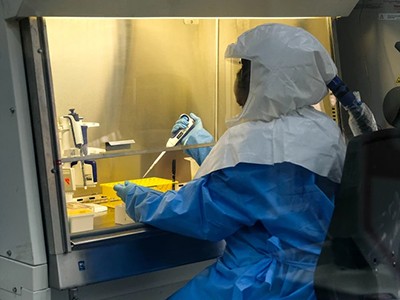
Also, Ebola symptoms are very similar to those of many other tropical diseases, including malaria. Even when people seek medical treatment quickly, other diseases must be ruled out before Ebola is considered. As this is happening, time is being lost because the virus is still multiplying inside the person’s body.
What is it like on the frontlines of an outbreak?
It’s very difficult. Many people arrive at our treatment facilities with metabolic disorders, electrolyte imbalances from loss of fluids, unstable blood pressure and blood flow to vital organs, and in shock or respiratory distress. Health-care workers need to urgently correct electrolyte imbalances with intravenous potassium and treat respiratory issues with oxygen. Antibiotics are given to prevent bacterial infection — one of the major complications of Ebola — and adrenaline is used to counter shock.
All of this is challenging because people with Ebola are kept in separate rooms in the hospital in an area known as the red zone. To enter it, health-care professionals must put on full personal protective equipment (PPE), which takes time. This makes it difficult to monitor patients continuously and to intervene quickly when there is a problem. The PPE makes you sweat so much that it’s hard to stay inside the red zone for more than 30 minutes. After 20 minutes, you start to feel bad. But all of our facilities are full of patients. So, you can’t go inside for just 30 minutes. You would never be able help everyone in that time.