- NEWS AND VIEWS
Ultraprecise clocks that use transitions in atomic nuclei to keep time show promise as a next-generation time standard and for probing fundamental physics.
By
-
Akio Kawasaki
-
Akio Kawasaki is at the National Metrology Institute of Japan, National Institute of Advanced Industrial Science and Technology, Tsukuba, Ibaraki 305-8563, Japan.
-
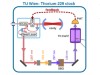
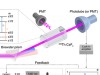
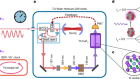
For decades, the most precise timekeepers have been atomic clocks. The mechanism of these clocks relies on the transition of electrons between the energy levels of atoms or ions. But some applications require even more precise timepieces — such as nuclear clocks, which depend on transitions that occur in the nuclei of atoms. Writing in Nature, Toscani De Col et al.1 and Huang et al.2 report the first implementations of a nuclear clock, a milestone in the field of metrology. Toscani De Col et al. also demonstrate that their clock shows promise for detecting a possible form of dark matter — the invisible material that makes up most of the matter in the Universe.
doi: https://doi.org/10.1038/d41586-026-03060-9
References
Toscani De Col, L. et al. Nature https://doi.org/10.1038/s41586-026-11084-4 (2026).
Article Google Scholar
Huang, B. et al. Nature https://doi.org/10.1038/s41586-026-11084-4 (2026).
Article Google Scholar
Aeppli, A., Kim, K., Warfield, W., Safronova, M. S. & Ye, J. Phys. Rev. Lett. 133, 023401 (2024).
Article PubMed Google Scholar
Zhang, B. et al. Phys. Rev. Lett. 136, 053202 (2026).
Article PubMed Google Scholar
Peik, E. & Tamm, C. Europhys. Lett. 61, 181 (2003).
Article Google Scholar
von der Wense, L. et al. Nature 533, 47–51 (2016).
Article PubMed Google Scholar
Zhang, C. et al. Nature 633, 63–70 (2024).
Article PubMed Google Scholar
Ooi, T. et al. Nature 650, 72–78 (2026).
Article PubMed Google Scholar
Arvanitaki, A., Huang, J. & Van Tilburg, K. Phys. Rev. D 91, 015015 (2015).
Article Google Scholar
Download references
Competing Interests
The author declares no competing interests.
Related Articles
-
 Read the paper: A thorium-229 optical nuclear clock with feedback loop
-
 Read the paper: A nuclear clock synchronized to 229Th
-
 Best clock ever: timekeeper based on lutetium atoms wows researchers
-
 The first ticking ‘nuclear clocks’ are here — what can they do?
-
See all News & Views
Subjects
Latest on:
- Nuclear physics
- Quantum physics
- Optics and photonics
-
A thorium-229 optical nuclear clock with feedback loop
Article
-
Continuous-wave laser absorption spectroscopy of the thorium-229 nucleus
Article
-

Exploring baryon semileptonic decays through polarization and entanglement
Article
-
A thorium-229 optical nuclear clock with feedback loop
Article
-
A nuclear clock synchronized to 229Th
Article
-
This super-cold microscope could spur a quantum revolution
News
-
A thorium-229 optical nuclear clock with feedback loop
Article
-
Experimental observation of critical topology
Article
-
Self-aligned optical microcomb emerging between octave-separated lasers
Article