Backed by 30,000 signatures, supporters urge approval of new campus as temporary premises face February deadline
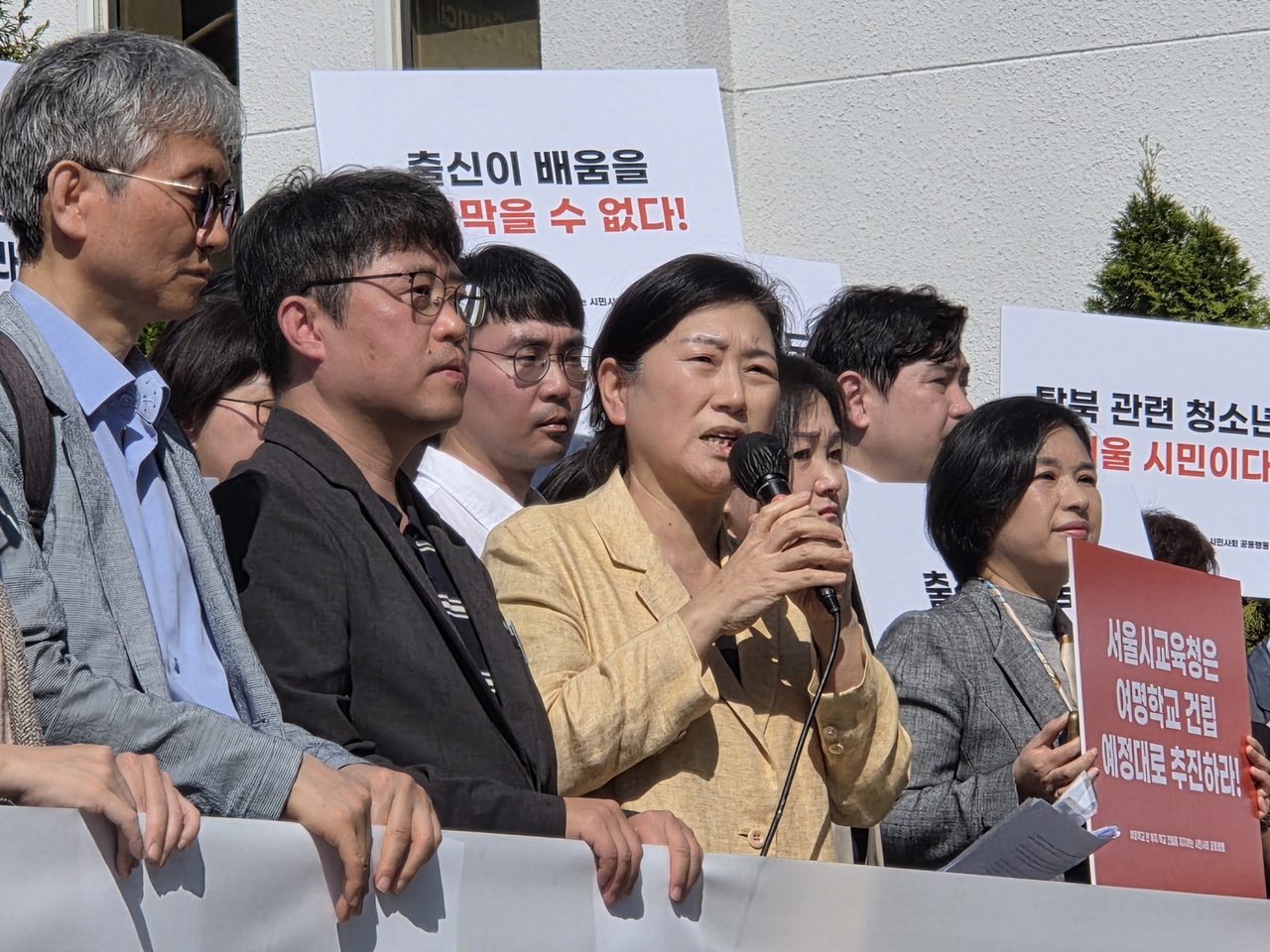
Students, graduates and supporters of Yeomyung School gathered outside the Seoul Metropolitan Council on Wednesday to appeal for a lasting home for a school that helps young people from North Korean defector families adjust to life in South Korea.
One placard read, “Young people from North Korean defector families are Seoul citizens, too.”
The school’s 105 students currently attend classes at a former elementary school in Gangseo-gu, where permission to use the building expires in February.
A plan to build a new campus on the same site has faced opposition from area residents, prompting Wednesday’s appeal to education authorities and city council members to move the project forward.
“These children have a right to education, and it is the state’s duty to guarantee that right,” Principal Cho Myung-sook said at the press conference.
“They are not children to be feared or shunned. They are just like our own children, lovable children who deserve to be cared for.”
Organizers said their coalition comprised 261 civic groups and had gathered more than 30,000 signatures supporting the project.
Founded in 2004 and accredited by Seoul education authorities in 2010, Yeomyung has operated in the former Yeomgang Elementary School building since 2023.
On July 24, the school, the Seoul Metropolitan Office of Education, the Ministry of Unification and Hyundai Motor Group signed an agreement to build a new school building on part of the same site. Hyundai pledged 6 billion won ($4.48 million), while the school said it would contribute another 10 billion won raised over the years.
'Not in my back yard'
Some area residents oppose the project, saying Yeomyung was allowed to use the site only temporarily and that they were not adequately consulted about plans for a new building.
Residents have also argued that the plan departs from earlier promises to develop a public kindergarten and early-childhood education facilities on the former elementary school site, according to local reports. Some have expressed unease about placing those facilities alongside a school for students from North Korean defector families.
The Education Office has said it would separate the facilities’ access routes and develop measures to address traffic, noise and student safety.
“Opposition banners remain posted near the school and nearby apartment complexes, while some opponents are planning to distribute leaflets at an upcoming festival,” said Kim Hae-young, who has lived in Gangseo-gu for nine years and joined the press conference in support of the project.
Principal Cho questioned residents’ attempts to determine the school’s future on land owned by the Education Office.
“The owner of this school site is the Seoul Metropolitan Office of Education. We signed a contract with the Education Office, but residents who have no authority over the site are asserting their rights,” she said.
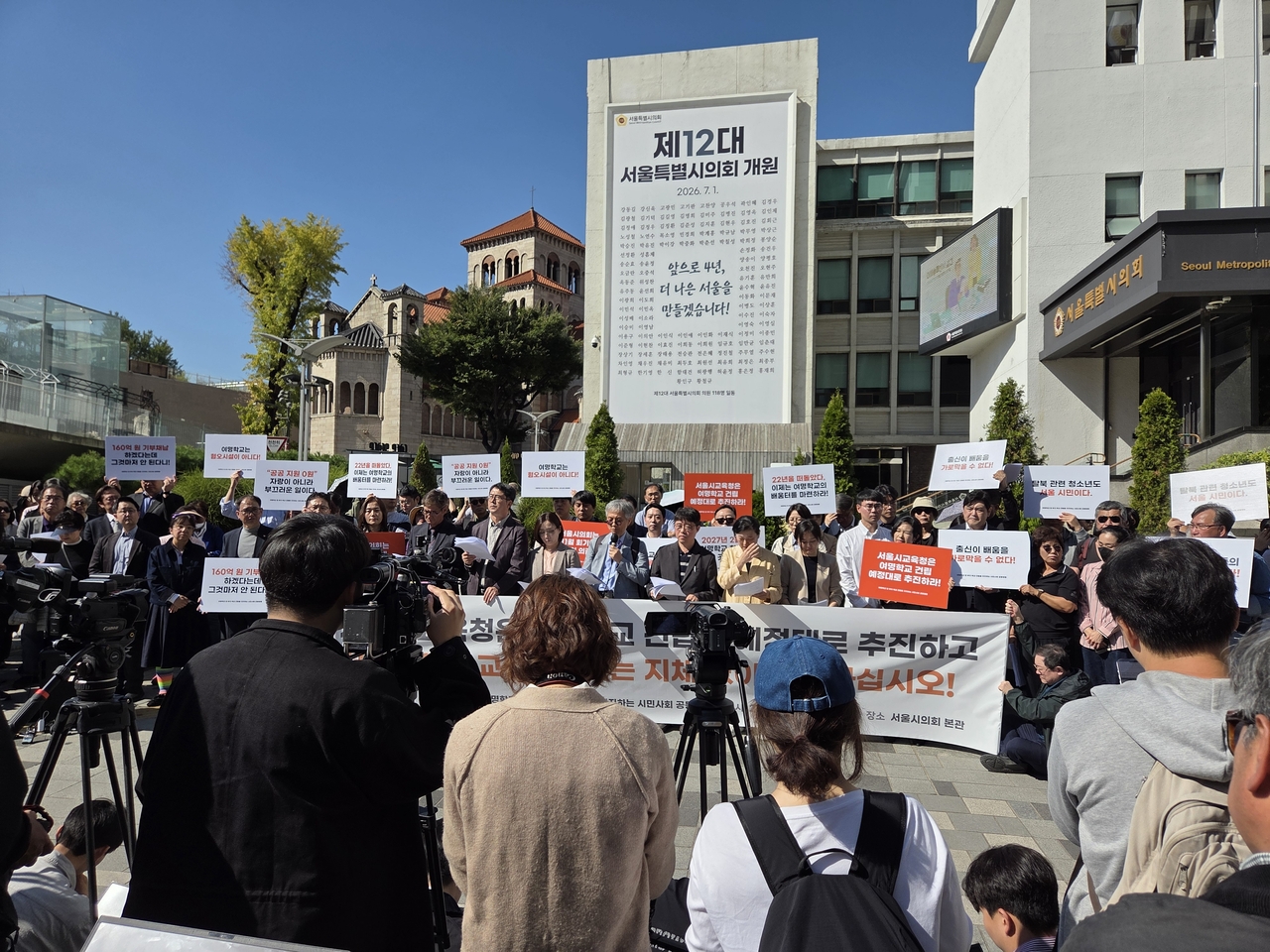
The coalition said students had been exposed to hostile messages demanding that the school leave.
“The children are already intimidated, worrying that residents might reject them or view them as a threat,” Cho said. “They lived in fear in North Korea and China. Should they have to flinch again here in South Korea?”
Eom Esther, a 2011 Yeomyung graduate, urged residents to meet the students before judging them.
She said the school helped her overcome language and academic difficulties after arriving in South Korea. In 2014, she founded UniSeed, a volunteer group whose members from North and South Korea help people experiencing homelessness and older people living alone.
“We received help while adjusting to a new environment, and now we have grown into people who look after our neighbors,” Eom said.
Kim said she found it “painful” that students were being asked to prove they posed no danger.
“The students are the ones who need protection, not people who pose a threat,” she later told The Korea Herald.
The dispute follows an earlier setback in 2019, when a planned move to Eunpyeong-gu fell through amid resident opposition and the suspension of a land-use change needed for the project.
Approval still pending
The coalition said the proposed building would occupy about 10.8 percent of the former school site. It would be donated to the Education Office upon completion, with Yeomyung receiving permission to use it for 20 years.
The project still requires administrative reviews and city council approval of a public-property management plan covering the Education Office’s acquisition of the building.
As of Tuesday, that plan had not been submitted to the council, News1 reported, citing a council official. The report said the education committee favored approving the proposal once it was submitted, although a full council vote would also be required.
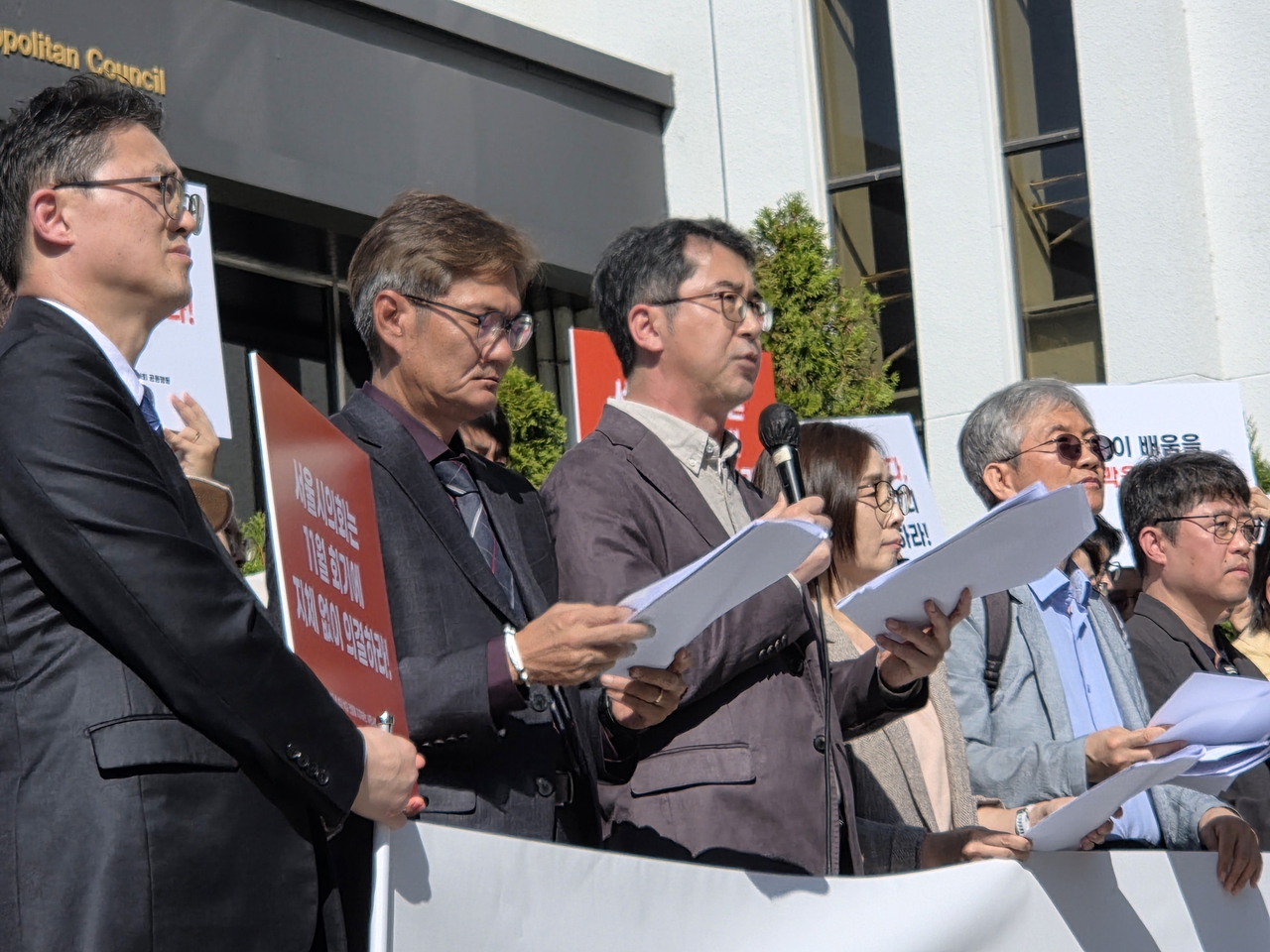
The coalition urged the Education Office to publish a timetable for the remaining procedures and arrange temporary classrooms after the school’s current permission to use the building expires.
It also called for the council’s education committee to review and approve the public-property management plan during its November session.
Organizers said they would seek further declarations of support from Gangseo residents and figures in religion, education, law, culture and human rights.
shwang9@heraldcorp.com