Beds remain empty and surgeries lag as regional hospitals face a yearslong wait for new specialists
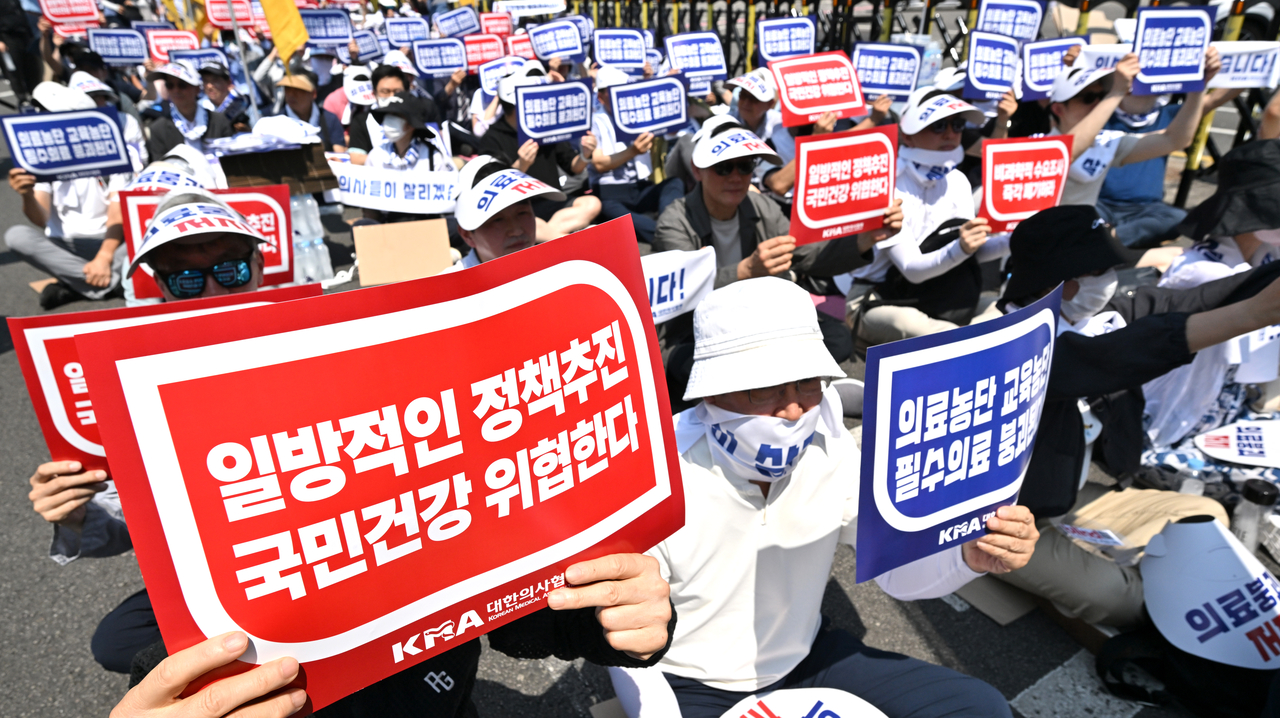
Korea’s push to rebuild medical care outside the capital faces a persistent challenge — regional hospitals have struggled to restore services disrupted by the government-doctor standoff, while training new specialists will take years.
Data released Tuesday showed average bed occupancy at nine national university hospitals outside the Seoul area remained at 56.4 percent in 2025, unchanged from 2024 and well below 73.6 percent in 2023. Surgical volumes also remained sharply below pre-dispute levels.
The Health Ministry figures, released by Rep. Seo Mi-hwa of the Democratic Party of Korea, cover all nine national university hospitals outside the Seoul National University Hospital system.
The decline followed the government’s February 2024 decision to increase annual medical school admissions from 3,058 to 5,058. Trainee doctors walked out of hospitals en masse in protest, while many regular physicians also departed as workloads increased in their juniors' absence.
Chungbuk National University Hospital recorded the largest drop in bed occupancy, from 77.2 percent in 2023 to 47.4 percent in 2025 -- a decline of 29.8 percentage points. Several other hospitals saw decreases exceeding 20 percentage points.
Surgical activity also contracted. Chungbuk National University Hospital performed 8,373 surgeries in 2025, down 37.4 percent from 13,368 in 2023.
Over the same period, surgical volumes fell 37.6 percent at Pusan National University Hospital, 32.6 percent at Kyungpook National University Hospital, 30.1 percent at Chonnam National University Hospital and 27.4 percent at Kangwon National University Hospital.
Experienced doctors in short supply
Trainee doctors began returning in large numbers in September 2025. Their return, however, has not resolved shortages of experienced physicians.
Separate data released by Rep. Jeon Jin-sook showed that the number of regular physicians at 16 national university hospitals fell from 3,797 in 2024 to 3,704 in 2025 and 3,647 in 2026, even as trainee staffing recovered.
Regional hospitals also face a substantial gap in specialist staffing compared with the Seoul National University Hospital system.
As of June, Seoul National University Hospital had 4.72 specialists per 10 beds, compared with 2.37 at the other nine national university hospitals, according to data released Monday by Rep. Park Yong-kab.
Park attributed the shortage to less favorable working conditions than at private hospitals in Seoul, as well as doctors’ preference for working in the capital region.
He warned that an aging faculty and heavier on-call workloads could prompt further departures, weakening regional hospitals’ ability to provide essential care around the clock.
A long wait for replacements
The government wants regional national university hospitals to serve as the final referral point for seriously ill patients in their respective regions. A regional doctor program is central to its efforts to expand the medical workforce outside the capital.
The program’s first selection process began in September. Medical schools are expected to admit 488 students through the regional track in 2027 and 610 in 2028.
Students will receive government support for their education and must work in their designated region for 10 years after obtaining their medical licenses.
Medical groups have questioned whether the program can deliver lasting gains without improvements in working and living conditions in regional areas.
Rep. Heo Jong-sik has urged the government to prepare for retirements among existing specialists, noting that students entering the program next year will take nearly a decade to qualify as specialists.
He cited an estimate that 100 of the 498 specialists involved in major cancer surgery and treatment and pediatric leukemia care will be aged 65 or older by 2037. He also pointed to the aging specialist workforce outside the capital.
“While the government trains new medical personnel through the regional doctor system, experienced specialists at regional national university hospitals could leave first,” Heo said. “The government should begin estimating and preparing for staffing gaps by hospital and medical specialty now.”
forestjs@heraldcorp.com