New York-based designer opens Herald Design Lounge with the assertion that life keeps improving over the long run
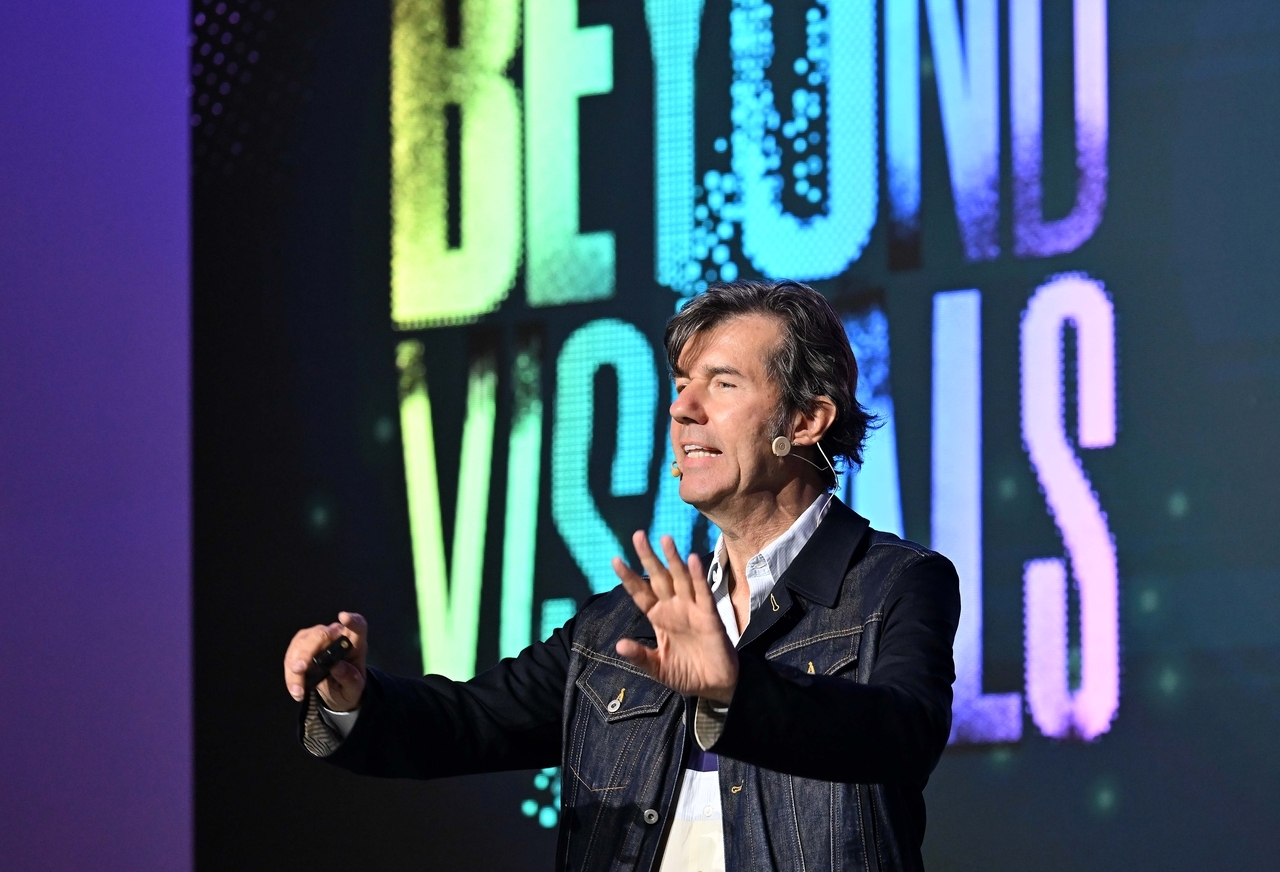
With wars dragging on and stories of artificial intelligence going rogue filling every feed, can we really say with confidence that the world is getting better? According to Stefan Sagmeister, the answer depends on how far back you're willing to look.
The New York-based Austrian designer is best known for creating album art and packaging for the Rolling Stones, Lou Reed and Talking Heads, work that has won him two Grammys. He opened Friday's Herald Design Lounge 2026 at Dongdaemun Design Plaza with "Finally, Something Good," a keynote on his years-long endeavor to chart human progress through design.
After a show of hands found the audience more hopeful about their own futures than about humanity's, Sagmeister pointed to a phenomenon known as the optimism gap, in which people in every community expect to do better than the world at large.
"All the people in the world think that they will do better than the world is doing," he said. "If everybody thinks that they themselves will do better than everybody else, there is something wrong in that thinking."
Rather than leaning on charts, Sagmeister presented his data through art and installations built from everyday objects. Examples ranged from lenticular prints that change with the viewing angle to an outdoor installation at DDP that turned inflatable air dancers into a bar graph.
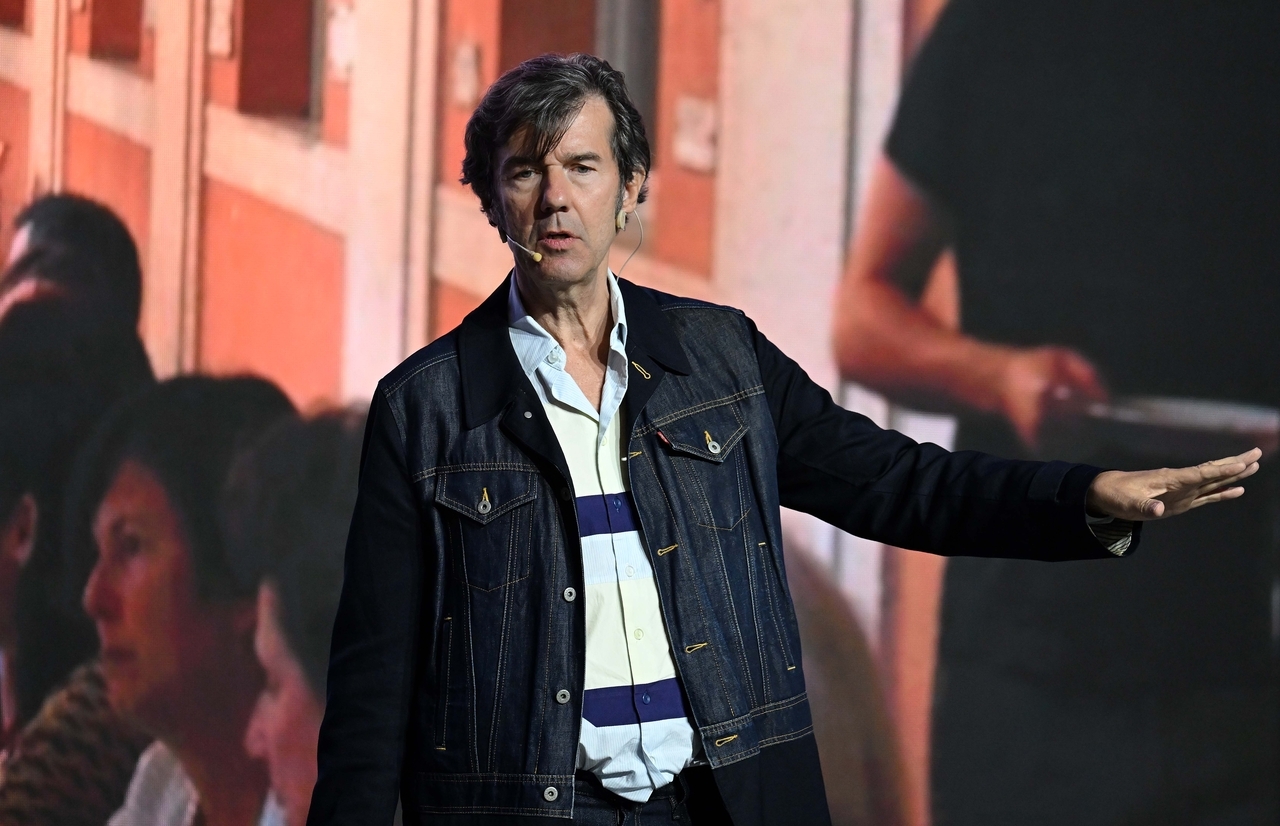
Sagmeister traced his interest in the subject to a dinner at the American Academy in Rome nine years ago. A lawyer seated next to him was convinced that liberal democracy as we know it was coming to an end. Sagmeister looked up the figures that night and found the opposite: The world was about as democratic as it had ever been.
"Two hundred years ago, there was one democratic country, the United States, and now the United Nations says there are 86," he said. "This very smart person, who was reading five newspapers in three languages every day, completely, utterly misjudged the situation."
He blames an ever-shrinking news cycle, which has gone from the yearly almanac his grandparents read to the constant churn of social media that keeps audiences perpetually hooked on bad news. "Scandals and catastrophes happen very quickly and fit beautifully into the short cycle, while good things take a long time to become good."
His recent series, "Now is Better," features 19th-century oil paintings with holes filled with minimalist-looking graphics that chart long-term progress in health, education and voting rights.
Some of the canvases came from unsold stock at his great-great-grandparents' antique shop, which ties the work to his own family's past. His great-great-grandparents lost six children. His grandmother had to wait until she was 48 to vote, after Austria granted women suffrage in 1919.
He held up Korea as a case study in rapid progress. "I've been coming here since the 1990s and saw this incredible transformation," he said. "Life expectancy moved from 26 years to 86 years, a development that no other country in the world was able to do."
"Does this mean that everything is fantastic? No, of course not," he added. "There is much, much to do, and these advancements were created by people who worked very, very hard for them."
That message of hope has found an audience in the unlikeliest of places. When a Ukrainian organizer invited him to bring the exhibition to Lviv, Sagmeister doubted it would ever happen.
The show eventually went up in converted containers at a park as Russian drones flew overhead. His talk there drew 3,500 people, with hundreds thanking him for coming.
He closed his talk in Seoul by repeating his opening poll, which drew a few more hands on the optimistic side. "I changed a couple of minds," he said.
moonkihoon@heraldcorp.com