Singapore-based Flashlight’s W906.6b bid tests whether five affiliates can justify keeping their holdings in security firm
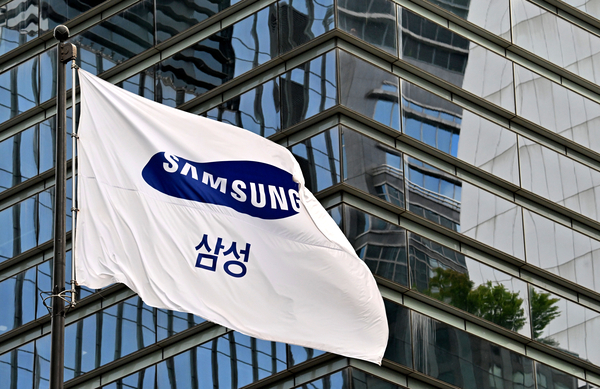
S-1 Corp. is a small part of Samsung’s sprawling business empire. But an activist investor’s bid for Samsung affiliates’ stakes in the security company poses the question: When should a conglomerate’s companies sell their holdings in one another?
Singapore-based Flashlight Capital Partners brought that question into focus in August, offering 906.6 billion won ($675 million) for the S-1 shares held by five Samsung affiliates: Samsung SDI, Samsung Life Insurance, Samsung Fire & Marine Insurance, Samsung Card and Samsung Securities.
The offer values S-1 at about 4.4 trillion won, above its market capitalization of roughly 3.2 trillion won. Flashlight, which owns more than 1 percent of S-1, argues that changes to its ownership and governance could unlock value.
The Samsung affiliates have rejected the offer, citing uncertainty over whether the transaction would be completed. Flashlight has responded by proposing an open auction.
The dispute is about more than the price. It tests whether the affiliates can explain why holding shares in a security company remains more valuable than selling them.
Why target S-1?
S-1 is Korea’s largest security firm, with a market share of about 50 percent. Unlike Samsung’s central ownership links, its shares offer an activist a way to challenge the rationale for affiliate holdings without directly targeting the group’s core control structure.
Flashlight sees a gap between the strength of S-1’s business and its stock-market performance. The company’s shares have fallen about 30 percent over the past decade despite its leading market position.
According to Flashlight, S-1 trades at an enterprise value of 3.6 times earnings before interest, taxes, depreciation and amortization, compared with the roughly 12 times multiple assigned to rival SK Shieldus in a transaction several years ago. The comparison involves different companies and periods, but underpins the investor’s argument that S-1 is undervalued.
Flashlight has also criticized the appointment of Samsung executives with limited security-industry experience to S-1’s leadership and board.
“We are prepared to invest in companies regardless of whether they are affiliates of major conglomerates, if we see strong businesses and companies with governance structures that are not aligned with global standards or are otherwise underdeveloped,” a Flashlight official said.
Why does Samsung matter to S-1?
S-1’s ties to Samsung are central to its business.
In 2025, Samsung Electronics, Samsung Life Insurance and Samsung Display accounted for about 35 percent of its revenue, or roughly 1.02 trillion won, according to company disclosures.
Those relationships provide a relatively predictable revenue base. S-1 also protects sensitive facilities, including Samsung Electronics’ semiconductor plants, which house technologies designated by the government as national core technologies.
Replacing a security provider at such facilities would not necessarily be straightforward. Familiarity with operations, reliability and continuity all help explain the durability of S-1’s business relationships.
But the strength of those commercial ties does not, by itself, settle the ownership question. The issue is whether the five affiliates need to retain their shares to preserve those benefits — and whether doing so offers a better return than a sale.
What must the affiliates justify?
Last year’s revision to the Commercial Act expanded directors’ fiduciary duties to include shareholders as well as the company, adding weight to demands that boards explain decisions affecting shareholder value.
An above-market offer does not automatically make selling the best option. Boards must also assess execution risk, the value of future returns and any strategic benefits of continued ownership.
For the Samsung affiliates, the challenge is to demonstrate those benefits. Flashlight’s proposed auction seeks to address their stated concern about transaction certainty by opening the process to other bidders.
Whether an auction would attract credible buyers or produce an acceptable price remains unresolved. For now, the two sides disagree over whether a sale process should begin at all.
Can other shareholders influence the outcome?
The Samsung affiliates and their ally, Japanese security company Secom, together hold roughly 45 percent of S-1.
Other significant investors include the National Pension Service and Brandes Investment Partners, each with 6.03 percent, and Fidelity Investments with 5.12 percent. Treasury shares account for about 11 percent.
Those outside investors have limited ability to force change individually, but could add pressure for a clearer explanation of the ownership structure.
An official at London-based shareholder advisory firm SquareWell Partners said global investors increasingly scrutinize group holdings that lack a “clear strategic rationale.” They could be receptive to Flashlight’s argument if the affiliates cannot adequately justify retaining their stakes.
Some institutional investors may also own shares in the Samsung companies holding S-1 stock, giving them another route to raise questions directly with the boards deciding whether to sell.
“Equally, that overlap provides a channel Flashlight could use to build support for a sale,” the official said.
The test, then, extends beyond S-1’s valuation. It is whether each Samsung affiliate can make a convincing case that keeping its stake serves its own company and shareholders.
silverstar@heraldcorp.com