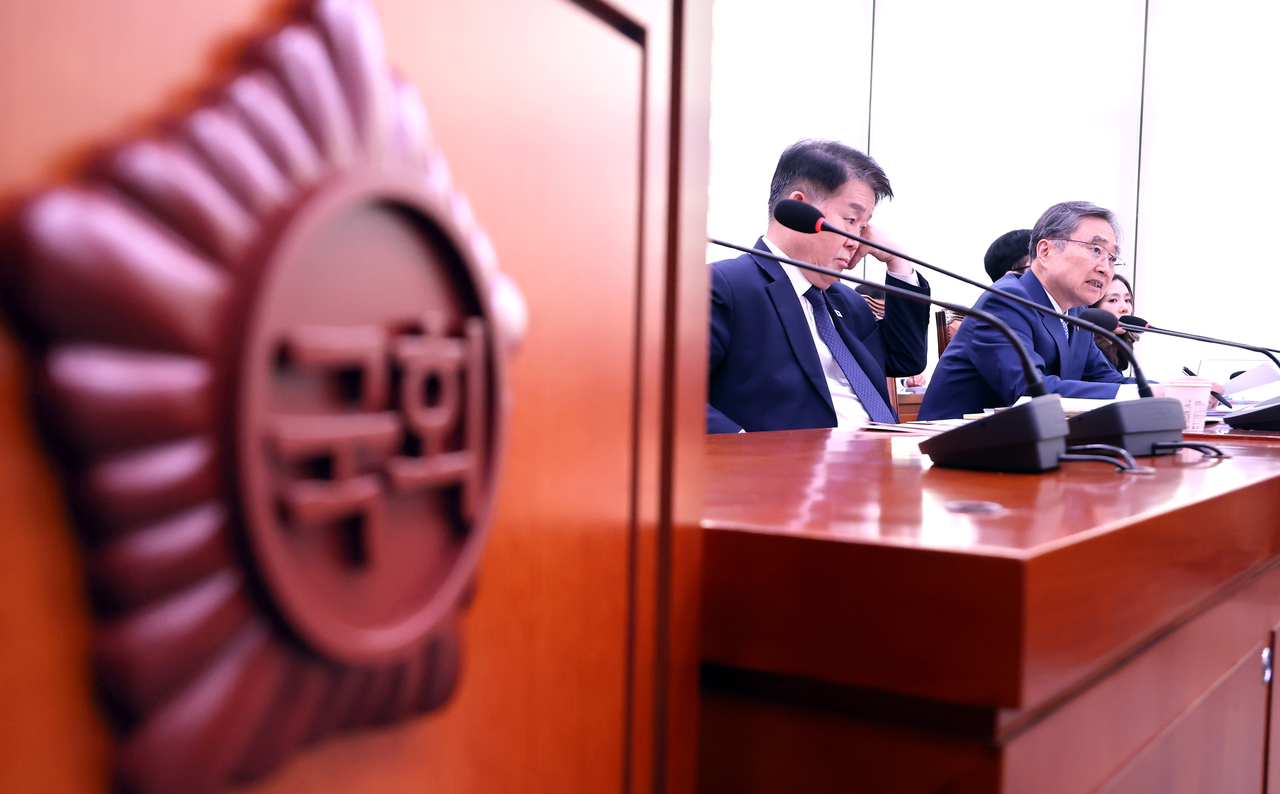
South Korea's annual parliamentary audit opened Tuesday with sharp partisan clashes over the government's handling of North Korea and Ukraine, as well as the deepening confrontation between the presidential office and the judiciary over a Supreme Court justice nomination.
Eight of the National Assembly's 17 standing committees began their annual inspections of government agencies Tuesday, kicking off a three-week audit scheduled to run through Oct. 27. This year's audit is the second since President Lee Jae Myung took office in June 2025.
Foreign policy and judicial affairs quickly emerged as two of the day's biggest flash points.
The main opposition People Power Party stepped up criticism of the Lee administration for what it described as a tougher approach toward Ukraine than North Korea, particularly after North Korean mines planted south of the Military Demarcation Line were found to have caused two explosions that seriously injured three South Korean troops on Sept. 21.
On the judiciary front, the roles were reversed. The ruling Democratic Party of Korea pressed Chief Justice Jo Hee-de over his refusal to recommend a new Supreme Court justice nominee at the presidential office's request, while the People Power Party accused the ruling bloc of infringing on judicial independence by compelling the chief justice to face questioning.
Ukraine and North Korea
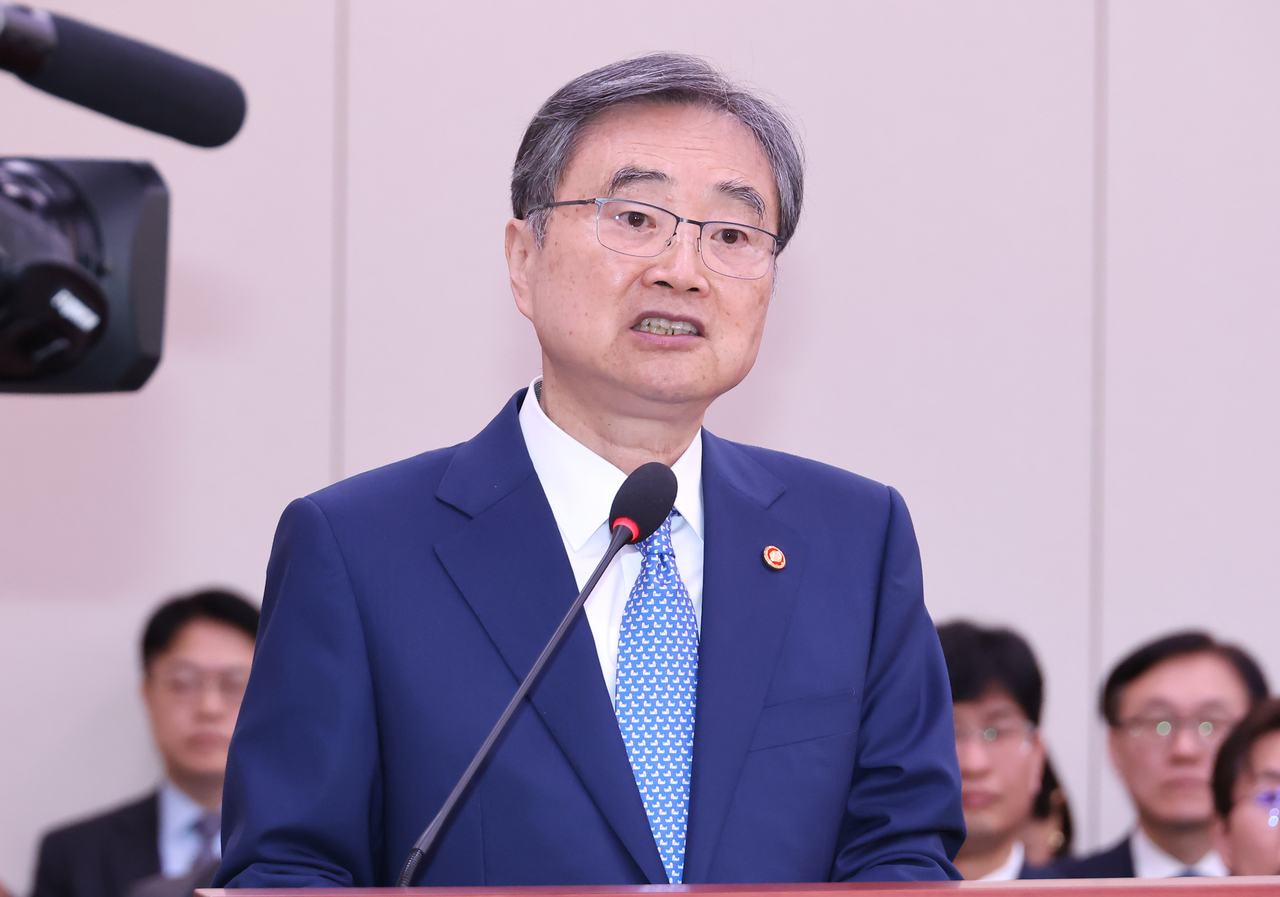
During the Foreign Affairs and Unification Committee's audit of the Foreign Ministry, independent Rep. Han Dong-hoon grilled Foreign Minister Cho Hyun over what he described as an inconsistent approach toward Ukraine and North Korea.
Han argued that the government had publicly demanded an apology from Kyiv over the disclosure of the transfer of two North Korean prisoners of war to South Korea while taking a more restrained approach toward Pyongyang.
He asked why Seoul was showing greater resolve toward Ukraine than toward North Korea.
In response, Cho said the government was responding to North Korea with the level of resolve it considered necessary, rejecting Han's characterization that Seoul had been softer on Pyongyang.
The exchange continued with a dispute over Ukraine's disclosure that two North Korean soldiers captured while fighting for Russia had been transferred to South Korea.
Seoul says the two countries had agreed to keep the transfer confidential, citing the soldiers' safety and potential implications for prisoner exchanges. President Lee Jae Myung has also publicly demanded an explanation and apology from Kyiv.
During the audit, Cho said he had received a message from the Ukrainian side containing words of apology but that it did not meet Seoul's expectations.
"There is a difference from the level we consider appropriate," Cho said, adding that the government intends to employ "firm measures."
Another point of contention was Seoul's response to the Sept. 21 mine explosions in the Demilitarized Zone.
The Joint Chiefs of Staff concluded Monday that North Korean antipersonnel mines deliberately planted south of the MDL caused the explosions that injured three South Korean military personnel.
People Power Party Rep. Kim Dai-sik, the committee's opposition floor representative, proposed a bipartisan resolution condemning North Korea and calling for sanctions.
"We must clearly hold North Korea responsible," Kim said, also calling for Seoul to consider unilateral sanctions against Pyongyang.
The ruling Democratic Party agreed that North Korea should be held responsible but stopped short of immediately backing a separate committee resolution.
Rep. Hong Kee-won, the committee's ruling party representative, said the party had "no reason to oppose" demanding an apology and measures to prevent a recurrence, but said further discussion was needed before adopting a resolution.
Cho said the government was reviewing further steps over the mine incident.
"We will respond calmly and wisely, solely in the national interest," he said.
Supreme Court nomination
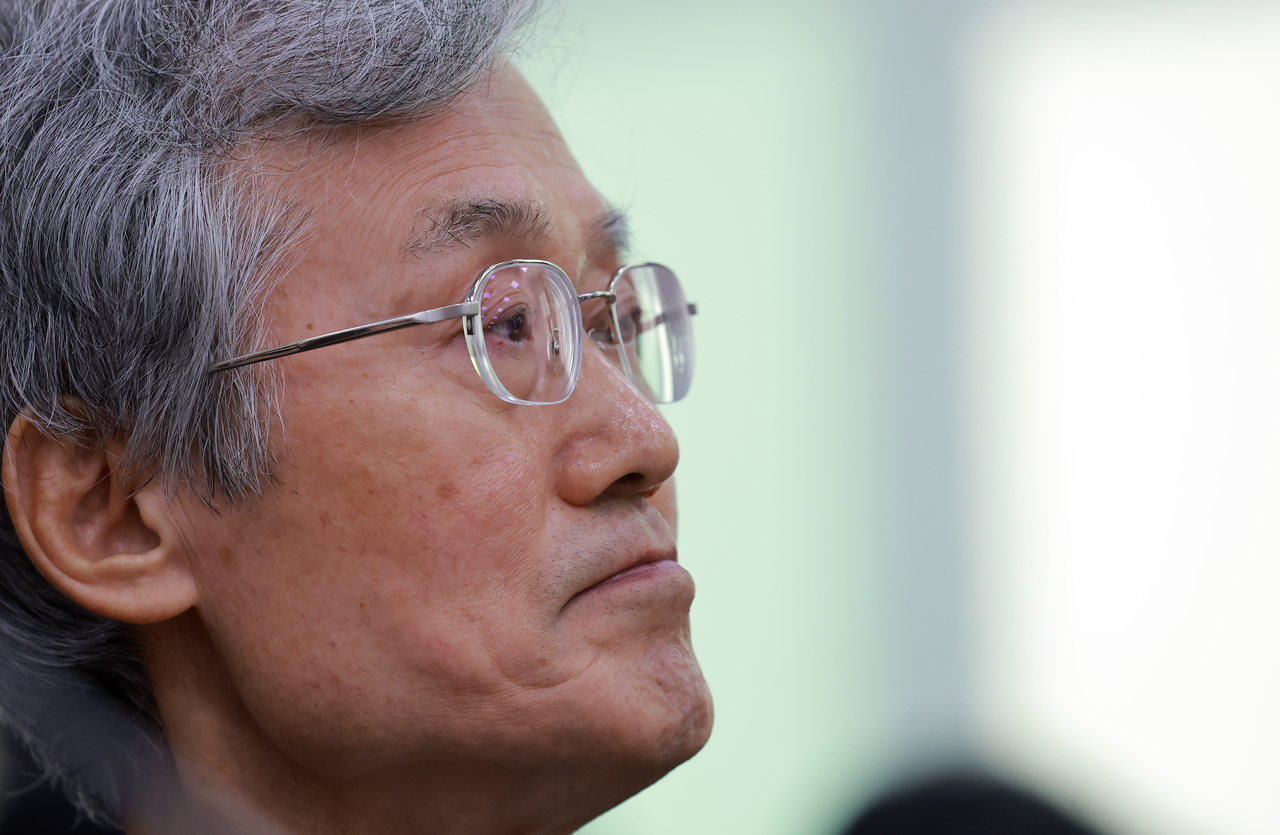
At the Legislation and Judiciary Committee, Chief Justice Jo Hee-de faced questions over his refusal to submit another candidate for a vacant Supreme Court seat after the presidential office asked him to reconsider his earlier recommendation.
Jo said Tuesday that the presidential office's request, which he said was made in writing, did not clearly state either why his nominee was unacceptable or what constitutional grounds supported the request for another candidate.
He said the Constitution separately grants the chief justice the authority to recommend Supreme Court justices, the National Assembly the power to consent to their appointment and the president the authority to appoint them.
Jo also refused to take the oath as a general witness or answer questions about the nomination process, arguing that doing so could undermine judicial independence and the separation of powers.
Committee Chair Rep. Seo Young-kyo of the Democratic Party called on Jo to take the oath and testify, noting that the committee had formally selected him as a witness.
Rep. Park Kyoon-taek of the Democratic Party went further, arguing that Jo's refusal to submit another nominee could amount to grounds for impeachment because it obstructed the president's constitutional authority to appoint Supreme Court justices.
People Power Party lawmakers pushed back, saying chief justices have traditionally delivered opening remarks at Supreme Court audits before leaving the hearing, with the minister of the National Court Administration responding to lawmakers' questions.
People Power Party Rep. Park Hyung-soo accused the ruling party of trying to keep Jo at the hearing against his will.
"What more are you trying to hear by forcing the chief justice to sit here?" Park said. "This is an act of arrest and detention using the power of the majority."
Jo also apologized for the prolonged vacancy on the Supreme Court and said he would work to resolve the situation.
Jo added that he would work to resolve the situation, with the presidential office and the judiciary still at odds over how the nomination process should proceed.
flylikekite@heraldcorp.com