- WORLD VIEW
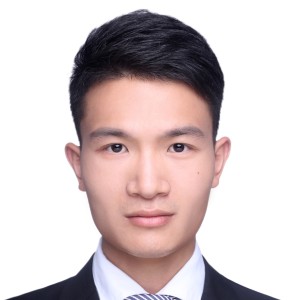
Talent schemes helped to propel China to the forefront of global science. But the system places undue emphasis on prestigious titles as a means to secure career prospects, putting pressure on young researchers.
By
-
Ming Li
-
Ming Li is a postdoctoral researcher working on smart vaccine-delivery materials at the Karolinska Institute in Stockholm.
-
China’s research sector has experienced spectacular growth over the past two decades. The increase in scientific output is due, in part, to a system that funnelled resources to researchers selected by prestigious talent-acquisition schemes. This approach has helped the nation’s scientists to publish in leading journals. Yet, a rapid expansion in the scientific workforce has also created a widening divide between a small group of leading academics and the rest of the nation’s research community, including growing numbers of young scientists who are competing for limited resources.
The prestigious titles available to leading Chinese researchers are commonly known as academic ‘hats’, and are earned through participation in national talent programmes, elite early-career scientist schemes and provincial and municipal initiatives. Having the correct hat can influence everything from salary and access to laboratory space to promotion prospects. Thus, for many early-career researchers, success tends to depend not only on scientific ability but also on securing one of these coveted designations.
Why China needs to review its approach to research evaluation
The Chinese government increasingly acknowledges the unintended consequences of this system. In June, Qiushi, the official journal of the Chinese Communist Party, published an influential article calling for the nation’s talent-development strategy to be reformed (see go.nature.com/45nd8hh). One sentence stood out to early-career researchers like myself: academic titles and talent labels should return to their “academic and honorary nature”, rather than being used mechanically to decide salaries and allocate resources. The statement reflects growing concern that a system that was originally designed to identify and reward excellence has evolved into one that distorts incentives and concentrates opportunities among a select few.
The scramble for funding and the intense pressures facing early-career academics are hardly unique to China. But the competition is amplified by the sheer scale of the nation’s talent pipeline. Chinese universities and research institutions admitted roughly 171,000 doctoral students in 2024, compared with around 54,000 in 2005 — an increase of more than 200%. Owing to intense competition, academic hats have become a convenient administrative shortcut for deciding who receives support.

Move beyond ‘publish or perish’ by measuring behaviours that benefit academia
China’s tenure-track system is often presented as an adaptation of US and European models. In practice, it functions differently. Hired faculty members are typically evaluated for three to six years against an array of demanding targets — including numbers of publications in specific journals and successful grant applications, teaching performance and which talent titles they have obtained.
Nature 656, 540 (2026)
doi: https://doi.org/10.1038/d41586-026-02525-1
Competing Interests
The author declares no competing interests.
Related Articles
-
 Why China needs to review its approach to research evaluation
-
 Move beyond ‘publish or perish’ by measuring behaviours that benefit academia
-
 China boosts prestigious grants for young scientists — will it ease competition?
Subjects
Latest on:
- Education
- Funding
- Institutions
-
Funders should look beyond strict age criteria
Correspondence
-

The forgotten 20 million: why is the world neglecting Afghanistan’s girls and women?
Editorial
-

I caught my students using AI to cheat in an exam — here’s what universities must do to stamp this out
World View
-
Funders should look beyond strict age criteria
Correspondence
-

When the best decision is no decision: the rise of randomization in grant funding
Career Feature
-

NIH limits funding for research on the health effects of public policy
News
-
I caught my students using AI to cheat in an exam — here’s what universities must do to stamp this out
World View
-

Cancer Research UK bets on Manchester with £6-million funding boost
Career News
-

Nature Index 2026 Research Leaders rankings: are China’s East Asian neighbours keeping pace with it?
Nature Index