 Choi Jae-hee
Chasing the Korean context AI can’t code
Once-rare younger-man, older-woman unions now account for one in five first marriages, but couples say stereotypes rooted in patriarchal times die hard
Being four years older than her husband does not make Han Se-hee the more experienced one at home.
The 32-year-old often finds herself on the receiving end of reminders from her husband, who, after years of living alone, is better at cooking, cleaning and keeping their home in order.
"I do my share of the housework, but he always seems to notice things that I miss. People often say that men are like children no matter how old they get and need their wives to look after them, but I think that’s just a stereotype," Han told The Korea Herald.
Han also finds herself leaning on her husband emotionally.
"Right now, I’m the one supporting him financially, but when I’m feeling sensitive or down, he’s really good at understanding what I’m going through and being there for me," she added.
Decades ago, a household like Han’s would have been unusual in Korea, where marriage was long shaped by patriarchal norms, with husbands cast as providers and wives expected to care for the home and their husbands. It was far more common for husbands to be older than their wives, while marriages in which the wife was older were relatively rare.
Today, roughly one in five first marriages in Korea involves an older wife and a younger husband.
About 40,000 such marriages were registered in 2025, accounting for a record 20.2 percent of about 198,500 first marriages that year, according to Statistics Korea. It was the first time the share had surpassed 20 percent.
Less need for an older breadwinner
For generations, being older gave men a certain advantage in Korea’s marriage market. More years often meant a stronger career and deeper pockets, fitting the traditional image of a husband as the family provider.
Women’s growing financial independence is changing that calculation.
With less need for a partner to provide economic security, some women are weighing more heavily what they value beyond income, including personality, looks and the vitality of a younger partner.
"What I like about having a younger (husband) is simply that he’s young. He has this lively energy, and I also like that he makes an effort to stay fit," Han said.
Having entered the workforce years before her husband, Han never expected him to enter the marriage on the same financial footing. When she decided she was ready to marry, she took the lead, covering most of the wedding expenses and securing a home for the couple herself.
"People naturally want what they don’t have. If that’s youth and passion, you may be drawn to someone who has those qualities. What has changed is that women are increasingly in a position where they can make that choice," she added.
Some matchmaking industry insiders say later marriage is making women more open to younger men as potential spouses, as age gaps matter less when couples share similar life experiences and stages.
"Men have traditionally entered the workforce and married later than women, partly because of mandatory military service. But as women are also marrying later, the gap in where they are in life has narrowed," said a manager surnamed Shin at Gayeon, a matchmaking agency in Seoul.
"If both are established in their careers and financially stable, female clients are much less likely to rule out a man simply because he is younger."
The average age at first marriage has risen sharply for both men and women in Korea over the past three decades. Men married for the first time at an average age of 34 in 2025, compared with 27.8 in 1990, while the figure for women rose from 24.8 to 31.6 over the same period, according to Statistics Korea.
"If my husband had been in his early 20s and fresh out of college, I probably would have felt the age difference. But he has a job and is financially independent from his parents, so I don’t really feel the gap in the way we live or in our values," Han said.
Younger men rethink masculinity
The shift is evident among younger men as well.
As dual-income marriages have become more common, the traditional expectation that men should be the primary breadwinners has weakened, lowering some of the psychological barriers to dating or marrying an older woman.
In 2025, 6.15 million of Korea’s 12.65 million married-couple households had both spouses working, accounting for 48.6 percent of the total, up 67,000 households and 0.6 percentage point from a year earlier, government data showed.
The rate was highest among households headed by people in their 30s, at 63.3 percent, followed by those in their 40s at 61.3 percent.
"It doesn’t bother me that my girlfriend has been in the workforce longer and is more financially established than I am. If anything, I think we can make up for what the other lacks," said Cho Min-seong, 23, who is dating a woman 15 years older.
"She’s a really good cook and knows a lot about everyday life that I haven’t learned yet. Just by spending time together, there are many things I naturally pick up from her or turn to her for help with."
That growing openness toward older female partners is also reflected in something as simple as what younger men call them.
Calling a romantic partner "noona" — a Korean term used by men for an older woman — has not always sat comfortably with conventional ideas of masculinity, which tended to cast the man as the older and more dominant partner.
Popular romances often played with that tension, portraying younger male characters who addressed an older woman by her name rather than as noona as more assertive or masculine.
"I don’t usually call my wife noona around older family members, of course. But otherwise, even when I’m with friends, I’m perfectly comfortable calling her that," said Kim Tae-won, 29, who married a woman six years older than him last year.
"Among men, dating a younger woman used to carry a certain status, while dating an older woman didn’t get the same kind of reaction. But I think that’s changed a lot. Men and women today tend to see relationships as more of an equal partnership, where both sides complement and rely on each other. I think that has made relationships with older women feel much more natural."
'Age doesn’t define maturity'
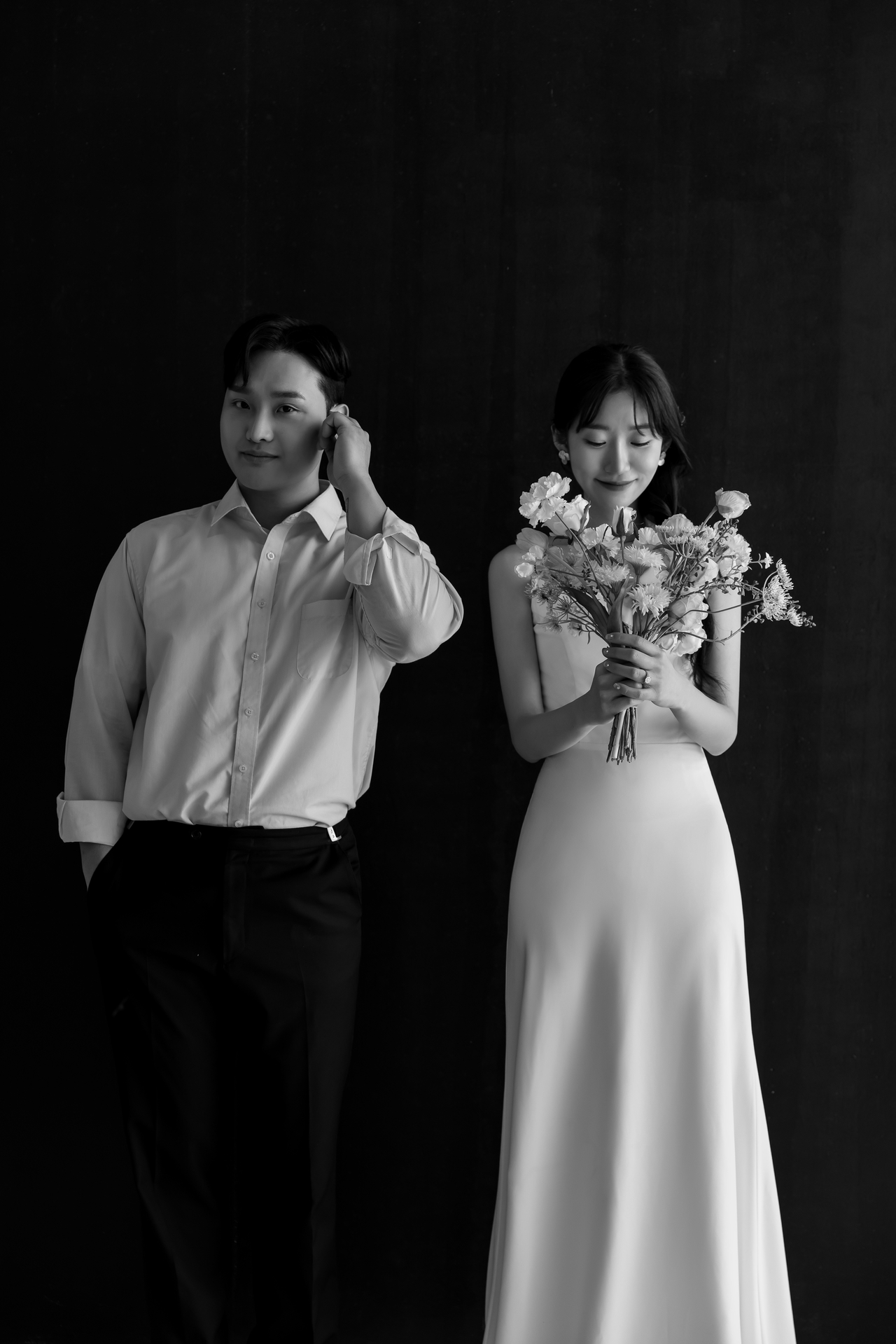
While these couples say they rarely think about the years between them, lingering stereotypes often make them more conscious of the age gap.
For Jeon Ha-yul, 30, who is set to marry her 26-year-old boyfriend in December, one such stereotype is the assumption that younger male partners are less mature or financially stable.
Her relationship, she said, has turned out to be quite the opposite.
"I've always liked being taken care of, so I was never particularly interested in younger men. But my boyfriend doesn't feel younger at all. If anything, he often feels like the older one in the relationship, and I think that's part of what I like about him," Jeon said.
"He's unusually mature for his age and also doing very well financially, so I've never really had those concerns. Right now, I'm not working and live on the money he gives me, and he's covering all of our wedding expenses."
With a 15-year age gap, Cho and his girlfriend have faced doubts from others about where their relationship is headed, something she said has frustrated her at times.
"Some people worried that if we broke up, my boyfriend is still young enough to start over without too much difficulty, while that might not be as easy for me," said Cho's girlfriend, who asked not to be named.
"Even if the two of us are happy together and don't really notice the age gap, other people tend to worry about what it could mean for our future. I thought his parents might feel the same way, and when we first started dating, that was my biggest concern."
The couple believes age itself says little about maturity or how a relationship works.
"Being younger doesn't necessarily mean someone thinks or behaves immaturely. My boyfriend has already had experiences and thought about things that I hadn't at his age. In the end, I think maturity has much more to do with life experience and the depth of your thinking than age," Cho's girlfriend said.
While such stereotypes persist, experts say Korea is in the midst of a broader shift in how relationships and marriage are viewed.
"The growing number of older-woman, younger-man couples is not so much a sudden phenomenon as a reflection of changing priorities in choosing a partner. People are looking beyond conventional measures such as age or financial status and placing more emphasis on shared values, interests and overall compatibility," said Shin Kwang-yeong, professor emeritus of sociology at Chung-Ang University.
"Also, traditional ideas about gender are also losing their grip as couples increasingly see each other as equals. Just as age is becoming less important in choosing a partner, the roles once expected of husbands and wives are becoming less rigid. These boundaries are likely to become even more fluid over time."
cjh@heraldcorp.com
- Rise of ‘noona’ wives: Korea’s marriage age gap is changing
- Cornell case: Could Korean defendant's citizenship affect what happens next?
- Music video shoot at 3 a.m.? Rookie boy group’s agency apologizes for noise at Incheon market
-
N. Korea's Kim oversees hypersonic missile launch, calls for bolstering war deterrent
x
-
'Bank-led won stablecoins risk limiting innovation'
x
-
Foreign investors sell W20.3tr in Korean stocks, led by SK hynix and Samsung Electronics
x