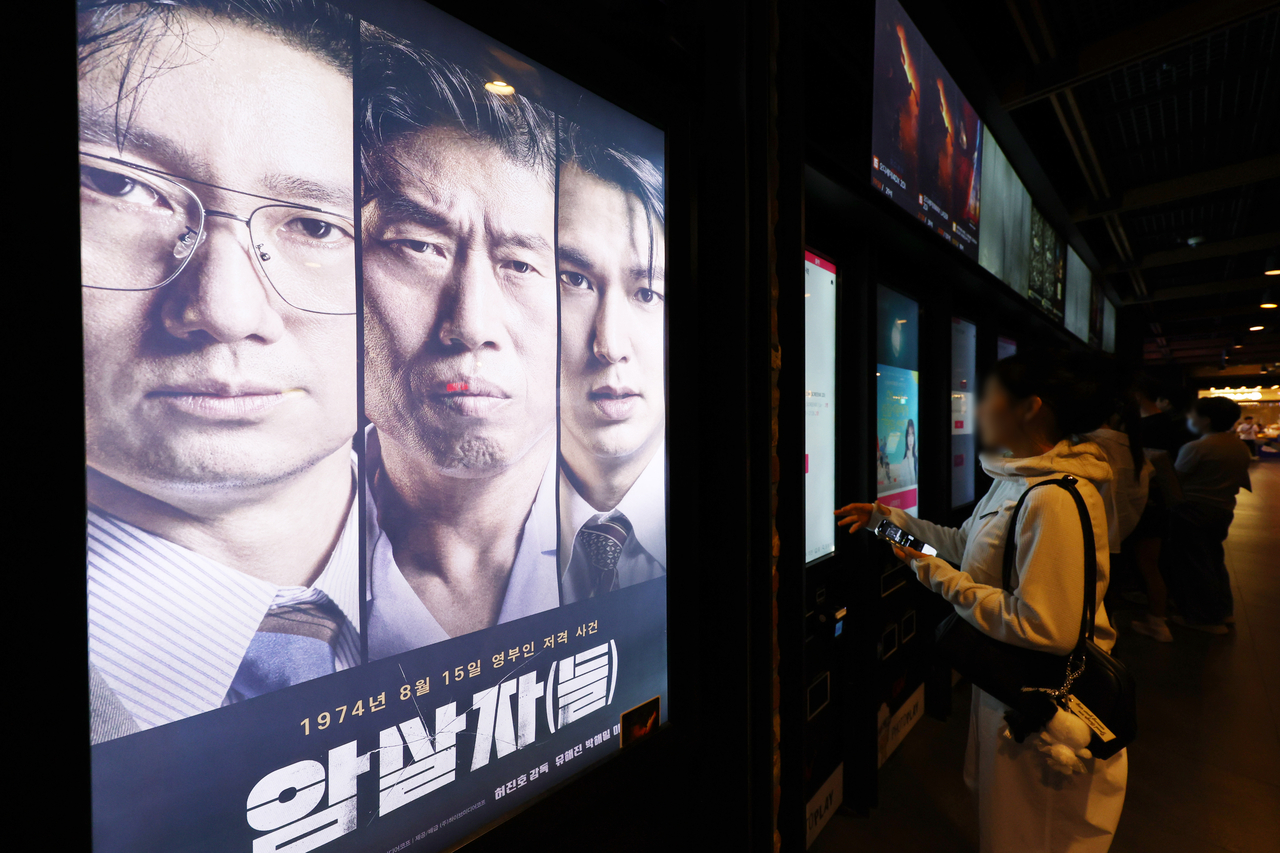
South Korea’s two state-run banks denied on Saturday that outside pressure influenced their investment in the controversial historical film “Assassin(s),” saying the decisions were made independently.
Industrial Bank of Korea said it decided to invest in the film after conducting its own internal review, while Korea Development Bank said it had only contributed capital to a fund and was not involved in the fund manager’s investment decisions.
IBK said the investment went through the same review process as other projects. A dedicated department evaluated factors such as the production company’s capabilities, the strength of the director and cast and the project’s commercial prospects.
“The allegation that the investment was decided at an outside request or through an abnormal process is not true,” the bank said in a statement.
In a separate statement, KDB said the investor was a fund it had put capital into, not the bank itself, and that the fund's management company made the investment decision independently.
It added that individual investment and post-investment management decisions are the responsibility of the fund manager and must be carried out independently, adding that the bank cannot participate in that process.
“KDB was not involved in selecting ‘Assassin(s)’ as an investment target or in the investment decision,” the bank said, also rejecting allegations that the investment resulted from outside requests or intervention.
Directed by Hur Jin-ho, the film has been embroiled in political controversy since its Sept. 23 release over its depiction of the 1974 assassination attempt on then-President Park Chung-hee, in which first lady Yuk Young-soo was fatally shot. The plot follows characters investigating unanswered questions about the shooting and raises the possibility that Park of the intelligence agency may be behind the attack. Groups honoring Park and Yuk, along with the main opposition People Power Party, have criticized the portrayal as distortion of history, while film industry figures have defended artistic freedom.
The bank’s statements came after Rep. Joo Jin-woo of People Power Party raised questions Tuesday over more than 30 billion won ($21 million) in investments by the state-run banks and funds in which they participated, calling for an investigation into whether political pressure had been involved.
According to documents released by Joo, IBK invested 2 billion won directly in the film, while KDB invested 400 million won through a fund.
Funds involving the two banks also invested in Hive Media Corp., the film’s production company. An IBK-backed fund invested 14.25 billion won in the company, while a KDB-backed fund invested 14 billion won, according to the documents.
sahn@heraldcorp.com