Police reassign 4,000 officers to investigative units, face one-month deadline for supplementary investigations
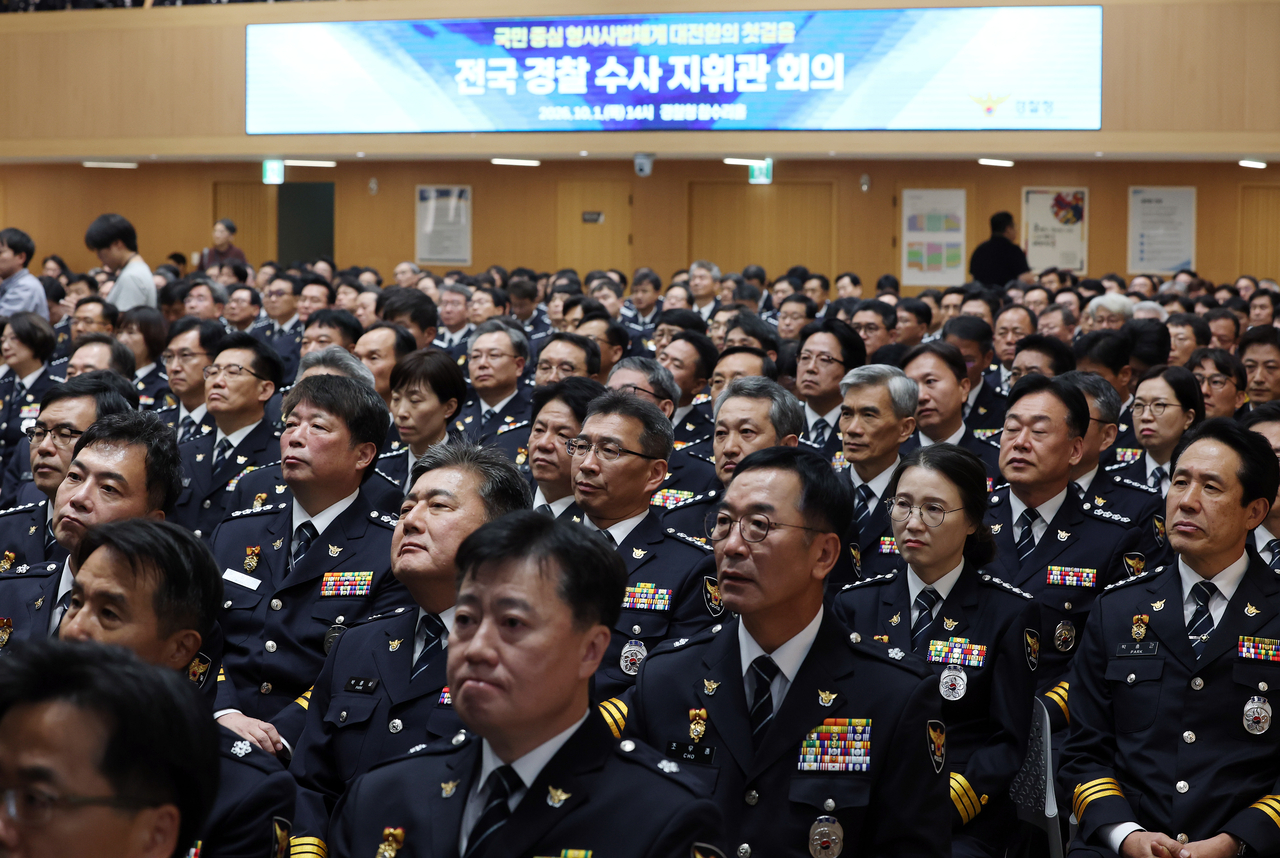
Police took on broader investigative powers Friday as Korea’s new criminal justice system expanded their responsibility for both initial investigations and follow-up work previously handled by prosecutors.
“Public expectations are high, but so are concerns, and our responsibility has become that much greater,” Seoul Metropolitan Police Agency Commissioner Ko Beom-seok told commanders and investigative department heads at a meeting Friday.
Police activated an emergency response system for the transition, with commanders ordered to monitor major cases and requests for further investigation daily.
The reforms abolished the Prosecutors’ Office and divided its functions between the Public Prosecution Service, which seeks warrants, decides whether to bring charges and handles prosecutions, and the Serious Crimes Investigation Agency, or SCIA, which investigates designated serious crimes.
Police handle most other criminal investigations, including opening cases and making initial decisions on whether to refer them for prosecution.
Prosecutors can request further investigation but can no longer carry it out themselves.
For police, that means taking responsibility for both the initial investigation and additional work requested after a case has been referred for prosecution.
Investigators must also adjust procedures for exchanging cases with the SCIA and handling unfinished investigations transferred from prosecutors.
Additional investigations, tighter deadlines
Police must generally complete supplementary investigations within one month of receiving a prosecutor’s request. An extension of up to one month is permitted when there are substantial grounds.
Police plan to manage those requests through a dedicated review system.
Relatively straightforward tasks will go to the original investigators. Cases requiring legal analysis — or decisions on investigative direction — will first be reviewed by designated officials before being assigned to frontline teams.
The National Office of Investigation has trained about 38,000 investigators and prepared guidelines covering revised procedures, including case referrals, reinvestigation requests and objections to case decisions.
The criminal justice information system, known as KICS, has also undergone changes to allow cases to be exchanged with the two new agencies.
Police are reinforcing investigative divisions with about 4,000 officers reassigned from other duties this year. However, officers without investigative experience will need training before taking on frontline cases.
The Seoul agency plans to reinforce its investigative departments with 352 officers, including 265 — about 75 percent — assigned to integrated investigation teams at local police stations.
Unfinished cases add uncertainty
Transferring unfinished prosecution cases poses further challenges.
Under transitional provisions, prosecutors may continue existing investigations for up to 90 days after the reforms take effect. Cases still unresolved will then be transferred to the SCIA, police or other competent investigative agencies.
The number of cases police will receive has not been finalized. The workload will depend partly on how many investigations prosecutors complete during the transition and the complexity of those transferred.
Economic and financial crime cases could pose particular challenges, as they require time to analyze evidence and resolve complex legal questions.
Police commanders have been instructed to closely monitor the transition to prevent cases from stalling between agencies.
Friday’s Seoul meeting followed a nationwide gathering of police investigative commanders Thursday, when acting National Police Agency Commissioner Kim Jong-cheol announced that emergency arrangements would remain in place until the new system had settled.
Police station chiefs must check daily on major cases and cases involving prosecutors’ requests for supplementary investigations, reinvestigations or corrective measures.
Regional police agencies and the National Office of Investigation will also monitor their progress and address problems as they arise.
“The success of the new criminal justice system depends on the frontline,” Kim said Thursday. “Police station chiefs must personally address and correct the confusion and difficulties encountered in the early stages.”
He also warned against cases being passed back and forth between agencies.
“Victims must not face delays in obtaining redress because of so-called 'case ping-pong,'” Kim said. “Commanders must ensure that the inadequate and unfair investigations the public fears have no place in police work.”
shwang9@heraldcorp.com