Vaclav Havel, the dissident playwright who helped lead the former Czechoslovakia's peaceful transition from communist rule, is being remembered in Seoul at a former interrogation site that became a symbol of South Korea's own fight for democracy.
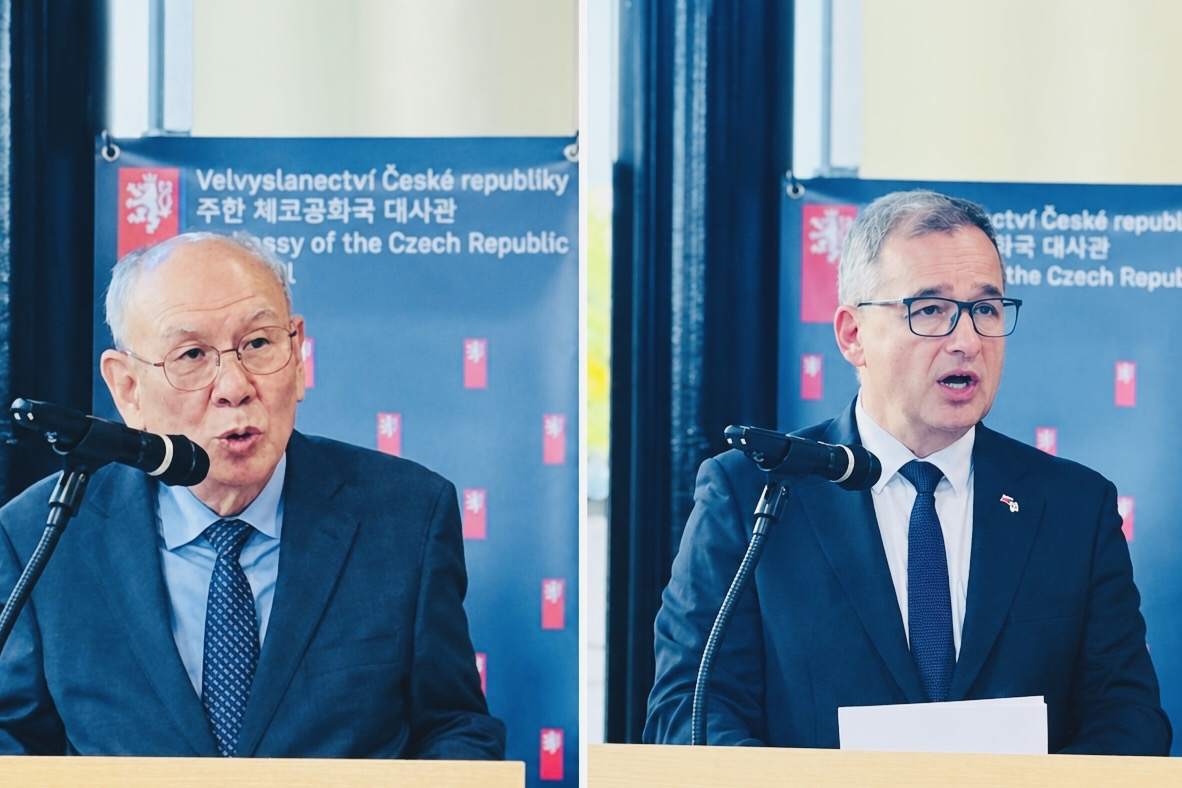
A photo exhibition marking the 90th anniversary of Havel's birth opened Thursday at the National Museum of Korean Democracy in Seoul, organized by the Korea Democracy Foundation, the Czech Embassy and the Czech Center Seoul.
The museum stands on the former site of the Namyeong-dong anti-communist interrogation office, where democracy activists were detained and tortured during South Korea's authoritarian era.
In January 1987, Seoul National University student Park Jong-chul died after being tortured there under the government of President Chun Doo-hwan.
Park's death and attempts by authorities to conceal the circumstances fueled public outrage in the months leading up to the June Democratic Struggle, which helped force constitutional changes that provided for direct presidential elections.
The setting gives the exhibition a distinctly Korean context, linking Havel's experience as a dissident with South Korea's own democratization movement. The former interrogation facility became part of the National Museum of Korean Democracy, which opened in June 2025.
Czech Ambassador to South Korea Ivan Jancarek said the venue connected the democratic experiences of the two countries.
"Today's exhibition brings together two symbols of democracy: a place representing Korea's democratic history and a figure representing Czechia's democratic transformation," Jancarek said.
South Korea and Czechoslovakia followed different political paths, but both saw their populace play a central role in movements challenging authoritarian rule.
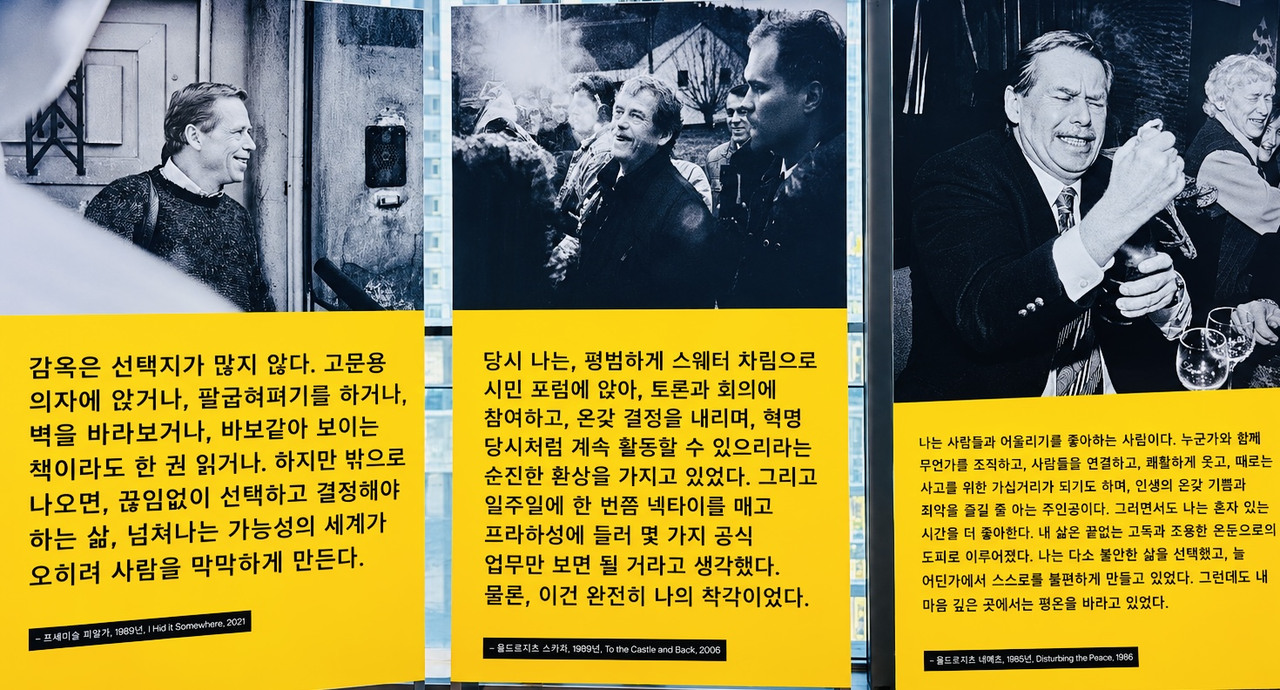
Havel, born Oct. 5, 1936, was a playwright, dissident and leading figure in the Charter 77 human rights initiative who was repeatedly imprisoned for opposing communist rule.
He emerged as a central figure in the 1989 Velvet Revolution before becoming the last president of Czechoslovakia and, after its peaceful dissolution in 1993, the first president of the Czech Republic.
"Havel's life reminds us once again that democracy is not achieved through institutions alone," Moon Kook-joo, chairperson of the Korea Democracy Foundation, said at the opening.
"In Korea, countless citizens also stood against authoritarianism and state violence in pursuit of freedom and democracy," Moon said, adding that their "courage and solidarity" became an important foundation of Korean democracy.
The exhibition features photographs of Havel alongside excerpts from his speeches, writings and letters, tracing his ideas on freedom, human dignity, individual responsibility and civic participation.
Jancarek, who met Havel twice during his diplomatic career, recalled him as "a very humble person" and "very human."
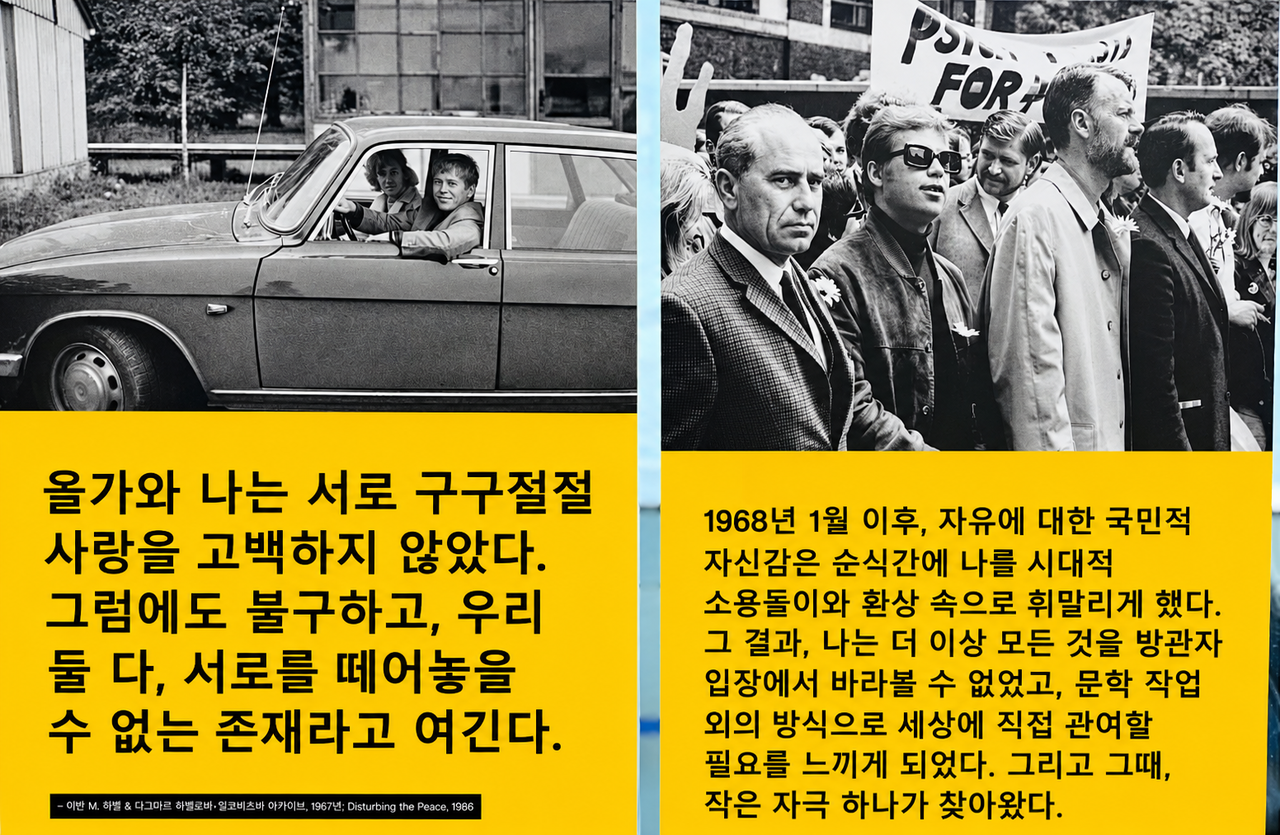
Havel remains closely associated with Nov. 17, 1989, when the violent suppression of a student demonstration in Prague sparked mass protests that developed into the Velvet Revolution, ending more than four decades of communist rule.
His legacy also has a presence elsewhere in Seoul.
Last year, the Czech Embassy and Seocho-gu opened Vaclav Havel's Place along the Yangjaecheon, featuring a memorial bench dedicated to the former Czech president.
For younger visitors with no direct memory of the political repression experienced in either country, the exhibition also raises the question of how those experiences are passed on to later generations.
"Events like this help our generation understand the role ordinary people can play in democracy," Ayushtseren Natsagdorj, a Mongolian international intern at the Korea Democracy Foundation, told The Korea Herald.
Moon said he hoped the exhibition would encourage visitors to look beyond commemorating Havel and reflect on "the kind of democracy we wish to build for the future."
sanjaykumar@heraldcorp.com