 Park Ga-young
As their visibility grows, creators are finding community while navigating stereotypes, language barriers and access to the industry
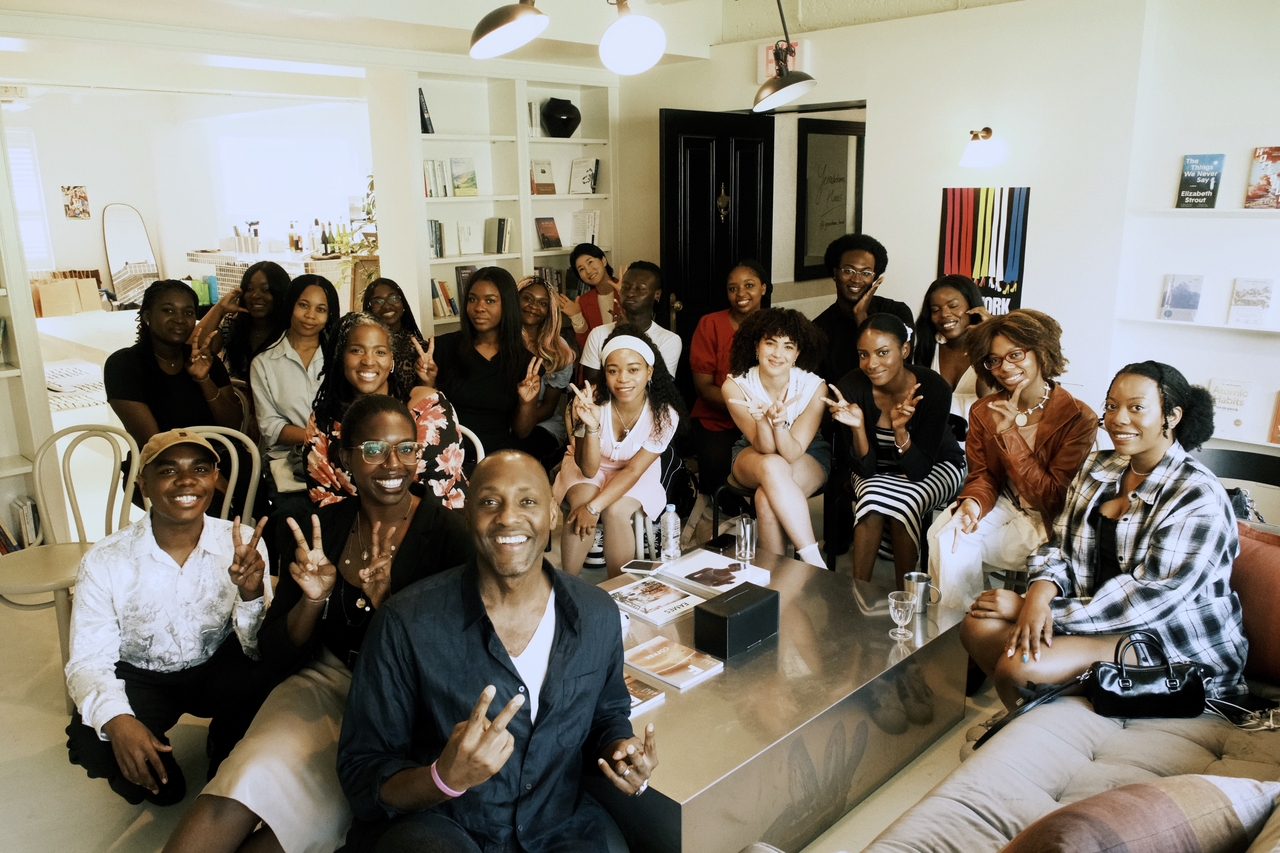
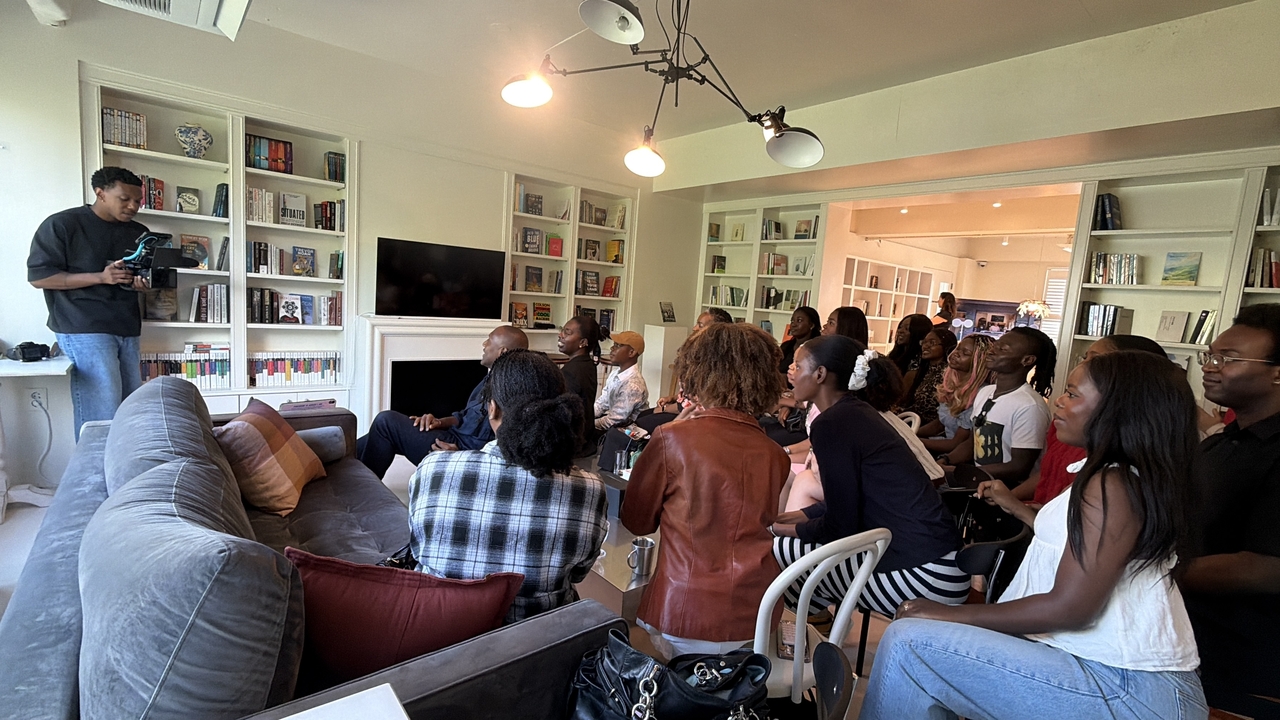
On Sept. 20, about 25 working and aspiring Black creatives — actors, writers, models, music producers, photographers, designers and dancers — gathered at a cafe in Mapo-gu, western Seoul, to talk about the pursuit of creative work in Korea.
The gathering had one purpose: to bring together Black people working in, or hoping to enter, Korea's creative industries. It also reflected a broader shift among foreign residents in Korea, with communities increasingly forming not only around nationality or language, but around shared professional and cultural interests.
Marie Noel, who founded the group after sharing updates from her first short film shoot in Korea on social media earlier this year, said she was struck by how many people were looking for information about pursuing creative work in Korea.
“Foreigners are able to see a lot of diversity actually on Korean media. Just seeing that in the media is what gets people motivated to try and find their own path. And I think that was what we saw in the room that day,” Noel, a German Austrian filmmaker, actor and writer from Vienna, told The Korea Herald.
She previously founded a similar collective for Black filmmakers in Vienna in 2014. She came to Korea two years ago and then wrote, directed and produced her first Korean-language short film "Switch Up," which was selected for the 14th Diaspora Film Festival in Incheon in May.
The gathering points to a broader increase in the visibility of Black creators in Korea's entertainment industry — a trend also playing out on YouTube, where creators can reach audiences directly.
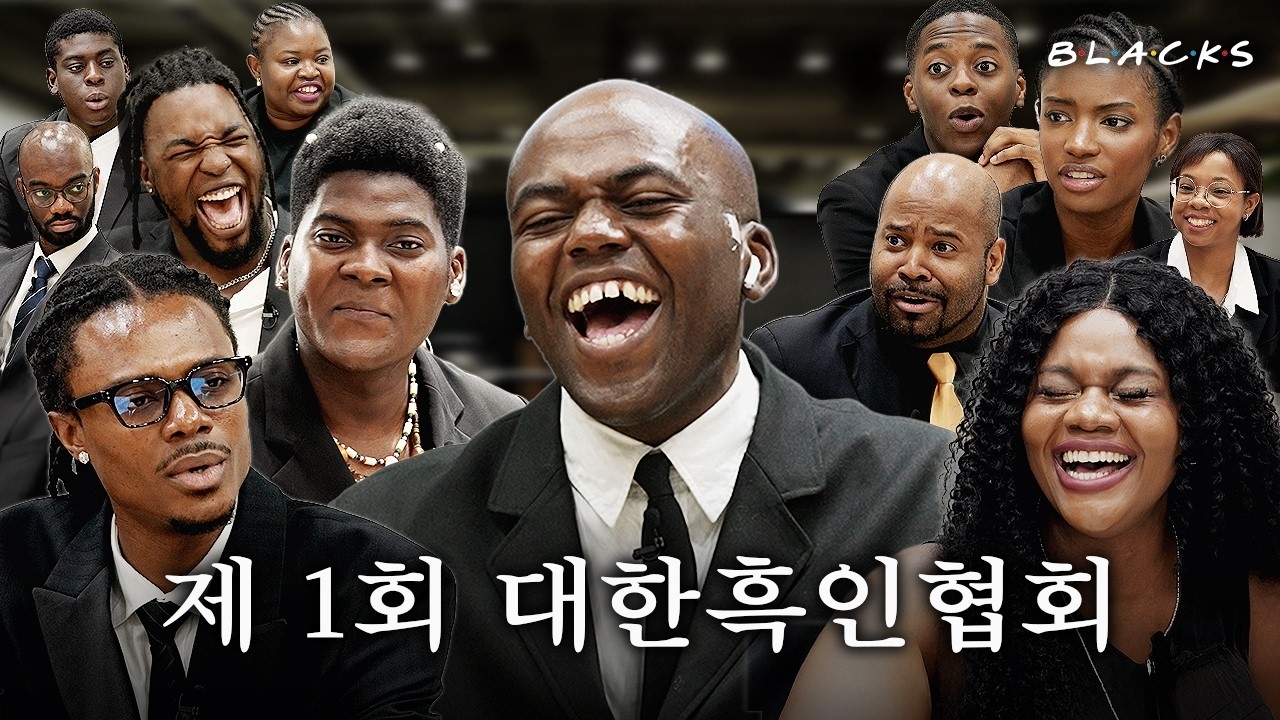
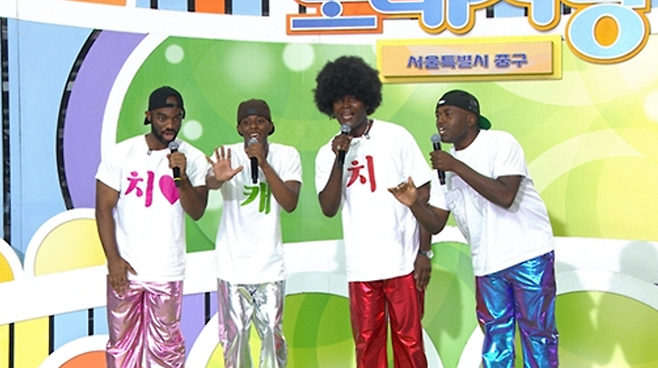
In one recent example, Korean Congolese entertainer Jonathan Yiombi hosted a video titled “The first Korean Black Association,” bringing together 12 Black entertainers already working in Korea.
Yiombi's family was granted refugee status in Korea in 2008 after fleeing the Democratic Republic of Congo. His sister, Patricia Yiombi, is now a university student who also works in television.
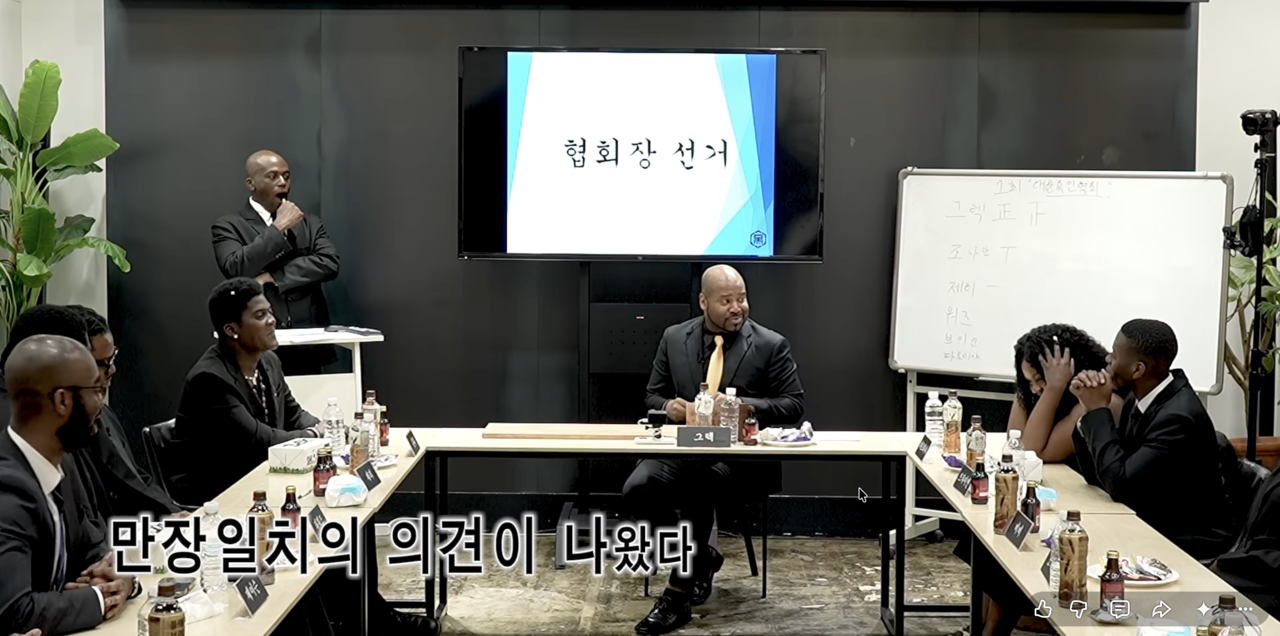
The video introduces a fictional association featuring 12 entertainers including Greg Levar Priester, who is later elected president in a mock election, Onyu, a content creator originally from Equatorial Guinea, fellow cast members Jay and Jerry, Laure Mafo, a pansori singer, and French model Barguette Bibi.
Twelve is far from a complete count of Black entertainers working in Korea. But seeing them assembled in one place — rather than scattered across separate shows and platforms — and speaking fluently in Korean appeared to take some viewers by surprise.
“Never thought I'd live to see the day I could lie in my room and watch foreign Black people gather to elect a ‘Korean Black representative’ — in Korean,” one commenter wrote.
The comments underneath the video suggest much of its appeal is in how precisely it plays back Korean organizational culture through a foreign cast.
"They make an association for anything and everything. Yep, they're definitely Korean," reads another comment — one of many likes and replies of support for the video.
"From Jonathan — who just up and founded this association — starting off with self-praise, to Greg winning the presidency because he brought fried chicken, to Jerry trying to sort out the hierarchy by age, it's just so Korean," one comment reads.
Another highlighted the vote count, tallied using "jeong," the five-stroke character commonly used to record tallies in Korea: "Voting counted in jeong strokes, lol."
Others saw a more serious significance in the video.
“This could quietly do a lot to help improve racism in our country,” one commenter wrote.
The growing visibility of Black creators comes as Korea moves beyond its long tradition of being a largely homogeneous society.
Their growing media presence reflects the country’s increasingly diverse population and is evidence that Korean society has now genuinely entered a fully multicultural era, Jeong Hoi-ok, a political science professor at Myongji University, told The Korea Herald Tuesday.
As of Nov. 1, 2024, 2.72 million people with a migration background — foreign nationals, naturalized citizens and their Korean-born children — were living in Korea, according to the National Data Agency, making up 5.2 percent of the population.
Their growing visibility "can play a very positive role in two respects. First, they can help improve Koreans' prejudices and build a greater sense of familiarity. Second, they can serve as a real role model, and have a very positive effect, for multicultural people living in Korea who are in similar situations," Jeong said.
Moving beyond visibility
Inside the entertainment industry, however, the questions are more specific: What kinds of roles are offered to Black actors, and what does it take to get in the room?
Speaking at the first Black Seoul Creatives meeting, Terris Brown, an actor who has been in Korea for 15 years and is a cast member on Netflix's “So Not Worth It” (2021), said that Black actors in Korea are often offered a narrow set of parts such as “soldier number three,” in his words.
He said he still worries about a related, narrower expectation placed on Black creators generally.
"There's sometimes a tendency, especially for Black creatives in Korea, to have to go through this comedy — you kind of have to be funny," he said.
The discussion also touched on the importance of language fluency in shaping access to opportunities in Korea's entertainment industry.
Bibi, whose real name is Brigitte Ciss, came to Korea to pursue an MBA at Yonsei University before becoming a YouTube creator and model.
She described a clear divide in her experience. “There is a before I spoke Korean and after I spoke Korean, and it’s completely different,” she said.
Her advice to newer arrivals at the gathering was straightforward: “Get on your Korean no matter what else you do, because it will literally change everything.”
Some have found another way to build a career in Korea: by creating their own professional space.
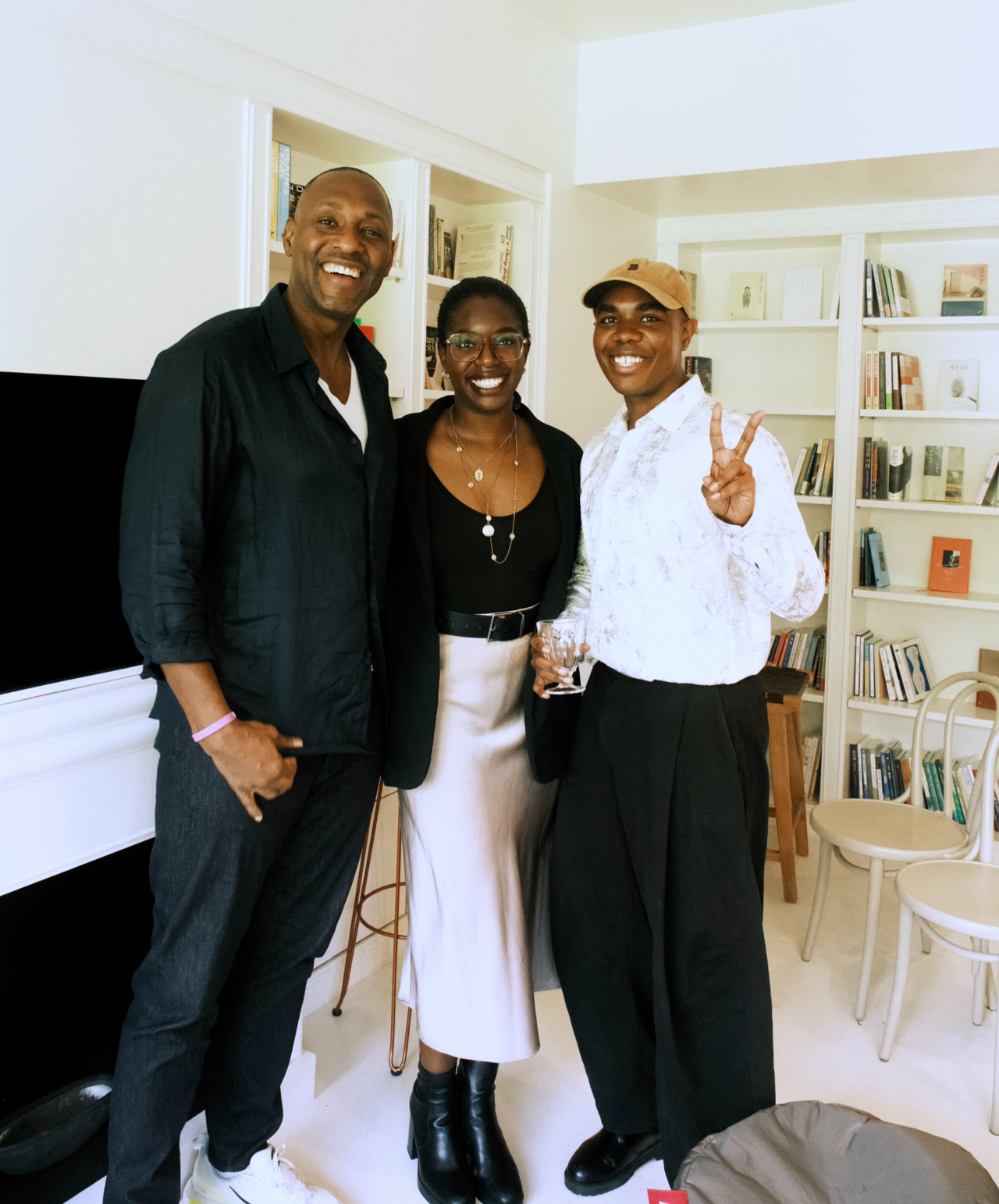
Paul Pryce, an actor and director who trained at Yale and taught for more than a decade at New York's HB Studio, first came to Korea with his Korean wife around the start of the COVID-19 pandemic, going back and forth before settling in Korea in May.
He built a career here not simply by auditioning for existing opportunities, but by opening a Korean branch of the training program alongside his work as an actor and director.
“What could you add to Korea, to the environment, to the industry?” Pryce said at the meeting. “If you're always looking to get something rather than asking what you're offering, it's always going to be hard.”
For Jeong, the growing presence of Black creators extends beyond their individual careers, offering a glimpse of how Korea's increasingly multicultural society could evolve — even if the transition might be uneven while public awareness and acceptance catch up with demographic change.
“Koreans still have some resistance to fully accepting foreigners as Korean,” Jeong said. “The pace at which our society is advancing toward becoming a multicultural society doesn't match the pace at which people are accepting that change, or the pace at which they're being educated about it.
“But their active participation in Korean society can serve as a positive symbol that people from different backgrounds can adapt and build lives here.”
gypark@heraldcorp.com
- Black creators in Korea are finding one another — and a wider audience
- Korea welcomes 15 million foreign visitors, but tourism deficit returns
- Koo Jaha accepts Ibsen Award, the first Asian and youngest winner
-
[Exclusive] S. Korean Embassy to US woos Trump allies to expedite skilled visa talks
x![[Exclusive] S. Korean Embassy to US woos Trump allies to expedite skilled visa talks](https://wimg.heraldcorp.com/news/cms/2026/09/29/rcv.YNA.20260924.PGT20260924167001009_R.jpg?type=h&h=120)
-
[Exclusive] Enhypen to return with new album in November, agency confirms
x![[Exclusive] Enhypen to return with new album in November, agency confirms](https://wimg.heraldcorp.com/news/cms/2026/09/29/news-p.v1.20260929.41760e88b0f048fcb5fa3e0dd9b75524_R.jpg?type=h&h=120)
-
Who you know, not what you have, gets you into Seoul Club
x