 Jung Min-kyung
Since 2017, I have covered South Korea’s political and economic landscape as a reporter, with a focus on foreign affairs, inter-Korean relations and security.
As a foreign affairs reporter, I closely follow developments from the Ministry of Unification, the Foreign Ministry and the Defense Ministry, tracking shifts in diplomacy, military policy and North Korea’s evolving posture. My work focuses on the intersection of geopolitics, security and policy decisions shaping the Korean Peninsula.
Earlier in my career, I also reported on South Korea’s financial sector, covering banking, markets and regulatory developments—experience that continues to inform my understanding of how economic policy intersects with national strategy.
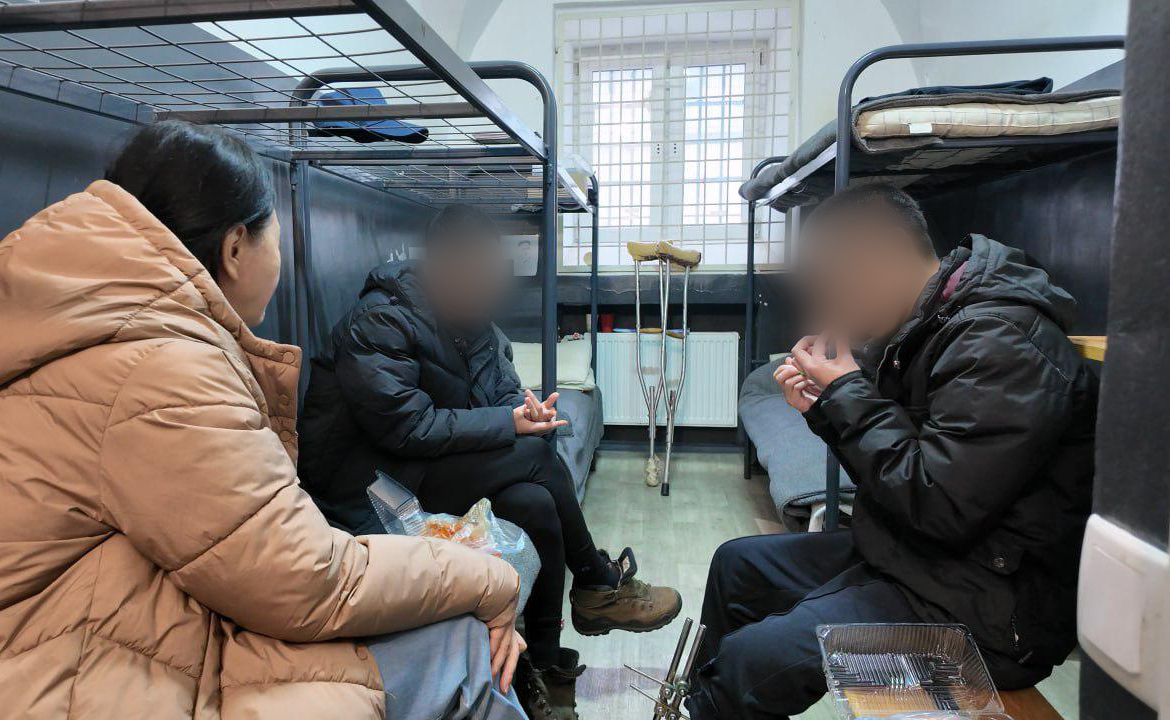
Speculation has emerged that Cheong Wa Dae initially sought to keep the transfer to South Korea of two North Korean prisoners of war under wraps to avoid disrupting efforts to build momentum for possible talks between Washington and Pyongyang, but experts on Monday cautioned against drawing a direct connection between the two.
The speculation comes as the Lee Jae Myung administration has been actively seeking to revive diplomacy between North Korea and the United States, while maintaining that its handling of the POWs was driven by humanitarian and human rights considerations rather than a desire to accommodate Pyongyang.
Cha Du-hyeogn, vice president of the Asan Institute for Policy Studies, questioned the logic of avoiding actions that might irritate North Korea for the sake of dialogue and raised broader questions over whether avoiding friction with Pyongyang should shape Seoul's approach to dialogue.
"If US-North Korea or inter-Korean dialogue can take place only when we avoid provoking North Korea, wouldn't that ultimately mean entering talks on terms largely dictated by Pyongyang?" Cha said.
"Of course US-North Korea dialogue itself is something that can and should be pursued. It is necessary for addressing issues on the Korean Peninsula and for peace," he said. "But dialogue itself is not what matters most. What matters much more is what agenda the talks are based on and whether North Korea shows some change in its position."
He also questioned whether keeping the transfer secret could realistically protect the soldiers or their families from possible repercussions in North Korea.
"There could certainly have been purely humanitarian concerns about the prisoners' safety," Cha said, pointing to possible retribution against the soldiers or their families by North Korea.
"But that brings us back to the same question: Is it really reasonable to assume that, simply because Seoul did not publicly disclose the transfer, North Korea would not know about it and therefore would not retaliate against their families?"
Bong Young-shik, a security expert and visiting professor at Yonsei University, said it would be a stretch to conclude that Seoul's preference for secrecy was intended to facilitate US-North Korea dialogue.
"I think it would be going too far to interpret this as being directly connected to efforts to promote US-North Korea dialogue," he said.
The arrival in South Korea of the two North Korean soldiers captured by Ukrainian forces was revealed by Ukrainian President Volodymyr Zelenskyy last week during his address to the United Nations General Assembly in New York.
President Lee Jae Myung has expressed regret over the disclosure, saying Seoul and Kyiv had agreed to keep the transfer confidential.
Cheong Wa Dae has called for an apology and explanation from Ukraine over the disclosure and subsequent statement that a nondisclosure agreement was not made.
The disagreement has prompted questions over why Seoul had placed such importance on keeping the transfer quiet.
One interpretation is that the government wanted to minimize potential friction with Pyongyang at a delicate moment for diplomacy.
North Korea has glorified the deployment of its troops to Russia, with leader Kim Jong-un portraying their participation as a sacrifice for the country and Pyongyang moving to build a memorial hall honoring those deployed.
Against that backdrop, the arrival in South Korea of soldiers captured while fighting abroad — after they themselves expressed a desire to come here — could be an uncomfortable development for Pyongyang. Seoul may therefore have seen value in handling their transfer quietly rather than turning it into another source of contention with the North.
The theory has gained attention partly because the Lee administration has simultaneously stepped up efforts to reopen diplomatic channels between Washington and Pyongyang.
At Lee's summit with US President Donald Trump in New York on Sept. 22, Trump reaffirmed his willingness to engage in dialogue with North Korea, while the two leaders agreed to remain in close communication to help resume US-North Korea talks. Lee also asked Trump to help facilitate the resumption of dialogue with Pyongyang, to which Trump responded positively, according to a Cheong Wa Dae official.
Seoul and Kyiv had also laid the groundwork for the POWs' transfer months earlier. During Lee's summit with Zelenskyy in July, the two leaders agreed that the issue should be resolved in a manner consistent with international law and humanitarian principles while respecting the wishes of the individuals involved.
Meanwhile, Cheong Wa Dae has rejected suggestions that considerations beyond human rights played a role in its decision.
"It is about observing human rights principles. There were no considerations beyond that," a senior presidential official said Thursday. "It is appropriate to handle the matter with extreme caution and discretion, rather than publicize it."
That position received support Monday from the National Human Rights Commission of Korea, which welcomed the two soldiers' arrival while stressing the need to protect their privacy and safety.
The commission said sensitive information, including the men's identities, travel routes, health conditions and family relationships, should not be excessively disclosed, warning that doing so could endanger both the soldiers and their families in North Korea. It also urged the media to respect their privacy.
The commission has maintained since the soldiers were captured that they should not be repatriated against their will and should be protected as prisoners of war. After they expressed their desire to come to South Korea, it characterized the matter as one concerning their fundamental rights and safety rather than simply a diplomatic or security issue.
Cha, meanwhile, said North Korea itself is unlikely to publicly turn the transfer into a major dispute, because doing so could draw renewed attention to both its deployment of troops to Russia and the fact that captured soldiers chose South Korea.
"The more North Korea highlights the issue, the more it would serve to remind people of the participation of North Korean troops in the war in Ukraine, so I don't expect it to make a major issue out of it," Cha said.
What could prove more sensitive for Pyongyang, he added, is what the two soldiers may eventually reveal about their experience fighting alongside Russian forces.
"The information that comes from these soldiers could be painful for North Korea," Cha said. "If they provided testimony that North Korean troops were placed in poor conditions or treated as expendable by Russian forces, that could also affect perceptions inside North Korea of the troop deployment."
Bong noted that, regardless of the dispute over the disclosure, Seoul had ultimately accomplished the more consequential task of bringing the two men safely to South Korea.
"The Foreign Ministry and the Lee Jae Myung administration did, after all, ensure that the prisoners, who expressed a desire to defect, were brought safely to South Korean territory," he said. "That was something they handled well."
mkjung@heraldcorp.com
- Experts caution against N. Korean POW speculation
- Opposition raises allegations of deliberate delay in DMZ blast probe
- N. Korea touts upgraded rocket system, urges stronger firepower along border
-
Korean holiday hit about a 1974 assassination draws fire from conservatives
x
-
Vanishing bus routes leave travelers taking the long way
x
-
How early do Korean toddlers start using smartphones?
x