Korea is cheaper, but customer demand and US policy are changing the economics of making memory in America
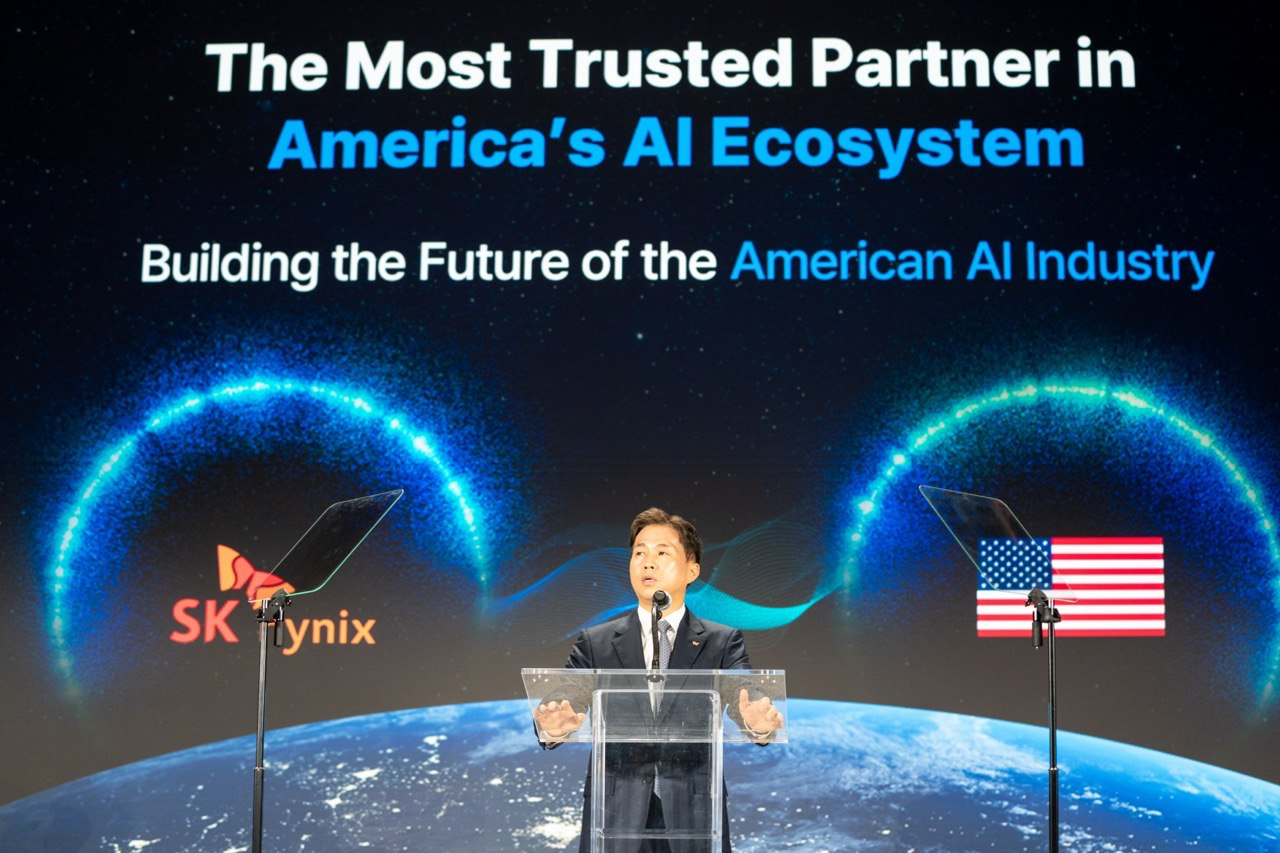
“I think we need to build a factory in the United States. If possible, I believe we should build it,” SK Group Chairman Chey Tae-won said in July, describing the "enormous pressure" from customers and governments to supply more memory chips. SK hynix was already preparing a US production base, but only for the later stages of making its most valuable artificial intelligence memory.
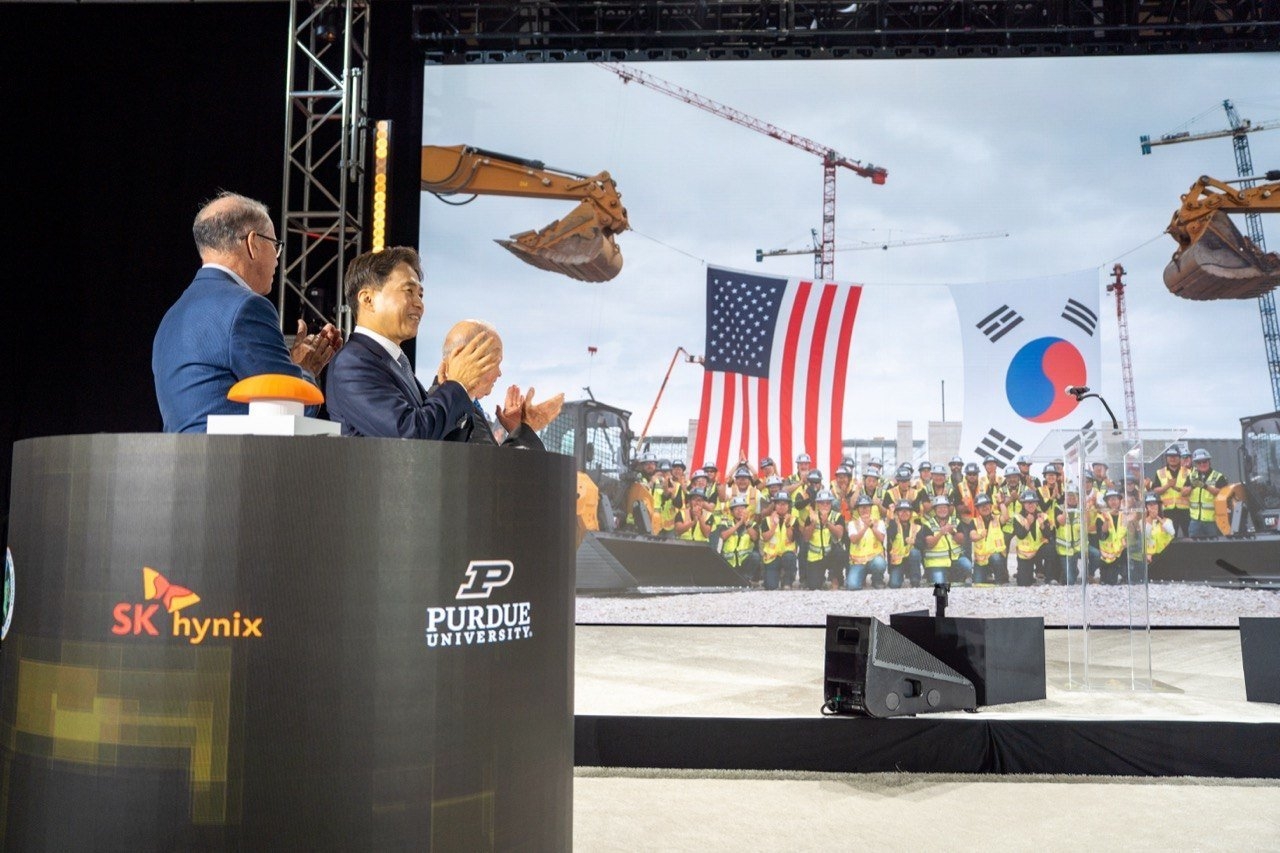
Its more than $4 billion Indiana plant, which broke ground last month, will receive advanced DRAM wafers made in South Korea and package and turn them into high-bandwidth memory, or HBM, from 2029. The memory chips themselves will still be fabricated in Korea.
The question now is whether SK hynix is willing to move part of the chipmaking itself to the US. Reuters reported Sept. 16 that SK hynix was discussing a bigger step, either leasing part of Intel’s Ohio complex to produce memory chips or forming a venture with Intel and major cloud companies seeking secure supplies. Two days later, Solidigm, SK hynix’s US NAND subsidiary, was reported to be considering a separate NAND plant in the US.
SK hynix has stressed that nothing has been decided. In a statement responding to the Reuters report, the company said it was “exploring various options to strengthen its global competitiveness,” but that “no specific plans or arrangements have been finalized.”
Why America when Korea is cheaper?
Making the wafers themselves, often called front-end production, is the costly part of semiconductor manufacturing. SK hynix has historically kept that work in Asia, where factories, engineers and suppliers are clustered around major production sites.
People familiar with the talks told Reuters that US fabrication would cost substantially more because of higher construction and labor expenses.
But US government policy is making that comparison less straightforward. SK hynix’s Indiana project received up to $458 million in federal CHIPS funding, while a White House semiconductor proclamation in January proposed broader chip tariffs alongside a “tariff offset program” that would give more favorable treatment to companies investing in US production.
“If you compare only manufacturing cost, Korea will almost always win,” an industry official said. “But if a major cloud company is willing to guarantee five or seven years of volume, you take a lot of uncertainty out of a multibillion-dollar investment.”
“Then you are asking whether the US premium is worth paying for guaranteed demand, subsidies and less exposure to future tariffs, not simply whether a wafer costs more.”
Reuters reported that major cloud companies seeking secure memory supplies could join a venture with SK hynix and Intel. No customer commitment has been disclosed.
SK hynix has cited customer proximity as one reason for Indiana. CEO Kwak Noh-jung called the US “the epicenter of AI innovation,” where major customers, research capabilities and partners come together. More than 100 companies are being considered as suppliers to the Indiana operation.
“Ten years ago, where the wafer was made was mostly the supplier's problem,” the industry official said. “Now the biggest AI customers are large enough that supply security itself can become part of the commercial discussion.”
What Intel’s unfinished fabs offer SK hynix
Intel began building two Ohio fabs in 2022, but the project has slipped years behind schedule, with the first now expected to begin operations in 2030 or 2031. A key question around Intel's foundry strategy has been whether it can secure enough outside customers to fill the capacity it is building, said Jo Jae-un, a researcher covering macroeconomics and investment strategy at Daishin Securities.
Intel has raised its 2026 capital expenditure plan above $20 billion and signaled still higher spending in 2027, with a significant share tied to completing Ohio, according to Daishin Securities. “If a major memory company like SK hynix fills part of that space, it would materially help both utilization and visibility on investment returns,” Jo said.
For SK hynix, the attraction is not a ready-made fab, but a site where Intel has already spent years developing infrastructure.
“I would not overstate the cost advantage,” Jo said. “But compared with starting from an empty field, that could reduce some of the execution burden.”
Solidigm has a different reason to reconsider geography. The US-based company grew out of Intel's former NAND and storage business acquired by SK hynix, while its NAND production remains concentrated in Dalian, China. A US plant would provide another production base and reduce some exposure to tariffs or tighter controls on semiconductor equipment shipped to China, Jo said.
Reuters reported separately on Friday that Solidigm is also considering a US IPO, although there is no public evidence linking the listing directly to the factory review.
Korea remains the main production base
SK hynix is still committing far more fabrication capacity at home. In August, it approved 35.2 trillion won ($25.97 billion) for a second DRAM fab in Yongin and 19.1 trillion won for a NAND fab in Cheongju, a combined 54.3 trillion won.
“I would not read this as SK hynix choosing the US over Korea,” Jo said. “The core capacity expansion is still happening in Korea.”
“You can build another fab in America, but you cannot recreate the Korean memory ecosystem overnight,” the industry official said. “But if customers are willing to guarantee demand and share some of the risk, then the fact that Korea is cheaper may no longer end the conversation.”
mjh@heraldcorp.com