
From local food traditions to historic streets and cultural landmarks, regional cities across South Korea are turning their distinctive assets into tourism destinations as the government seeks to draw international visitors beyond Seoul and revitalize local economies.
The two-year initiative, led by the Small Enterprise and Market Service, will support about six commercial districts outside Seoul. Each one can receive up to 5 billion won ($3.68 million) through the end of 2027.
The program centers on developing tourism content based on local culture and providing better services for international visitors, stronger support for local businesses and startups and upgraded marketing. Key measures include multilingual guides, payment and tax-refund services, pedestrian-friendly infrastructure, hands-on tourism experiences and collaboration with influencers and content creators.
Sokcho’s Seorak Rodeo, Yeongju’s Octopus 1955 and Gyeongju’s Hwangnidan-gil are among the areas chosen, along with Daegu's Gyodong, Gwangju's Dongmyeong and Seogwipo's central shopping district on Jeju Island. Each area is seeking to turn its own mix of culture, tourism and local businesses into a distinctive destination for domestic and international travelers beyond the country's major tourist hubs.
Sokcho’s Seorak Rodeo
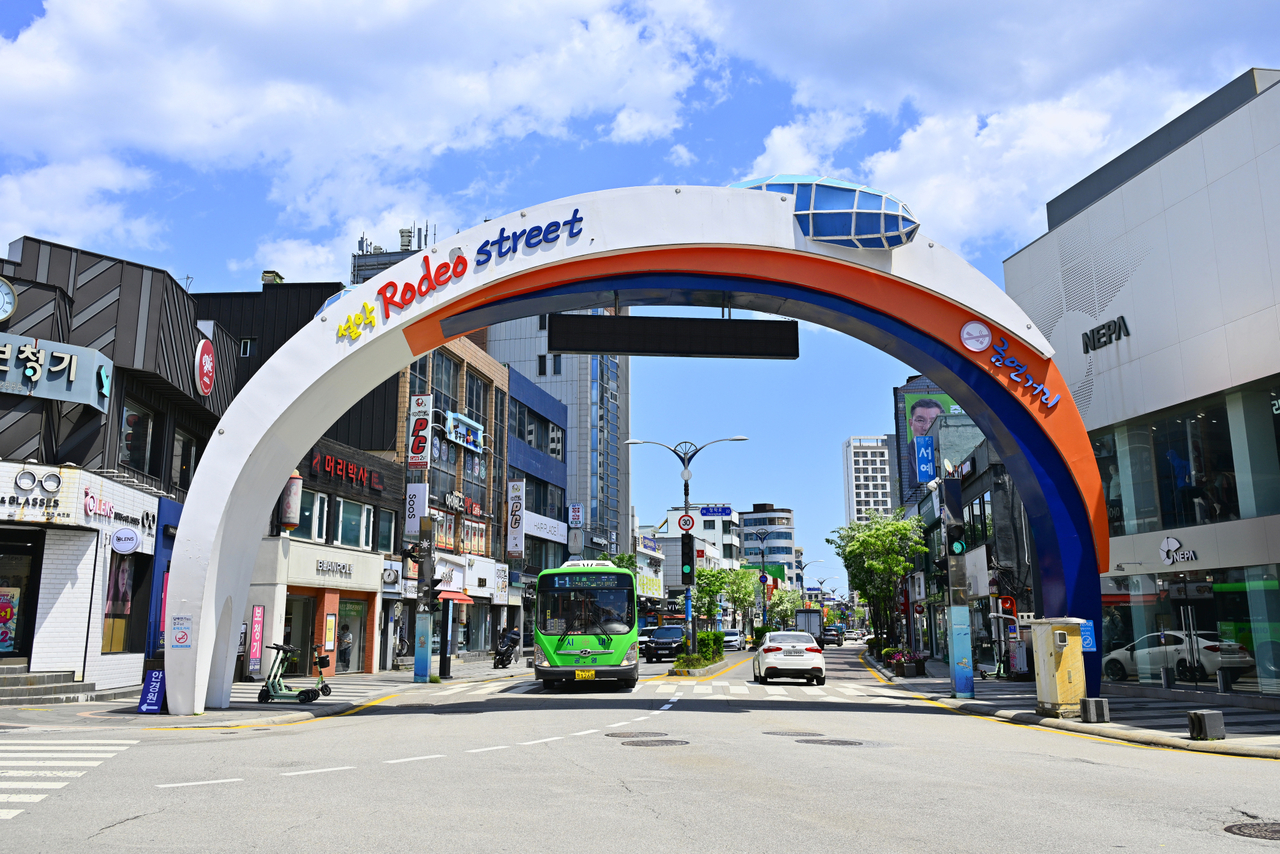
Seorak Rodeo is a downtown commercial district in Sokcho, Gangwon Province, that has 443 stores along Jungang-ro, including restaurants, retail shops and personal service businesses.
The district brings together Sokcho’s natural scenery, history and local culture. Visitors can access Seoraksan Mountain, the East Sea and Cheongcho Lake, as well as the food culture of Abai Village, which was formed by displaced residents after the Korean War. Nearby cultural spaces such as Chilseong Shipyard, Dong-A Bookstore and Munwudang bookstore also add to the area’s local character.
The district will work with the nearby Sokcho Tourist & Fisheries Market to encourage visitors to stay longer and spend more locally. A multilingual commercial district map covering food, accommodation, shopping and tourism information will be distributed, while a traveler center will provide services such as luggage storage and tax refunds for international visitors.
Vacant stores will be repurposed for local content. Second-floor spaces will be converted into media galleries, while ground-floor sites will host local goods showrooms and pop-up spaces for young entrepreneurs. Busking and cultural events will also be held, alongside startup programs that draw on local resources such as the central market, Seoraksan and displaced-resident cuisine to support young local creators.
Through 2027, the district will host seasonal festivals and monthly local programs while gradually expanding foreigner-friendly stores and spaces for new businesses. The initiative aims to establish Seorak Rodeo as a tourism district that showcases Sokcho’s natural, historical and cultural assets.
Yeongju’s Octopus 1955
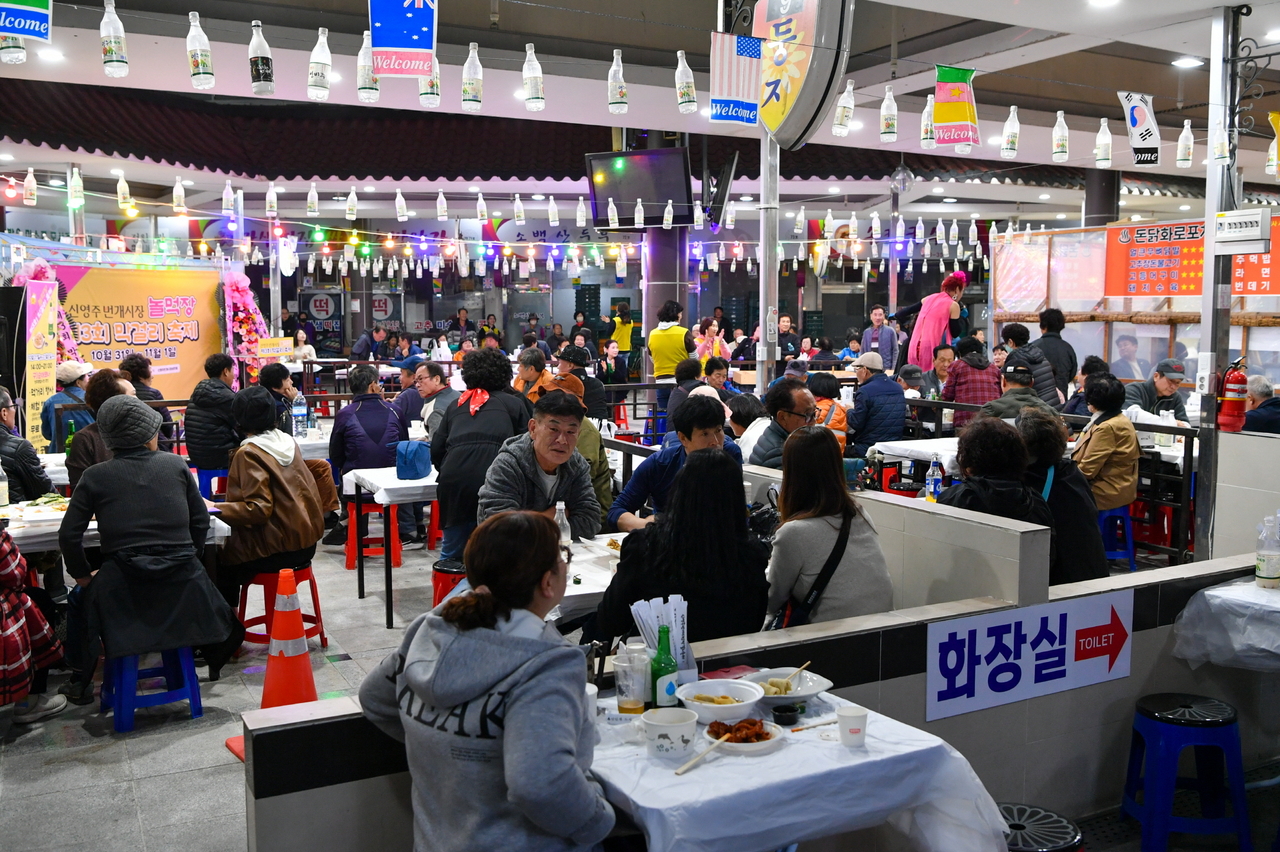
Yeongju Octopus 1955 is a downtown commercial district in Yeongju, Gyeongsangbuk-do, built around traditional markets and shopping streets along Yeongju Station and the railway. Spanning 52,400 square meters with 179 stores, the area brings together local food and everyday goods, including seafood, seasonal produce, grains, rice cakes and snacks.
Its signature offering is Yeongju Jasuk Octopus, a local food tradition with about 70 years of history. The food emerged after the Yeongdong Line opened in 1955, when octopus from the East Coast began arriving in Yeongju by rail. It became part of local customs and celebrations, including ancestral rites, weddings and communal feasts.
The area also brings together the Baeknyeon Railway, seonbi culture (virtuous scholars), regional specialties such as beef, ginseng and apples, and UNESCO World Heritage sites including Sosuseowon and Buseok Temple.
The Yeongju Octopus 1955 Glocal District project will connect these local assets through a unified brand and tourism route. Yeongju Station will serve as a gateway, with the railway corridor linking the commercial area to major tourist sites. Plans include local food and nighttime programs using Yeongju Jasuk Octopus and regional agricultural products, as well as experiential programs and souvenirs.
The initiative will also develop local products for online sales and identify new brands through collaboration among key stores, merchants and prospective entrepreneurs. It aims to establish a tourism route linking dining, experiences and shopping with stays at local accommodations.
The project will bring Yeongju’s World Heritage sites, cultural traditions, railway history and local cuisine together as part of a broader tourism offering, positioning the district as a place where visitors can explore the city’s diverse local content.
Gyeongju’s Hwangnidan-gil
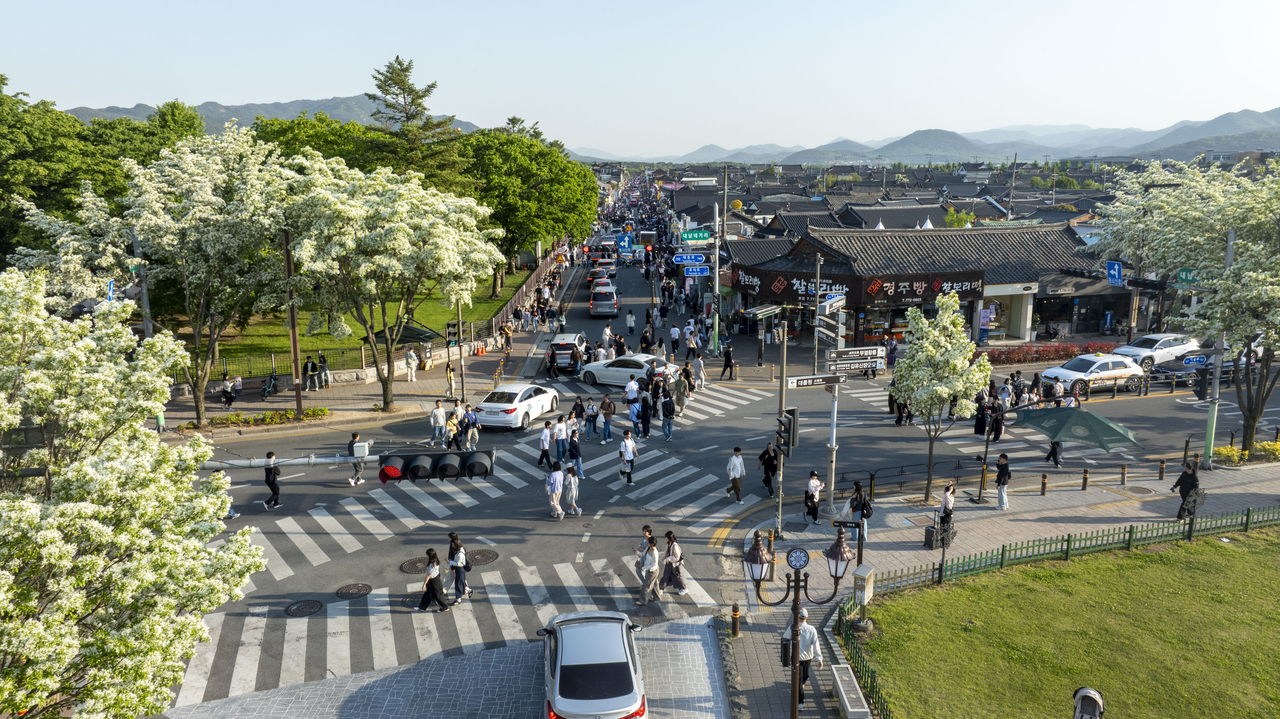
Gyeongju’s Hwangnidan-gil is a commercial district where cultural heritage sites such as Daereungwon and Cheomseongdae sit alongside traditional hanok, cafes, restaurants and independent bookstores. Covering 347,500 square meters, the area has 479 stores and has developed a distinct character by adapting traditional hanok and older buildings for use by contemporary businesses.
About 11 million people visited Hwangnidan-gil in 2025, including around 300,000 international visitors. Building on increased recognition following the APEC Economic Leaders’ Meeting, the district aims to develop into a global destination that combines traditional and contemporary culture.
The glocal district project will focus on adding global services to Hwangnidan-gil’s local content to make the area more accessible to international visitors. Plans include global payment options, multilingual information and digital platforms for tourism information and commercial content. Individual stores will also be encouraged to introduce services tailored to foreign customers.
Building a local startup ecosystem is another key part of the initiative. The project will identify local entrepreneurs, support collaboration with anchor businesses and develop products using tourism content and regional specialties. Inbound and outbound pop-up stores will also be operated to promote Hwangnidan-gil brands and products and create opportunities for new local businesses to establish themselves in the area.
K-culture content and global festivals will be developed around Hwangnidan-gil. The initiative will also connect the district with nearby commercial areas including Geumridan-gil, Bonghwang-ro, Jungang Market, Seongdong Market and Hwangchon, creating a tourism route that extends visitor traffic and spending across central Gyeongju.
kwonhl@heraldcorp.com
jyoungseon8@heraldcorp.com
- Korea's regional districts turn local culture into tourism destinations
- Beyond Seoul, local districts tap K-culture to attract tourists
- From protection to value creation: Korea resets IP strategy
- Korea's regional districts turn local culture into tourism destinations
- Hanwha Aerospace sets up Saudi unit in Middle East defense push
- SK On signs W1.1tr LFP materials deal with Posco Future M
-
Seoul education chief pushes to make international learning part of everyday classrooms
x
-
Basketball delivers triple gold as Korea sweeps Asian Games finals
x
-
Korean student among 7 sued over group sexual assault at Cornell University
x