Korea Herald correspondent
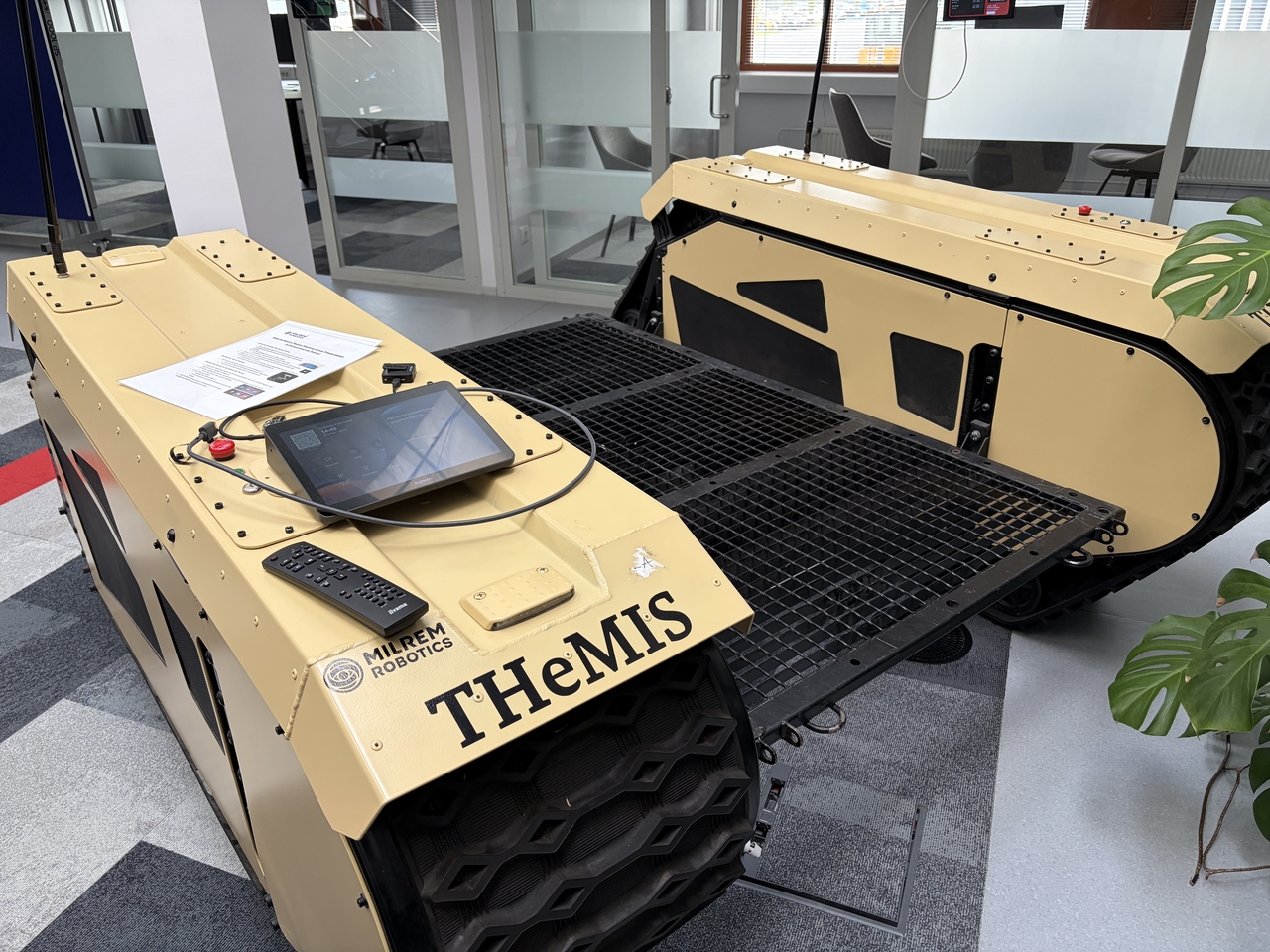
TALLINN, Estonia — On a control screen inside Milrem Robotics’ headquarters in Tallinn, a THeMIS unmanned ground vehicle moved across a field some 25 kilometers away, transmitting live video, fuel levels and battery status.
The demonstration offered a glimpse of a future battlefield already taking shape in Ukraine, where unmanned systems are increasingly being sent into areas too dangerous for soldiers or crewed vehicles — reducing the risk to human lives and offering advantages to countries with limited manpower.
Milrem, the Estonian defense company behind the vehicle, is drawing heavily on battlefield experience from Ukraine as it develops its next generation of robotic systems.
Founded in 2013, Milrem has grown into one of Europe’s leading developers of unmanned ground vehicles, supplying robotic systems to more than 20 countries.
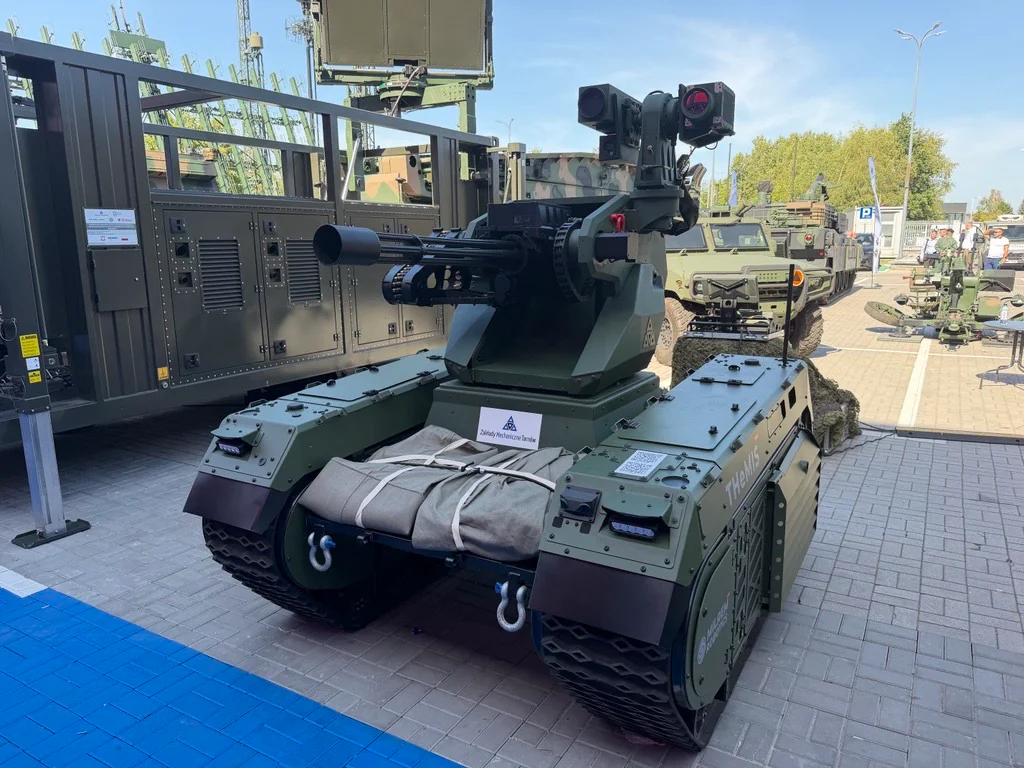
Its flagship THeMIS platform is now being used extensively by Ukrainian forces, primarily for logistics missions in areas considered too dangerous for crewed vehicles.
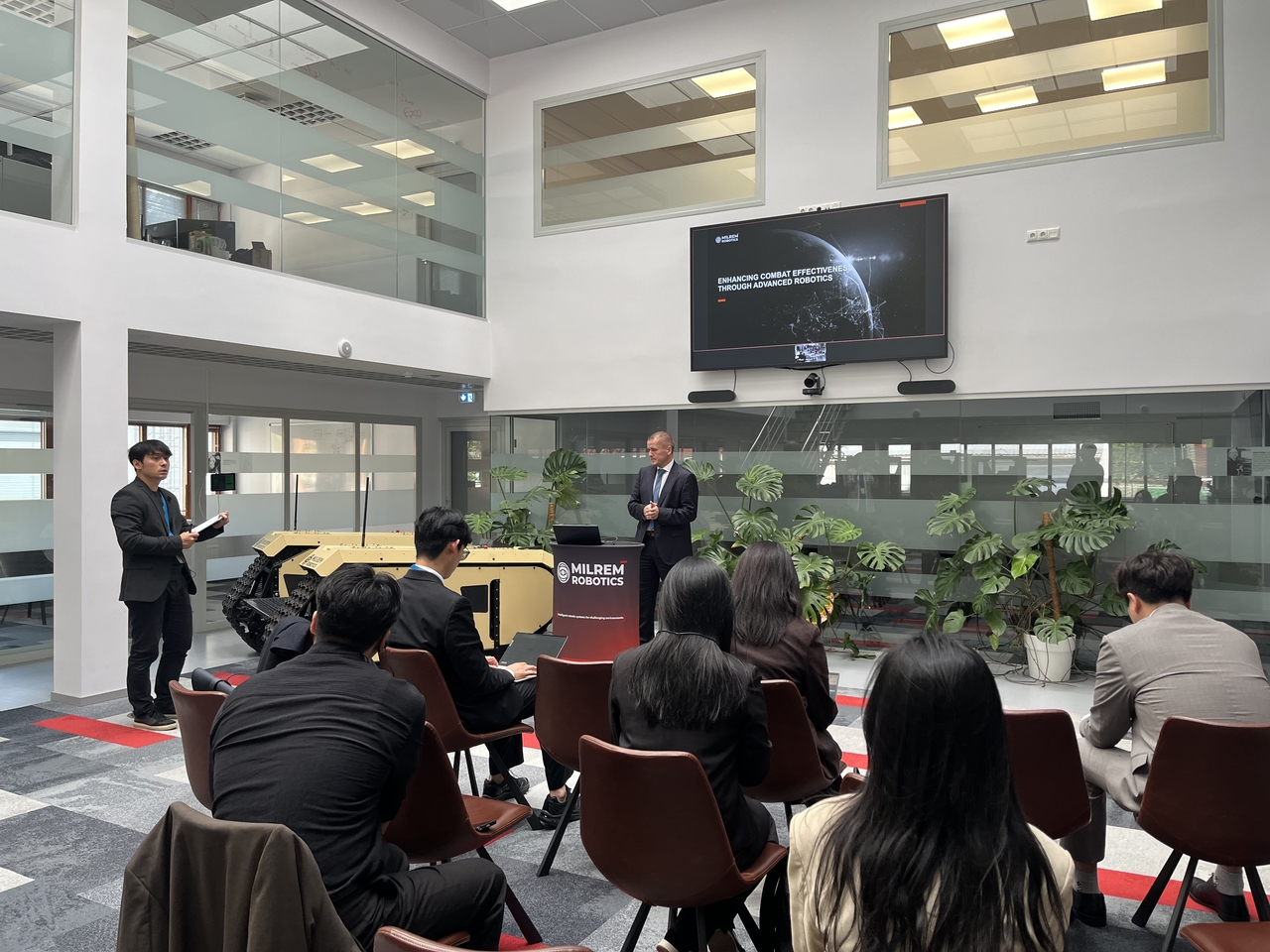
“Today, the biggest challenge on the front line is that logistics with manned vehicles is practically impossible,” Milrem Robotics founder and CEO Kuldar Vaarsi told a group of South Korean reporters visiting the facility on Sep. 17.
He said reconnaissance and first-person-view attack drones had made conventional vehicles vulnerable near the front, prompting Ukrainian forces to increasingly rely on unmanned ground vehicles to move supplies across areas stretching 10 to 20 kilometers.
Milrem expects more than 200 of its unmanned vehicles to be deployed on the Ukrainian front by the end of this year, according to Vaarsi.
The war has also influenced how the company designs and operates its systems.
“The simpler the system, the better and more reliable it is,” Vaarsi said, explaining that some sophisticated functions valued during peacetime exercises have proved unnecessary, or even burdensome, under actual combat conditions.
Ease of operation has become equally important. While Milrem normally provides two weeks of operator training, vehicles used in Ukraine must be simple enough for soldiers with little or no previous experience with unmanned systems to operate almost immediately, he said.
The company’s ARCOS software is designed to coordinate multiple robotic systems through a common interface. Milrem ultimately aims to make the system compatible not only with its own vehicles but also with unmanned platforms made by other companies.
At its Tallinn production line, Milrem uses an assembly-focused manufacturing model, outsourcing heavy manufacturing processes such as cutting and welding while conducting final assembly and system integration in-house. The company said its Tallinn and Netherlands facilities each had the capacity to produce roughly one vehicle per day.
Milrem is also expanding cooperation with South Korea’s Hanwha Aerospace.
The two companies signed a memorandum of understanding in February 2025 to cooperate on robotic combat vehicles and other unmanned ground systems, with the partnership aimed at developing products for both domestic and global markets.
Vaarsi said their cooperation goes beyond modifying the smaller THeMIS platform and includes work related to a new roughly 15-ton tracked unmanned vehicle designed to operate alongside mechanized forces.
“We are looking at how to combine Milrem’s ground robotics technologies with Hanwha’s extensive advanced defense technologies to bring completely new solutions to the market,” he said.
He added that the partnership was not aimed solely at the South Korean or Estonian markets, but at broader opportunities in the global defense industry.
Despite Milrem’s close monitoring of battlefield developments in Ukraine, Vaarsi said the deployment of North Korean troops in support of Russia had not resulted in any noticeable change in the operational data observed by the company.
Asked whether Milrem had detected changes in battlefield tactics or operating patterns since North Korean troops entered the war, he said, “No difference whatsoever.”
For Milrem, the broader lesson from Ukraine is that unmanned systems are increasingly being used in areas where the risk to soldiers and crewed vehicles has become too high.
“The ultimate purpose of an unmanned vehicle is that even if the equipment is hit and destroyed, you do not lose the life of your soldier,” Vaarsi said.
South Korean reporters visiting the facility attended under the Korea Press Foundation’s “2026 KPF Diploma Program: Security in the AI Era.”
flylikekite@heraldcorp.com