- NEWS AND VIEWS
Variants in genes involved in the production of extracellular matrix molecules could have enabled the skeletal adaptations that distinguish humans from other great apes.
By
-
Audrey M. Arner
-
Audrey M. Arner is in the Department of Biological Sciences, Vanderbilt University, Nashville, Tennessee 37232, USA.
-
-
Amanda J. Lea
-
Amanda J. Lea is in the Department of Biological Sciences, Vanderbilt University, Nashville, Tennessee 37232, USA.
-
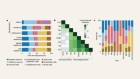
Across biological and biomedical disciplines, there is a strong interest in understanding the evolution and function of traits that differ in humans and our closest primate relatives, such as chimpanzees, bonobos and gorillas. Writing in Nature, Yan et al.1 use a comprehensive suite of genomics tools to systematically map genetic variants, genes and pathways that are involved in differentiating the human skeleton from those of other great apes.
doi: https://doi.org/10.1038/d41586-026-02775-z
References
Yan, Y. et al. Nature https://doi.org/10.1038/s41586-026-11053-x (2026).
Article Google Scholar
Almécija, S. et al. Science 372, eabb4363 (2021).
Article PubMed Google Scholar
King, M.-C. & Wilson, A. C. Science 188, 107–116 (1975).
Article Google Scholar
Song, J. H. T. et al. Proc. Natl Acad. Sci. USA 118, e2117557118 (2021).
Article PubMed Google Scholar
Jurmain, R. J. Hum. Evol. 39, 185–203 (2000).
Article Google Scholar
Richard, D. et al. Cell 181, 362–381 (2020).
Article PubMed Google Scholar
Benton, M. L. et al. Nature Rev. Genet. 22, 269–283 (2021).
Article PubMed Google Scholar
Rood, J. E., Hupalowska, A. & Regev, A. Cell 187, 4520–4545 (2024).
Article PubMed Google Scholar
Housman, G. et al. Curr. Opin. Genet. Dev. 93, 102374 (2025).
Article PubMed Google Scholar
Housman, G., Briscoe, E. & Gilad, Y. PLoS Genet. 18, e1010073 (2022).
Article PubMed Google Scholar
Popp, J. M. et al. Cell Genom. 4, 100701 (2024).
Article PubMed Google Scholar
Download references
Competing Interests
The authors declare no competing interests.
Related Articles
-
 Read the paper: The gene-regulatory evolution of the human skeleton
-
 A mobile DNA sequence could explain tail loss in humans and apes
-
 How the pelvis evolved to enable human bipedalism
-
See all News & Views
Subjects
Latest on:
- Evolution
- DNA sequencing
- Genomics
-
Reference genomes and fossils revise bat family phylogeny and biogeography
Article
-

Genome project opens the next chapter for studying bat evolution
News & Views
-
The gene-regulatory evolution of the human skeleton
Article
-
Mutating every DNA letter of a genome shows surprising effects — and the limits of AI
News
-
Reply to: Artefacts in single-cell mtDNA analyses misinform phylogenies
Matters Arising
-
Harmonizing standards and resources for the medical genome
Perspective
-
Vast cellular gene-expression atlas could transform how scientists understand brain ageing and disease
News & Views
-
Genome project opens the next chapter for studying bat evolution
News & Views
-
Reference genomes and fossils revise bat family phylogeny and biogeography
Article