- RESEARCH BRIEFINGS
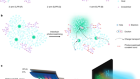
Non-uniformities in the layer of passivator molecules, which are used to fix defects and protect the surface of perovskite material in solar cells, can limit the durability of the resulting modules. Large modules treated instead with chemically stable lead carboxylate passivators were efficient, reliable and had a higher yield than did commercial silicon modules.
This is a summary of: Xu, D. et al. Lead carboxylates passivation for metre-scale perovskite solar modules. Nature 657, 918–924 (2026).
doi: https://doi.org/10.1038/d41586-026-02937-z
‘Expert opinion’ is published under a CC BY 4.0 licence.
References
Green, M. A. et al. Joule 10, 102494 (2026).
Article Google Scholar
Xiong, Z. et al. Science 390, 638–642 (2025).
Article PubMed Google Scholar
Jiang, W. et al. Nature 646, 95–101 (2025).
Article PubMed Google Scholar
Li, Z. et al. Nature Commun. 17, 7418 (2026).
Article PubMed Google Scholar
Download references
Related Articles
-
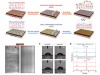 Read the paper: Lead carboxylates passivation for metre-scale perovskite solar modules
-
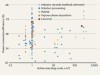 Vaporization trick enables ‘tandem’ solar cells to be made at lower temperatures
-
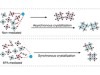 Uniform film formation helps tandem solar cells work better for longer
Subjects
Latest on:
- Renewable energy
- Materials science
-
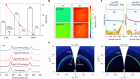
Lead carboxylates passivation for metre-scale perovskite solar modules
Article
-
Photocatalytic water splitting by 2D polymer with out-of-plane carrier flow
Article
-
Electronic-resonance enhanced molecule for perovskite solar cells
Article
-
Sequence-encoded hexagonal lattices in multichannel peptide nanofibrils
Article
-
Stacking-induced direct band gap in CVD-grown 1H MoS2 bilayers
Article
-
Electroluminescent photoresists extending lithographic scaling to OLEDs
Article