- NEWS AND VIEWS
A map of fats across the whole mouse brain reveals a spatial architecture that differs from that seen in gene-expression and protein atlases.
By
-
Evan Macosko
-
Evan Macosko is in the Stanley Center for Psychiatric Research at the Broad Institute of MIT and Harvard, Cambridge, Massachusetts 02142, USA.
-
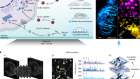
When the pioneering German–British neurochemist Johann Thudichum generated the first catalogue of brain lipids more than a century ago, one molecular fraction baffled him so much that he named it sphingosine, after the enigmatic ancient Sphinx1. A century and a half later, the brain’s fats have retained much of that mystery. Comprising half of its dry weight, lipids are perhaps the brain’s most defining compositional feature. Their most famous role is forming the insulating myelin wrapping that enables efficient electrical conduction along neuronal projections called axons. But beyond this, a broader conceptual understanding of brain lipids is still in its infancy. How the vast diversity of brain lipids is spatially organized, and why the brain requires such immense biochemical variety, remains a big puzzle — one that Bassini et al.2 begin to address in their paper in Nature.
doi: https://doi.org/10.1038/d41586-026-02772-2
References
Thudichum, J. L. W. A Treatise on the Chemical Constitution of the Brain (Bailliere Tindall, 1884).
Google Scholar
Bassini, L. F. et al. Nature https://doi.org/10.1038/s41586-026-11050-0 (2026).
Article Google Scholar
Langlieb, J. et al. Nature 624, 333–342 (2023).
Article PubMed Google Scholar
Yao, Z. et al. Nature 624, 317–332 (2023).
Article PubMed Google Scholar
Sjöstedt, E. et al. Science 367, eaay5947 (2020).
Article PubMed Google Scholar
Oh, S. W. et al. Nature 508, 207–214 (2014).
Article PubMed Google Scholar
Pritschet, L. et al. Nature Neurosci. 27, 2253–2260 (2024).
Article PubMed Google Scholar
da Silva, R. R., Dorrestein, P. C. & Quinn, R. A. Proc. Natl Acad. Sci. USA 112, 12549–12550 (2015).
Article PubMed Google Scholar
Hoffmann, M. A. et al. Nature Biotechnol. 40, 411–421 (2022).
Article PubMed Google Scholar
Stravs, M. A., Dührkop, K., Böcker, S. & Zamboni, N. Nature Methods 19, 865–870 (2022).
Article PubMed Google Scholar
Skinnider, M. A., Stacey, R. G., Wishart, D. S. & Foster, L. J. Nature Mach. Intell. 3, 759–770 (2021).
Article Google Scholar
Vaughen, J. P., Theisen, E. & Clandinin, T. R. Curr. Opin. Neurobiol. 80, 102702 (2023).
Article PubMed Google Scholar
Vaughen, J. P. et al. Neuron 110, 3186–3205 (2022).
Article PubMed Google Scholar
Hansen, S. B., Tao, X. & MacKinnon, R. Nature 477, 495–498 (2011).
Article PubMed Google Scholar
Ioannou, M. S. et al. Cell 177, 1522–1535 (2019).
Article PubMed Google Scholar
Frank, J. A., Franquelim, H. G., Schwille, P. & Trauner, D. J. Am. Chem. Soc. 138, 12981–12986 (2016).
Article PubMed Google Scholar
Hartrampf, N. et al. Biophys. J. 122, 2325–2341 (2023).
Article PubMed Google Scholar
Mukhopadhyay, T. K., Morstein, J. & Trauner, D. Curr. Opin. Pharmacol. 63, 102202 (2022).
Article PubMed Google Scholar
Idevall-Hagren, O., Dickson, E. J., Hille, B., Toomre, D. K. & De Camilli, P. Proc. Natl Acad. Sci. USA 109, E2316–E2323 (2012).
Article PubMed Google Scholar
Tei, R., Li, X.-L., Luan, L. & Baskin, J. M. Nature Chem. Biol. 22, 728–739 (2026).
Article PubMed Google Scholar
Download references
Competing Interests
The author declares no competing interests.
Related Articles
-
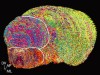 Read the paper: The lipidomic architecture of the mouse brain
-
 A map of neural signals and circuits traces the logic of brain computation
-
 Cellular atlases of the entire mouse brain
-
See all News & Views
Subjects
Latest on:
- Brain
- Biochemistry
- Microscopy
-
Landmark map of human brain’s gene activity holds clues to Alzheimer’s disease and more
News
-

How to stay smart in the age of AI: the science of critical thinking
News Feature
-
Vast cellular gene-expression atlas could transform how scientists understand brain ageing and disease
News & Views
-
Chiral oxazolidinones via biocatalytic aziridination of unactivated alkenes
Article
-
The lipidomic architecture of the mouse brain
Article
-

How do I change labs gracefully during my PhD?
Career Feature
-
This super-cold microscope could spur a quantum revolution
News
-
Atomic-scale double-slit interferometry with a focused electron probe
Article
-
Luminescent-reaction-enabled super-resolution imaging
Article