- RESEARCH BRIEFINGS
In the natural world, an animal can blend strategies so it can advance towards several goals at the same time. An engineering approach called control theory was used to infer people’s goals while they played a simple video game, and showed how three brain regions work together to implement goal blending.
This is a summary of: Chericoni, A. et al. Neural basis of compositional control. Nature https://doi.org/10.1038/s41586-026-10896-8 (2026).
doi: https://doi.org/10.1038/d41586-026-02395-7
‘Expert opinion’ is published under a CC BY 4.0 licence.
References
Pereira, T. D., Shaevitz, J. W. & Murthy, M. Nature Neurosci. 23, 1537–1549 (2020).
Article PubMed Google Scholar
Merel, J., Botvinick, M. & Wayne, G. Nature Commun. 10, 5489 (2019).
Article PubMed Google Scholar
Yoo, S. B. M., Hayden, B. Y. & Pearson, J. M. Philos. Trans. R. Soc. Lond. B 376, 20190664 (2021).
Article Google Scholar
Hayden, B. Y., Pearson, J. M. & Platt, M. L. Nature Neurosci. 14, 933–939 (2011).
Article PubMed Google Scholar
Download references
Related Articles
-
 Read the paper: Neural basis of compositional control
-
 How the brain decides when to stick at it, give up or try something new
-
 How the brain’s amygdala reacts when making decisions to avoid losses
Subjects
Latest on:
- Neuroscience
- Brain
-
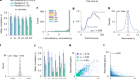
Neural basis of compositional control
Article
-
Temporal uncoupling of radial glia lineage progression in cortical organoids
Article
-

A controversial Alzheimer’s surgery is said to reverse symptoms — here’s what scientists know
News Feature
-
A controversial Alzheimer’s surgery is said to reverse symptoms — here’s what scientists know
News Feature
-

Brains of male and female mice recover differently from ketamine
Research Highlight
-

All living things emit a faint glow. Could this light be useful?
News Feature