- RESEARCH BRIEFINGS
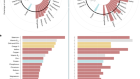
Marine algae produce sulfated carbohydrates called fucoidans that are chemically too complex for any bacteria to digest alone. Instead, marine bacteria split the task between them in a modular fashion: some strains degrade the molecular backbone, whereas others remove the side branches.
This is a summary of: Sichert, A. et al. Synergistic degradation of fucoidans in the ocean. Nature https://doi.org/10.1038/s41586-026-10980-z (2026).
doi: https://doi.org/10.1038/d41586-026-02873-y
‘Expert opinion’ and the figure are published under a CC BY 4.0 licence.
References
Vidal-Melgosa, S. et al. Nature Commun. 12, 1150 (2021).
Article PubMed Google Scholar
Hellige, I. et al. Preprint at bioRxiv https://doi.org/10.64898/2026.07.10.737761 (2026).
Sichert, A. et al. Nature Microbiol. 5, 1026–1039 (2020).
Article PubMed Google Scholar
Pérez-Cruz, C. et al. Nature Commun. 15, 10906 (2024).
Article PubMed Google Scholar
Vincent, F. et al. Nature Commun. 14, 510 (2023).
Article PubMed Google Scholar
Download references
Related Articles
-
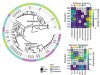 Read the paper: Synergistic degradation of fucoidans in the ocean
-
 Artificial algal blooms could remove atmospheric carbon — but can they be used responsibly?
-
 Corals have algal friends for dinner
Subjects
Latest on:
- Microbiology
- Ecology
- Ocean sciences
-
Mutational constraints on RSV F and its neutralization by antibodies
Article
-
These bizarre, much-coveted microbes are revealing the origins of complex life
News Feature
-
Assessing biological degradation of non-hydrolysable synthetic polymers
Perspective
-

How is climate change affecting conifers and their ability to sequester carbon?
News & Views
-

The pet trade puts reptiles and amphibians at risk: close legal gaps now
Comment
-

The super El Niño is already wreaking havoc: here’s what’s in store
News
-
The nutritional value of invertebrate aquatic foods
Article
-

Why are El Niños getting stronger? 1,000-year-coral record points to climate change
News
-

Ocean temperatures set to break all-time record: what’s next?
News