 Korea Herald
Poeun Jong Mong-ju (1337-1392) exemplified the spirit of "jijo" and "gigae," the unyielding fidelity and fortitude to uphold one’s principles and convictions. These qualities represent an essential core of the "seonbi," or scholar, spirit.
More than six centuries after his death, Poeun remains a beloved and revered historical figure. Despite the political division of the peninsula, Koreans on both sides honor him as an enduring symbol of loyalty, integrity and principled conviction.
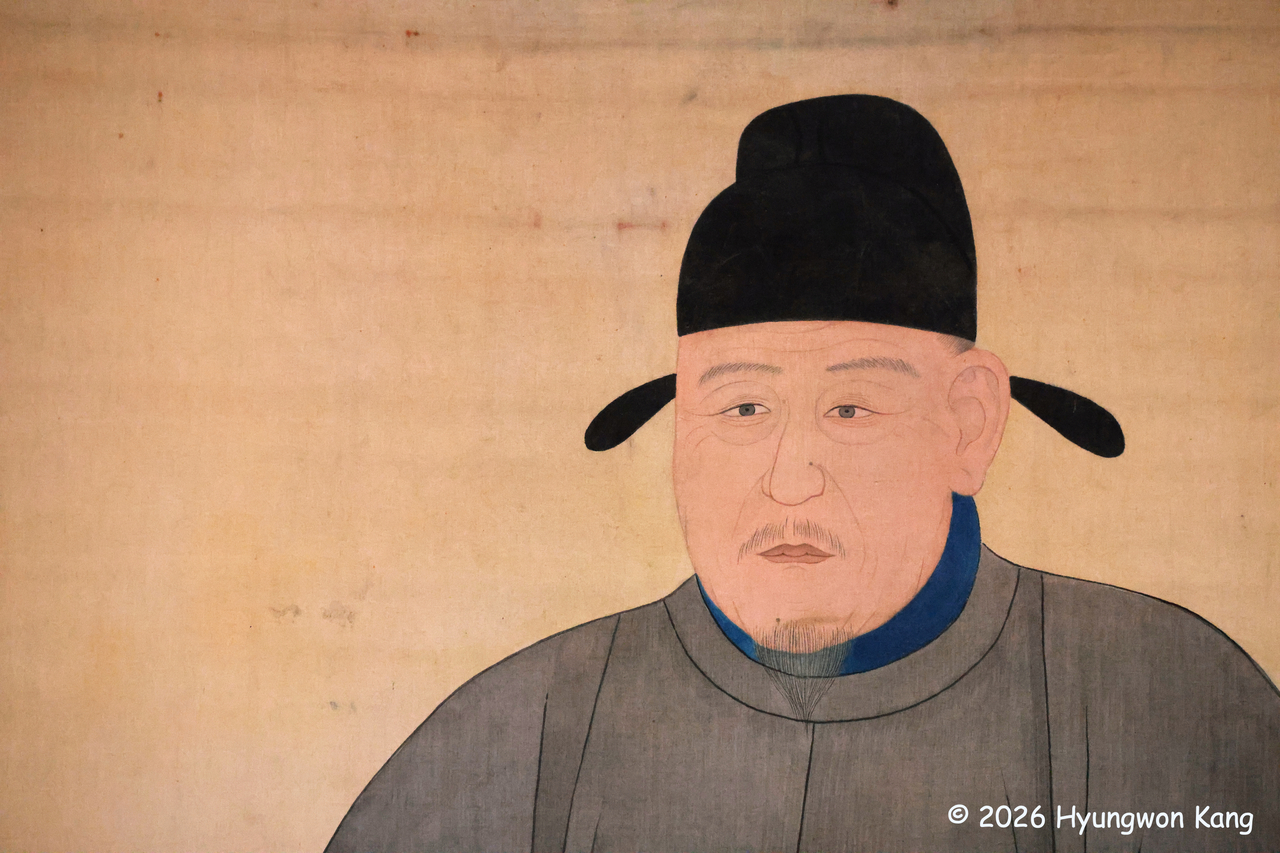
A native of Gyeongsang Province, Poeun was one of the last great seonbi of the Goryeo empire, also romanized as Koryo, before Yi Seong-gye overthrew Goryeo and established the Joseon kingdom in 1392.
When Yi Bang-won, who later became King Taejong and was the father of King Sejong the Great, urged Jong Mong-ju to abandon Goryeo and support the emerging Joseon regime, Poeun replied with an impromptu "sijo," or poetry, declaring his unshakable fidelity:
“Though this body die and die again, a hundred deaths,
Though white bones turn to dust and dirt,
Whether a soul remains or not —
How could loyalty to my king ever change?” Dansimga (Song of Enduring Fidelity)
Such spontaneous exchanges of sijo were a classical medium through which seonbi expressed moral conviction. Poeun’s final verse became an archetype of unwavering loyalty in Korean culture.
Shortly thereafter, Poeun was assassinated on Yi Bang-won’s orders at Sonjuk Bridge in Kaesong on May 4, 1392, shortly before the fall of Goryeo.
Yet one of the great historical ironies of Poeun’s legacy is that the very man who ordered his killing later helped restore his honor.
Immediately after the founding of Joseon, Jong Mong-ju was regarded as an opponent of the new dynasty. But after Yi Bang-won became King Taejong, he rehabilitated Poeun, posthumously elevated his status and bestowed honors upon him.
The political logic was profound. A new dynasty founded through the overthrow of the old one needed to teach its own officials that loyalty to one’s sovereign was an absolute virtue. By honoring the man who had refused to betray Goryeo, Joseon transformed a former political enemy into an enduring model of fidelity.
Poeun was also an important early scholar of Neo-Confucianism in Korea. As Joseon increasingly defined itself through a Neo-Confucian political and moral order, his scholarship, integrity and refusal to abandon his king made him an ideal spiritual ancestor for the seonbi class. Later scholar-officials and the Sarim revered him as both a scholarly predecessor and a symbol of uncompromising loyalty.
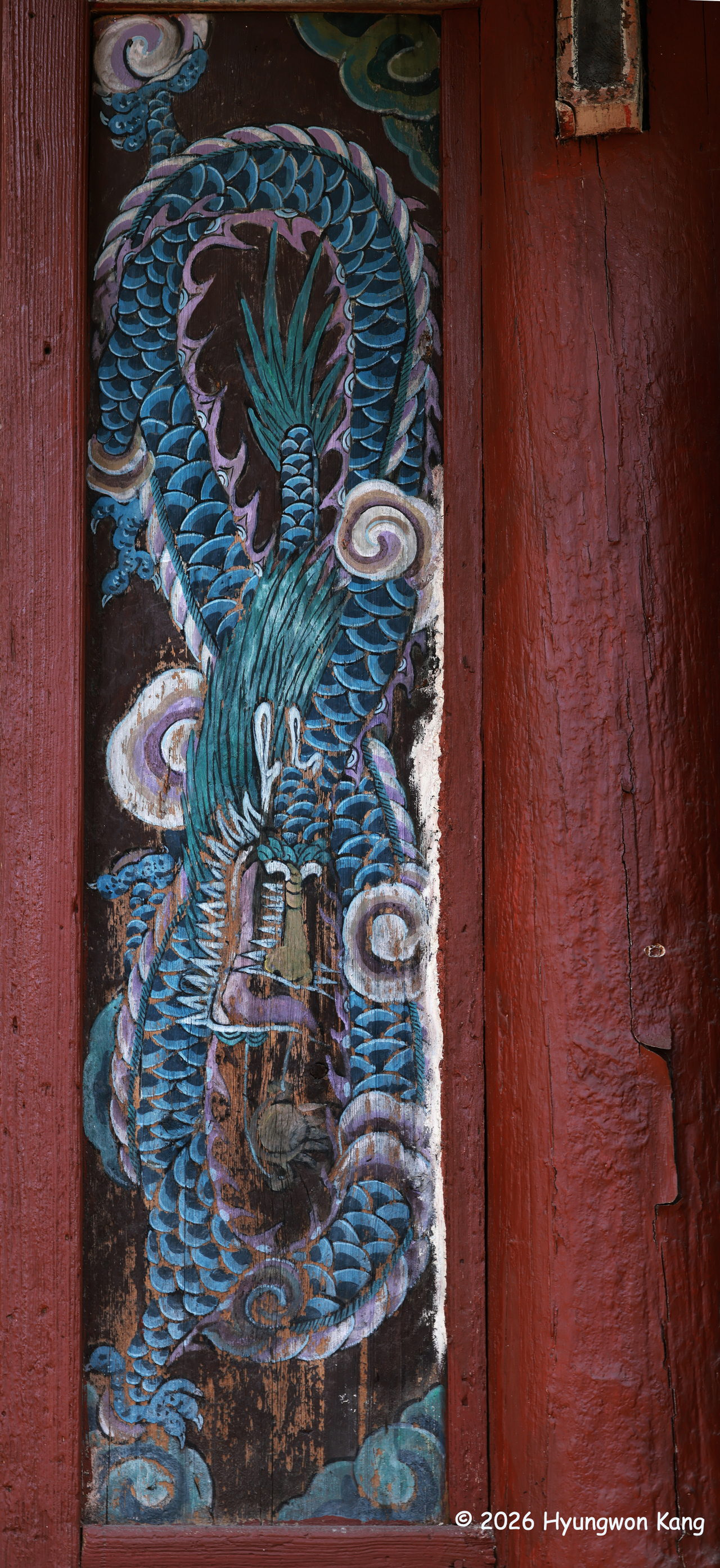
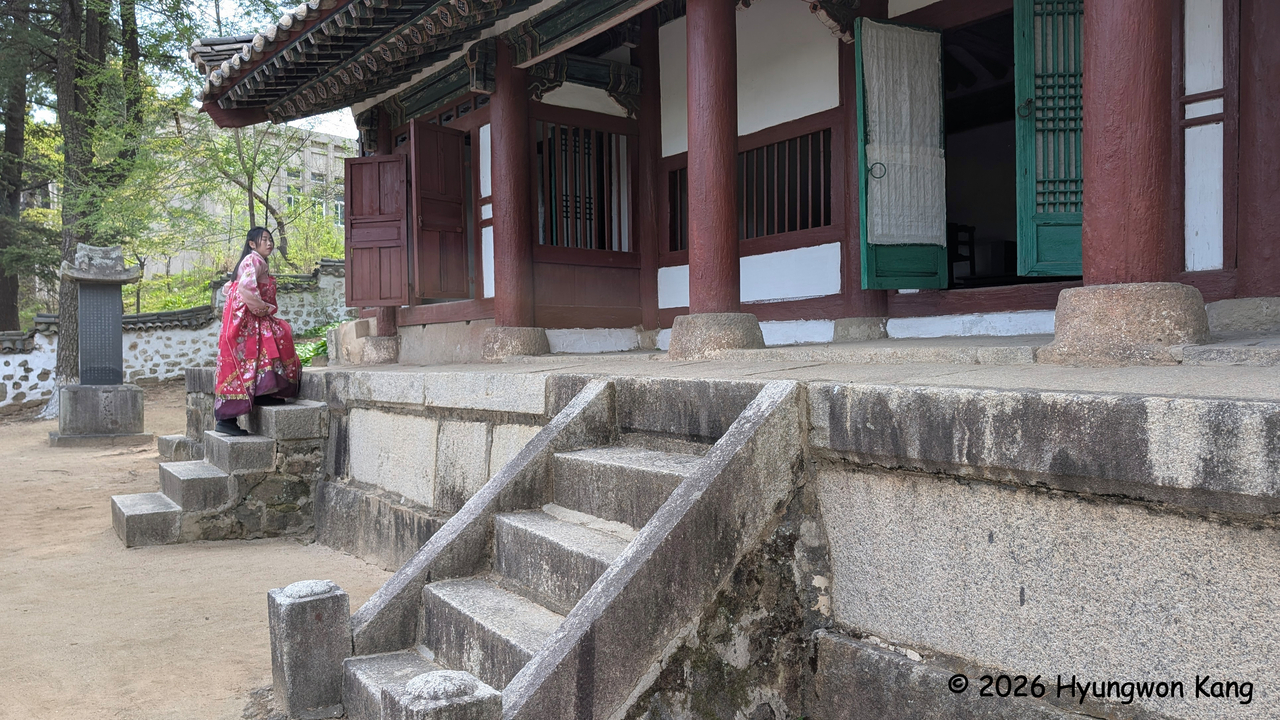
In Kaesong, Sungyang Sowon was established in 1573 on the site of Jong Mong-ju’s former residence. UNESCO describes it as a Confucian private school at the former home of Jong Mong-ju, whose assassination marked the overthrow of Goryeo. Sungyang Sowon is one of the components of the Historic Monuments and Sites in Kaesong, inscribed on UNESCO’s World Heritage List in 2013.
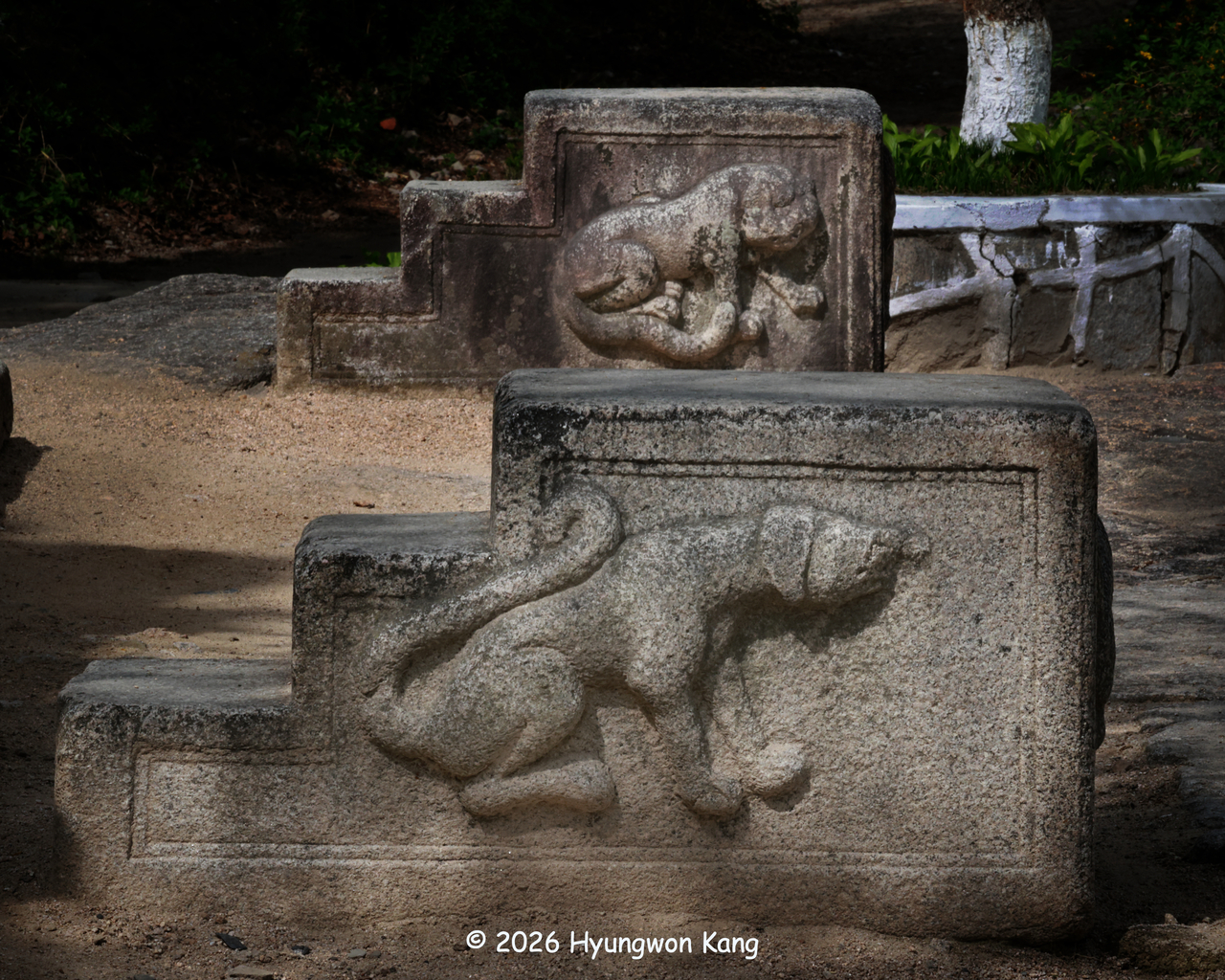
At the entrance to Sungyang Sowon in Kaesong stand two stepped stone structures of equal height facing each other, known as "masangdae" and "mahadae." They served as mounting (masangdae) and dismounting (dismounting) platforms for horse riders.
The three exposed sides of the stone steps are decorated with finely carved animals. Carved into the mahadae are images resembling native Korean dogs. One has floppy ears, while another has a short muzzle, offering an intriguing visual record of the variety of dogs familiar to Koreans in earlier times.
According to professor Ha Ji-hong, one of Korea’s best-known experts on native dogs, large numbers of Korean dogs were slaughtered between 1937 and 1945, during the Japanese colonial period, for their hides, which were used to make winter clothing for Japanese troops fighting in the bitter cold of Manchuria. The mass killing contributed to the disappearance or severe depletion of many indigenous Korean dog populations, leaving only a small number of native breeds surviving today.
Modern whole-genome research likewise shows that Korea’s surviving native dogs preserve substantial and ancient genetic diversity. A 2023 study published in iScience, analyzing 205 canid genomes, places the divergence of Korean dog populations thousands of years into the past.
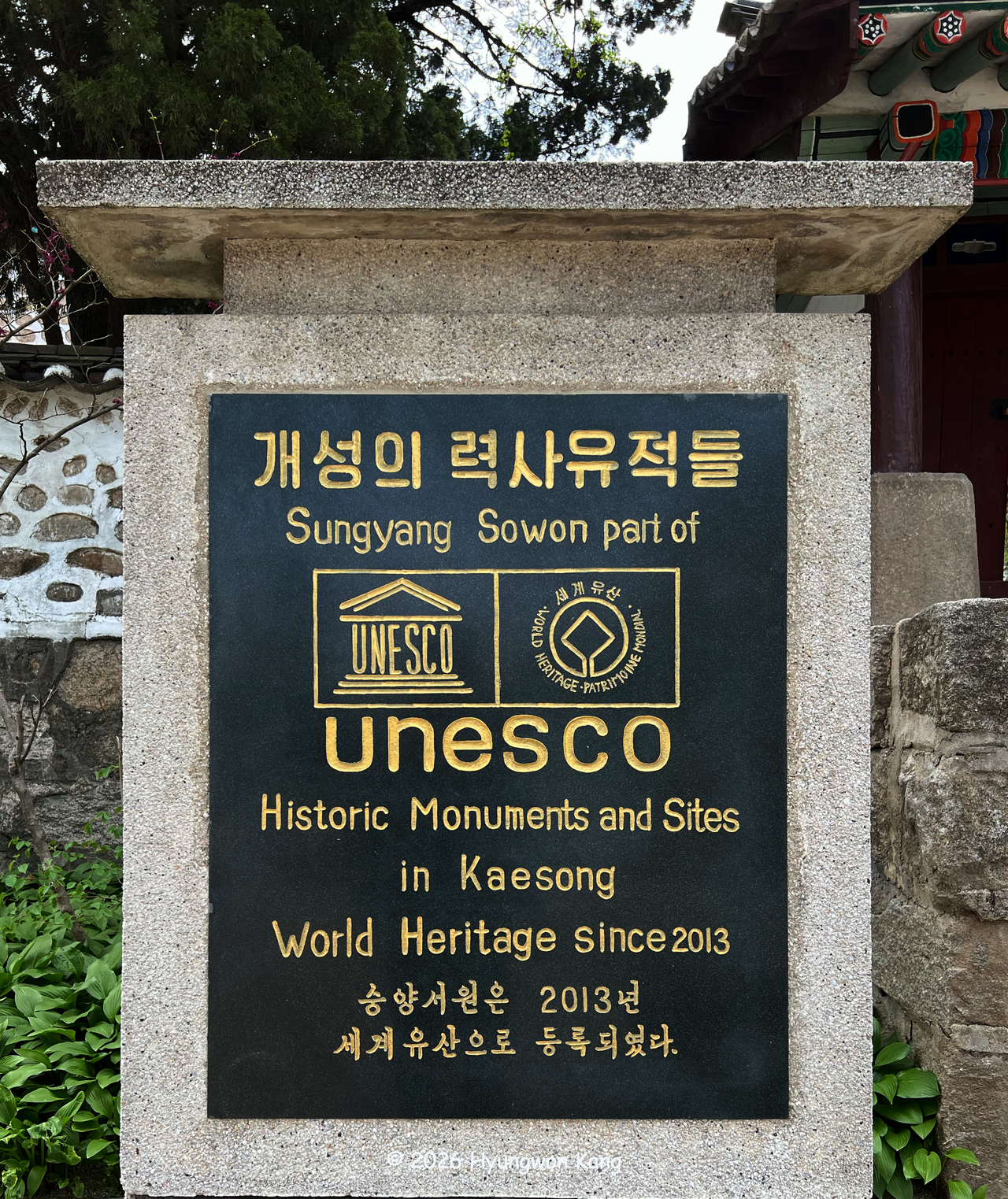
Across the centuries, seonbi have revered Jong Mong-ju as one of the “Eighteen Sages of the East.” More than six centuries after his death, Poeun remains beloved and revered in both North and South Korea. In the South, his scholarship, Dansimga and unwavering loyalty remain part of the cultural memory of the seonbi tradition. In the North, his legacy is preserved at Sungyang Sowon and Sonjukgyo Bridge in Kaesong, where he is remembered as one of Goryeo’s great historical figures.
That makes Poeun Jong Mong-ju a remarkable figure in Korean history: A Goryeo loyalist killed for refusing to betray his dynasty, rehabilitated by the very Joseon king who had ordered his death, and ultimately embraced across the Korean Peninsula as an enduring symbol of fidelity.
More than 600 years after his assassination, political systems have changed, and the peninsula has been divided, but Poeun’s jijo and gigae still belong to Koreans on both sides — holding firmly to principle even when the price is one’s life.
By Hyungwon Kang
Hyungwon Kang is a Korean American photojournalist, columnist, author and two-time Pulitzer Prize winner. He reported on North Korea in 1995, 1997 and 2026. Kang is the author of "Visual History of Korea" and "Seonbi Country Korea, Seeking Sagehood." His ongoing Visual History of Korea project documents Korean history and culture across all of Korea for global audiences.
The views expressed in this article are the writer’s own. — Ed.
khnews@heraldcorp.com
- LIV players returning to PGA Tour has been a trickle. The tour might need to plan for more
- [Graphic News] Heat wave reshapes summer mobility
- [Kim Seong-kon] What if Nazism and imperialism had won?
-
Zelenskyy says Moscow is getting more North Korean missiles
x
-
Homeplus outlets resume operations after court extends rehabilitation proceedings
x
-
Gwangju FC players pull driver from burning car after match
x