- RESEARCH BRIEFINGS
As the most diverse class of animals, insects have dominated terrestrial ecosystems for the past 320 million years. However, the origins of this successful group have faded into the abysses of geological time. A collection of fossils reveals the unusual body plans and evolutionary experiments that could have contributed to the success of insects.
This is a summary of: Tihelka, E. et al. Amphibious stem-insect sheds light on colonization of land. Nature https://doi.org/10.1038/s41586-026-10961-2 (2026).
doi: https://doi.org/10.1038/d41586-026-02710-2
References
Stork, N. E. Annu. Rev. Entomol. 63, 31–45 (2018).
Article PubMed Google Scholar
Lozano-Fernandez, J. et al. Phil. Trans. R. Soc. B 371, 20150133 (2016).
Article PubMed Google Scholar
Haas, F., Waloszek, D. & Hartenberger, R. Org. Divers. Evol. 3, 39–54 (2003).
Article Google Scholar
Garrouste, R. et al. Nature 488, 82–85 (2012).
Article PubMed Google Scholar
Download references
Related Articles
-
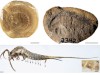 Read the paper: Amphibious stem-insect sheds light on colonization of land
-
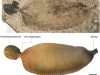 Jurassic fossil reveals the origin of parasitic thorny-headed worms
-
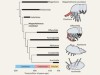 Pincer movement: fossil pushes origins of chelicerate arthropods back to the Cambrian period
Subjects
Latest on:
- Palaeontology
- Evolution
-
Denisovans from southwestern China and their subsistence strategies
Article
-
Ancient proteins identify various Denisovan remains from Southwest China
Article
-
The Kelvin scale’s creator William Thomson made many scientific advances
News & Views
-
Denisovans from southwestern China and their subsistence strategies
Article
-
Ancient proteins identify various Denisovan remains from Southwest China
Article
-
The Kelvin scale’s creator William Thomson made many scientific advances
News & Views