- NEWS AND VIEWS
Mining millions of AI-predicted structures reveals an evolutionarily conserved protein that resembles a receptor family member but functions differently.
By
-
Nil Casajuana-Martin
-
Nil Casajuana-Martin is in the Center of Excellence for Data Driven Discovery, Department of Structural Biology, St. Jude Children’s Research Hospital, Memphis, Tennessee 38105, USA.
-
-
M. Madan Babu
-
M. Madan Babu is in the Center of Excellence for Data Driven Discovery, Department of Structural Biology, St. Jude Children’s Research Hospital, Memphis, Tennessee 38105, USA.
-
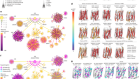
Most human proteins have been catalogued. However, many remain part of the ‘dark proteome’, which comprises proteins with functions that cannot be readily inferred because their amino-acid sequences are not similar to those of characterized protein families1. Writing in Nature, Lee et al.2 use predicted protein structures to shine a light on this poorly understood group of proteins.
doi: https://doi.org/10.1038/d41586-026-02472-x
References
Oprea, T. I. et al. Nature Rev. Drug Discov. 17, 317–332 (2018).
Article PubMed Google Scholar
Lee, K. et al. Nature https://doi.org/10.1038/s41586-026-10993-8 (2026).
Article Google Scholar
Venkatakrishnan, A. J. et al. Nature 494, 185–194 (2013).
Article PubMed Google Scholar
Chothia, C. & Lesk, A. M. EMBO J. 5, 823–826 (1986).
Article PubMed Google Scholar
Jumper, J. et al. Nature 596, 583–589 (2021).
Article PubMed Google Scholar
Pandey, S. et al. Mol. Cell 81, 4605–4621, (2021).
Article PubMed Google Scholar
Rustom, A., Saffrich, R., Markovic, I., Walther, P. & Gerdes, H.-H. Science 303, 1007–1010 (2004).
Article PubMed Google Scholar
Liu, S., Daly, C. A., Ogden, S. K. & Zurzolo, C. Nature Rev. Mol. Cell Biol. 27, 684–701 (2026).
Article PubMed Google Scholar
Varadi, M. et al. Nucleic Acids Res. 52, D368–D375 (2024).
Article PubMed Google Scholar
van Kempen, M. et al. Nature Biotechnol. 42, 243–246 (2024).
Article PubMed Google Scholar
Download references
Competing Interests
The authors declare no competing interests.
Related Articles
-
 Read the paper: TM184C is a GPCR-like regulator of intercellular exchange and autophagy
-
 Dogma-defying signalling through G proteins could lead to better pain relief
-
 Protein-structure prediction revolutionized
-
See all News & Views
Subjects
Latest on:
- Cell biology
- Computational biology and bioinformatics
- Structural biology
-
TM184C is a GPCR-like regulator of intercellular exchange and autophagy
Article
-
AI model predicts which breast-cancer drugs work best
News
-

Drug delivery gets subcellular
Outlook
-
TM184C is a GPCR-like regulator of intercellular exchange and autophagy
Article
-

Use AI as a sparring partner, not an oracle
World View
-

The Einstein test: what happens when AI tries to rediscover relativity?
News Feature
-

Structure and operating principles of a monkeypox virus replisome
Article
-

Evolutionary mystery revealed by structures of a key enzyme in the synthesis of glycolipids
News & Views
-
Primate-specific regulation of the human glycosphingolipid gatekeeper UGCG
Article