- RESEARCH BRIEFINGS
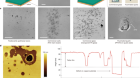
In many real-world settings, water droplets can become slightly charged as they slide across solid surfaces. This charge has been found to enable water droplets to damage protective coatings more easily than uncharged droplets do, and to cause the underlying metal to corrode.
This is a summary of: Ni, Z. et al. Spontaneously charged water drops induce corrosion. Nature 657, 393–399 (2026).
doi: https://doi.org/10.1038/d41586-026-02705-z
Figure 1 is published under a CC BY 4.0 licence.
References
Erkal, A., D’Ayala, D. & Sequeira, L. Build. Environ. 57, 336–348 (2012).
Article Google Scholar
Yatsuzuka, K., Mizuno, Y. & Asano, K. J. Electrostat. 32, 157–171 (1994).
Article Google Scholar
Xu, W. et al. Nature 578, 392–396 (2020).
Article PubMed Google Scholar
Li, X. et al. Nature Phys. 18, 713–719 (2022).
Article Google Scholar
Bista, P., Ratschow, A. D., Butt, H.-J. & Weber, S. A. L. J. Phys. Chem. Lett. 14, 11110–11116 (2023).
Article PubMed Google Scholar
Download references
Related Articles
-
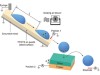 Read the paper: Spontaneously charged water drops induce corrosion
-
 Atomic-scale insights into the mystery of how ice surfaces melt
-
 Intriguing features of the interface between water and oil droplets uncovered
Subjects
Latest on:
- Physical chemistry
- Materials science
-
Probing far-from-equilibrium dynamics of electrical double layers
Article
-
Selectivity emerges from indiscriminate photoreduction
Article
-
Graphene oxide-polydopamine membranes with controlled interlayer spacing
Article
-
Foaming photopolymers as a high-resolution biomimetic printing platform
Article
-
Spontaneously charged water drops induce corrosion
Article
-

Smaller reactors bring nuclear power closer to fulfilling its promise
Outlook