- RESEARCH BRIEFINGS
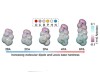
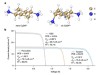
When making mixed-halide perovskite films for use in solar cells, bromide-rich domains crystallize faster than iodide-rich ones do, leading to defects. Adding a molecule tuned to bind selectively to bromide-bound lead synchronizes the crystallization rates, yielding uniform films, better operating stability and a more-efficient perovskite–organic tandem.
This is a summary of: Shi, P. et al. Phase-homogeneous mixed-halide perovskites for stable tandem photovoltaics. Nature 657, 121–126 (2026).
doi: https://doi.org/10.1038/d41586-026-02709-9
References
Brinkmann, K. O. et al. Nature Rev. Mater. 9, 202–217 (2024).
Article Google Scholar
An, Y. et al. Adv. Mater. 36, 2306568 (2024).
Article Google Scholar
Zhang, Z. et al. Nature Energy 9, 592–601 (2024).
Article Google Scholar
Pearson, R. G. J. Chem. Educ. 45, 643–648 (1968).
Article Google Scholar
Download references
Related Articles
-
 Read the paper: Phase-homogeneous mixed-halide perovskites for stable tandem photovoltaics
-
 High-performance perovskite–organic tandem solar cells
-
 Solar cells that combine multiple perovskite layers surpass 30% efficiency
Subjects
Latest on:
- Renewable energy
- Materials science
-
Lead carboxylates passivation for meter-scale perovskite solar modules
Article
-
Photocatalytic water splitting by 2D polymer with out-of-plane carrier flow
Article
-
Electronic-resonance enhanced molecule for perovskite solar cells
Article
-
Foaming photopolymers as a high-resolution biomimetic printing platform
Article
-
Spontaneously charged water drops induce corrosion
Article
-

Smaller reactors bring nuclear power closer to fulfilling its promise
Outlook