- NEWS AND VIEWS
A long-underexplored test of particle-physics theory has been revived. This method uses quantum entanglement to infer the presence of undetectable particles.
By
-
Matt Kenzie
-
Matt Kenzie is in the Department of Physics, University of Cambridge, Cambridge CB3 0US, UK.
-
The protons and neutrons that make up the majority of everyday matter consist of fundamental particles called up quarks and down quarks. Less common is the unstable strange quark, which can turn into an up quark. This transformation, which serves as a key test of conventional physics theory, can be measured in the decay of particles called lambda hyperons. However, over the past 35 years, this decay has received little experimental attention because some of its characteristics could not be measured. Now, in a paper in Nature, the BESIII Collaboration1 reports an experiment that ‘tagged’ the lambda hyperon decay through quantum entanglement with the particle’s antimatter partner. The authors find that a key decay parameter is consistent with conventional theory, in conflict with previous measurements.
Nature 657, 42-44 (2026)
doi: https://doi.org/10.1038/d41586-026-02123-1
References
The BESIII Collaboration. Nature 657, 92–97 (2026).
Article Google Scholar
Seng, C.-Y., Galviz, D., Marciano, W. J. & Meißner, U.-G. Phys. Rev. D 105, 013005 (2022).
Article Google Scholar
Cabibbo, N., Swallow, E. C. & Winston, R. Annu. Rev. Nucl. Part. Sci. 53, 39–75 (2003).
Article Google Scholar
Dworkin, J. et al. Phys. Rev. D 41, 780–800 (1990).
Article Google Scholar
The BESIII Collaboration. Nature Phys. 15, 631–634 (2019).
Article Google Scholar
Batozskaya, V., Kupsc, A., Salone, N. & Wiechnik, J. Phys. Rev. D 108, 016011 (2023).
Article Google Scholar
Baltrusaitis, R. M. et al. Phys. Rev. Lett. 56, 2140–2143 (1986).
Article PubMed Google Scholar
Navas, S. et al. Phys. Rev. D 110, 030001 (2024).
Article Google Scholar
Bacchio, S. & Konstantinou, A. Phys. Rev. Lett. 135, 231901 (2025).
Article PubMed Google Scholar
The BESIII Collaboration. Preprint at arXiv https://doi.org/10.48550/arXiv.2512.15273 (2025).
Download references
Competing Interests
The author declares no competing interests.
Related Articles
-
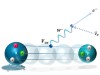 Read the paper: Exploring baryon semileptonic decays through polarization and entanglement
-
 Electric fields probe the symmetry of the ‘heavy hydrogen’ nucleus
-
 High-precision measurement of the W boson’s mass lends weight to the standard model
-
See all News & Views
Subjects
Latest on:
- Particle physics
- Quantum physics
-

Exploring baryon semileptonic decays through polarization and entanglement
Article
-

Is this the first glimpse of dark matter? Data point excites physicists
News
-

A solution to the mystery of the missing neutrinos
Research Highlight
-

Infrared absorption spectroscopy of a single polyatomic molecular ion
Article
-

AI tool lets researchers ‘vibe code’ in the quantum realm
News
-
Evidence for vacuum-enhanced superconductivity in NbSe2
Article