- NEWS AND VIEWS
Observations of a magnetized stellar core indicate that in an ultra-strong magnetic field, empty space can polarize light.
By
-
Ekaterina Sokolova-Lapa
-
Ekaterina Sokolova-Lapa is in the Dr. Karl Remeis-Sternwarte and ECAP, Friedrich-Alexander-Universität Erlangen-Nürnberg, Bamberg 96049, Germany.
-
-
Joern Wilms
-
Joern Wilms is in the Dr. Karl Remeis-Sternwarte and ECAP, Friedrich-Alexander-Universität Er-langen-Nürnberg, Bamberg 96049, Germany.
-
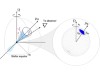
The extreme conditions of outer space give astronomers the opportunity to study light and matter under conditions far beyond the reach of the most advanced terrestrial laboratories. For example, it has long been predicted that empty space (a vacuum) can modify the properties of light if it is permeated by a very strong magnetic field. Such fields have been found only around young neutron stars (a type of collapsed stellar core), the most magnetized of which belong to a rare subclass called magnetars. Writing in Nature, Stewart et al.1 report observations of a magnetar that indicate that light from the star becomes more polarized as it passes through the magnetar’s magnetic field because of interaction with the vacuum.
doi: https://doi.org/10.1038/d41586-026-02289-8
References
Stewart, R. E. et al. Nature https://doi.org/10.1038/s41586-026-10859-z (2026).
Article Google Scholar
Heisenberg, W. & Euler, H. Z. Physik 98, 714–732 (1936).
Article Google Scholar
Ho, W. C. G., Lai, D., Potekhin, A. Y. & Chabrier, G. Astrophys. J. 599, 1293–1301 (2003).
Article Google Scholar
Mignani, R. P. et al. Mon. Not. R. Astron. Soc. 465, 492–500 (2017).
Google Scholar
Kaspi, V. M. & Beloborodov, A. M. Annu. Rev. Astron. Astrophys. 55, 261–301 (2017).
Article Google Scholar
Taverna, R. et al. Astrophys. J. 1002, 102 (2026).
Article Google Scholar
Turolla, R., Taverna, R., Zane, S. & Heyl, J. Galaxies 12, 53 (2024).
Article Google Scholar
Dinh Thi, H., Baring, M. G., Hu, K., Harding, A. K. & Barchas, J. A. Astrophys. J. 992, 188 (2025).
Article Google Scholar
Download references
Competing Interests
The author declares no competing interests.
Related Articles
-
 Vacuum birefringence and the polarized X-ray emission from a radio magnetar
-
 Ultra-bright supernova wobbles like a spinning top
-
 Mysterious radio bursts mostly come from massive galaxies
-
See all News & Views
Subjects
Latest on:
- Astronomy and astrophysics
- Quantum physics
-

Scientists up in arms about cuts to UK physics and astronomy
News
-
Ubiquitous Kelvin–Helmholtz instabilities driving plasma mixing on the Sun
Article
-

Vacuum birefringence and the polarized X-ray emission from a radio magnetar
Article
-
An entangling gate for dual-rail erasure qubits
Article
-

Encapsulation epitaxy of air-stable 2D superconductors for quantum circuits
Article
-

Pseudogap in a Fermi–Hubbard quantum simulator
Article